

1 markka – Finland
Add to wishlist
Finland
Context
Years: 1872–1915
Issuer: Finland
Ruler: Alexander II
Currency:
(1860—1963)
Demonetized: Yes
Total mintage: 4,834,000
Material
References
KM: #
Numista: #4435
Value
Bullion value: $10.93
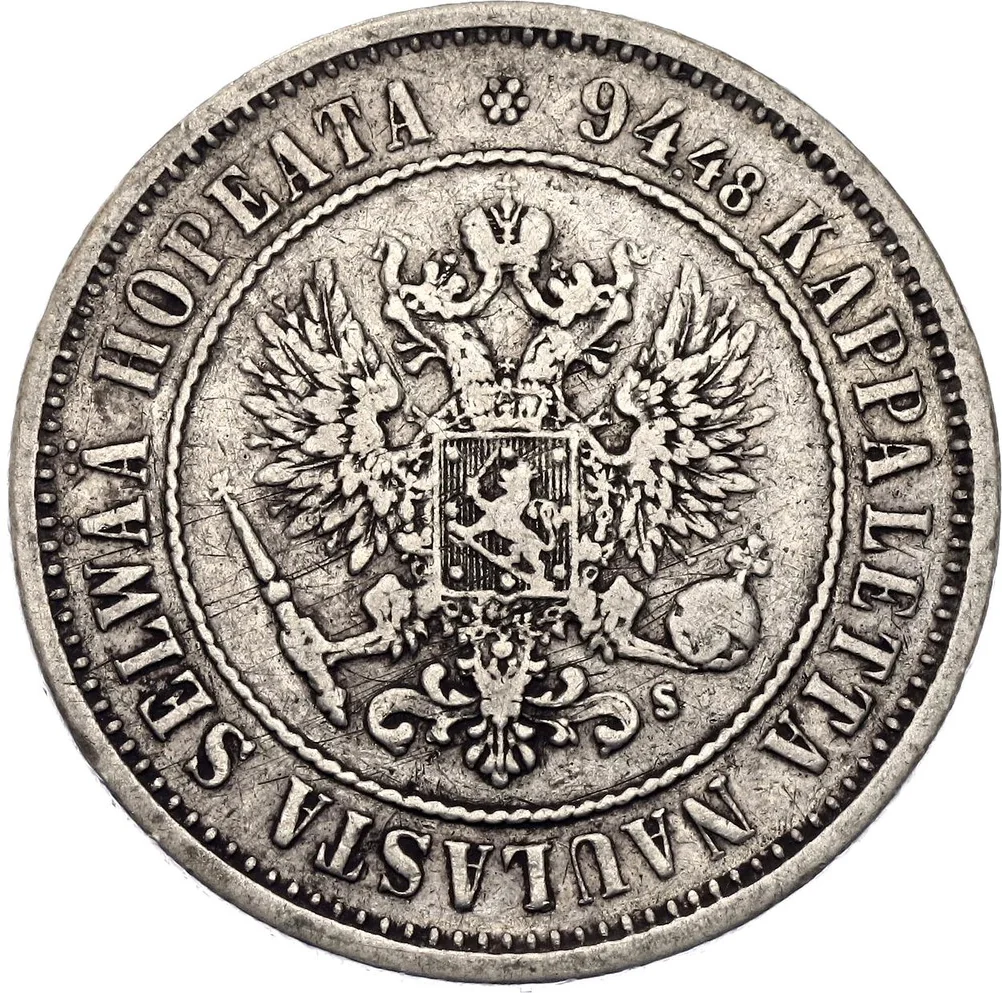
Obverse
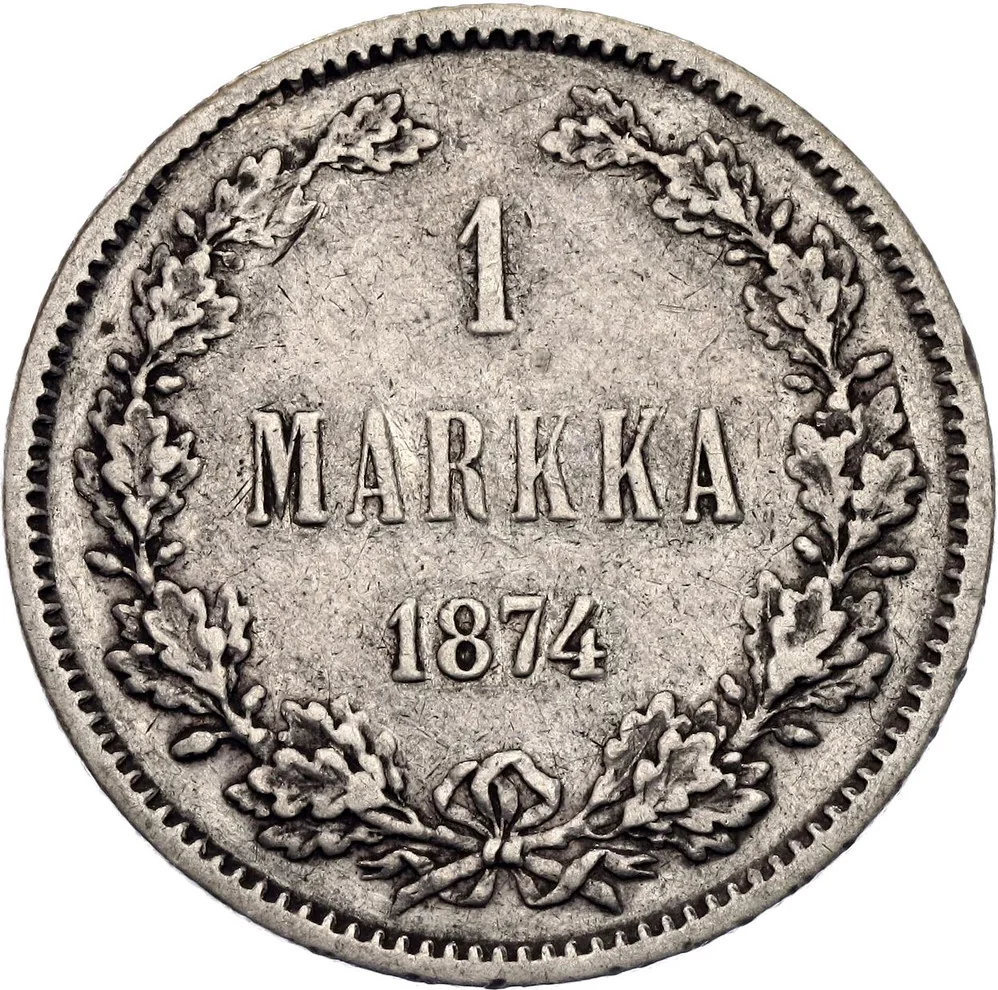
Reverse
Edge
Milled
Categories
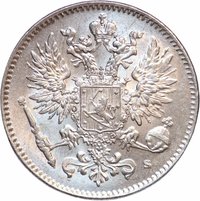
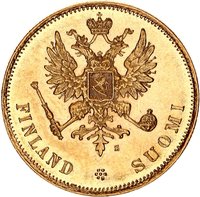
| Animal> Bird |
| Symbol> Crown |
| Symbols> Coat of Arms |
| Symbol> Double-headed eagle |
| Object> Globus cruciger |
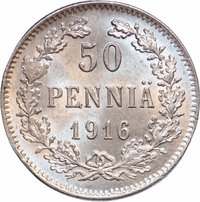
| Symbol> Wreath |
Mints
| Name | Mark |
|---|---|
| Mint of Finland | — |
Mintings
| Year | Mint Mark | Mintage | Quality | Collection |
|---|---|---|---|---|
| 1872 | — | 538,000 | ||
| 1874 | — | 1,002,000 | ||
| 1890 | — | 841,000 | ||
| 1892 | — | 484,000 | ||
| 1893 | — | 254,000 | ||
| 1907 | — | 350,000 | ||
| 1908 | — | 153,000 | ||
| 1915 | — | 1,212,000 |
Historical background
In 1872, Finland found itself at a pivotal moment in its monetary history, operating under a complex dual-currency system inherited from its time as a Grand Duchy within the Russian Empire. The official currency was the Russian ruble, mandated for all state transactions and accounting. However, the older Swedish riksdaler, subdivided into marks and penni, remained deeply entrenched in everyday commerce and public trust, a legacy from the preceding Swedish era that ended in 1809. This created practical confusion and inefficiency, as two separate monetary units circulated simultaneously, requiring constant calculation of exchange rates.
The situation was further complicated by the nature of the ruble itself. While Finland used silver-based ruble notes, Russia had introduced a separate paper ruble that was not fully convertible to silver and had begun to depreciate. Fearing the importation of Russia's inflationary paper currency, the Finnish authorities, with a degree of autonomy in domestic affairs, took decisive action. In 1860, they had already established the "Markka" as Finland's distinct accounting unit, pegged to silver and defined as one-quarter of the ruble. By 1865, the Bank of Finland began issuing the new silver markka notes, initiating a transition.
Therefore, by 1872, Finland was actively mid-transition, moving decisively away from the ruble towards its own stable, silver-based national currency. The markka had been in circulation for several years and was gaining full acceptance. The year 1877 would finally see the formal demonetization of the ruble within Finland, but in 1872, the direction was clear: Finland was successfully asserting its monetary sovereignty, replacing a cumbersome dual system with a unified national currency designed to ensure financial stability and foster economic growth.
The situation was further complicated by the nature of the ruble itself. While Finland used silver-based ruble notes, Russia had introduced a separate paper ruble that was not fully convertible to silver and had begun to depreciate. Fearing the importation of Russia's inflationary paper currency, the Finnish authorities, with a degree of autonomy in domestic affairs, took decisive action. In 1860, they had already established the "Markka" as Finland's distinct accounting unit, pegged to silver and defined as one-quarter of the ruble. By 1865, the Bank of Finland began issuing the new silver markka notes, initiating a transition.
Therefore, by 1872, Finland was actively mid-transition, moving decisively away from the ruble towards its own stable, silver-based national currency. The markka had been in circulation for several years and was gaining full acceptance. The year 1877 would finally see the formal demonetization of the ruble within Finland, but in 1872, the direction was clear: Finland was successfully asserting its monetary sovereignty, replacing a cumbersome dual system with a unified national currency designed to ensure financial stability and foster economic growth.
🌱 Common