

1 reaal – Curaçao
Add to wishlist
Netherlands
Context
Year: 1821
Country: Netherlands
Issuer: Curaçao
Ruler: William I
Currency:
(1799—1828)
Demonetized: Yes
Total mintage: 120,655
Material
References
KM: #
Numista: #44344
Value
Bullion value: $3.92
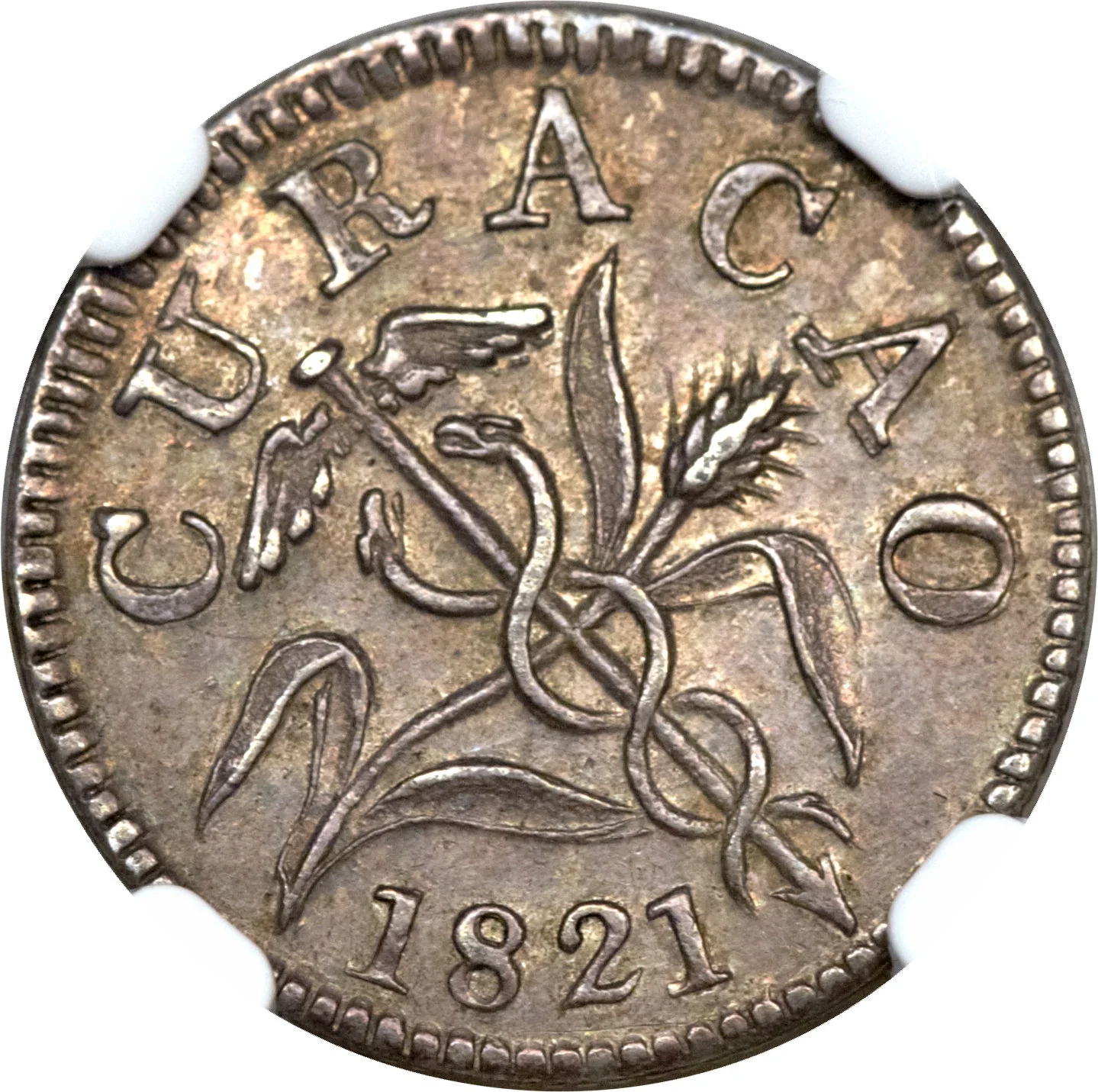
Obverse
Description:
Cornucopia and caduceus crossed. Legend above, year below.
Inscription:
CURACAO
1821
1821
Script: Latin
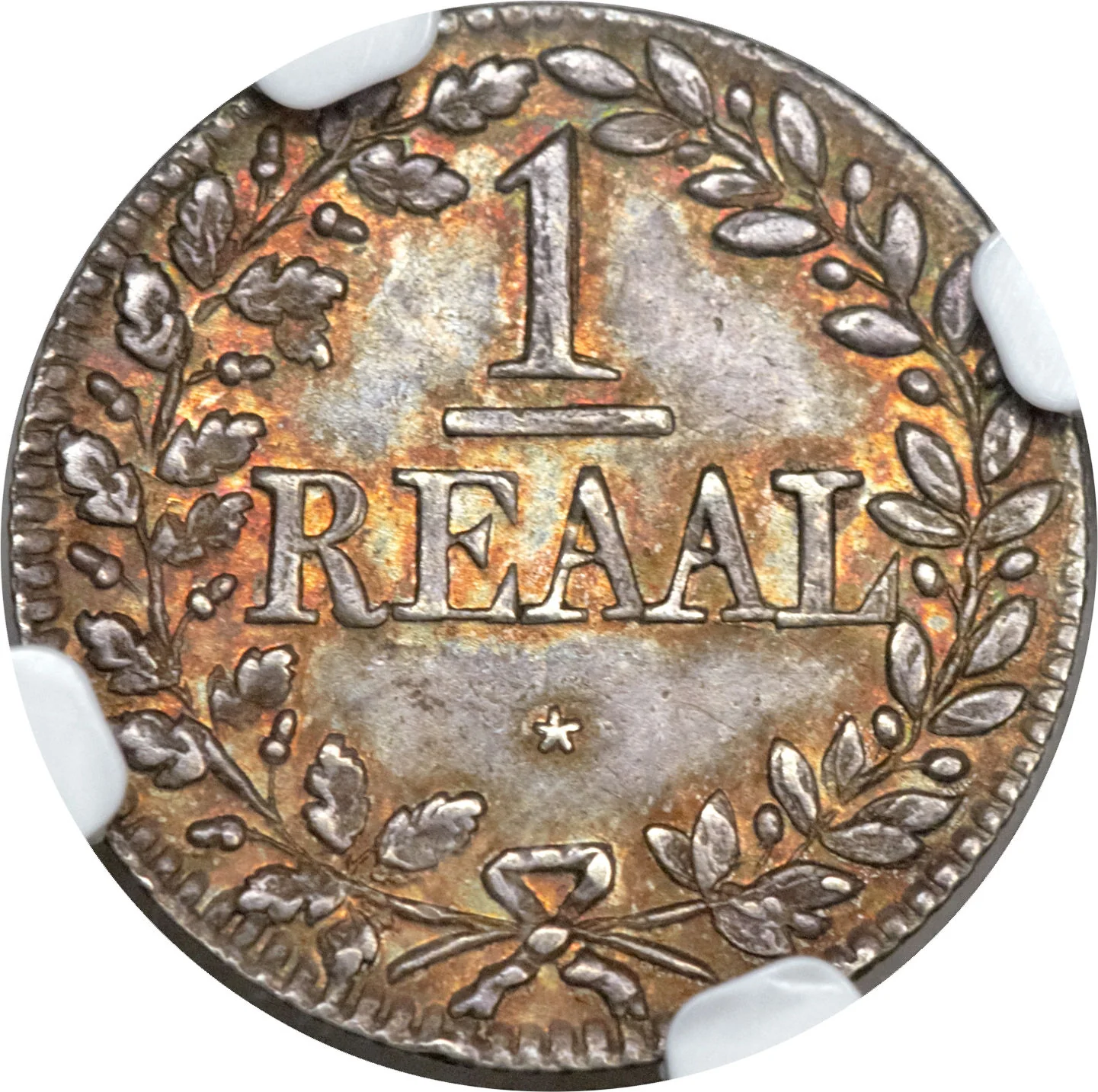
Reverse
Description:
Laurel and oak wreath; acorn count and bow style vary.
Inscription:
1
REAAL
★
REAAL
★
Script: Latin
Edge
Reeded
Mintings
| Year | Mint Mark | Mintage | Quality | Collection |
|---|---|---|---|---|
| 1821 | — | 120,655 |
Historical background
In 1821, Curaçao was navigating a complex and challenging monetary landscape as a colony of the Kingdom of the Netherlands. The island's economy, heavily reliant on trade and its role as a regional commercial hub, was plagued by a severe shortage of official coinage. The primary currency in theory was the Dutch guilder, but in practice, the limited supply of Dutch and Spanish silver coins (like the peso and real) failed to meet the demands of daily commerce. This scarcity was a chronic issue, exacerbated by the colony's trade imbalances and the tendency for full-value specie to be exported to settle debts.
To fill this void, a chaotic multiplicity of foreign coins circulated at fluctuating values. Spanish-American, British, French, and even United States coins were all used in transactions, their worth determined by local proclamation and their intrinsic silver or gold content. Furthermore, the local government and merchants increasingly relied on the issuance of paper biljetten (notes) and credit instruments to facilitate trade. This paper money, while necessary, was often unstable, with its value subject to distrust and depreciation, especially following the economic turmoil of the Napoleonic Wars which had recently concluded.
Consequently, the year 1821 fell within a prolonged period of monetary uncertainty. The lack of a uniform, trusted currency hindered smooth commercial exchange and posed a constant administrative challenge. While still under Dutch sovereignty, Curaçao's currency situation in practice was defined by a pragmatic but disorderly bazaar of foreign metal and fragile local paper, reflecting its interconnected position in the Caribbean economy rather than a neatly imposed colonial system. This instability would persist until more formal reforms were attempted later in the 19th century.
To fill this void, a chaotic multiplicity of foreign coins circulated at fluctuating values. Spanish-American, British, French, and even United States coins were all used in transactions, their worth determined by local proclamation and their intrinsic silver or gold content. Furthermore, the local government and merchants increasingly relied on the issuance of paper biljetten (notes) and credit instruments to facilitate trade. This paper money, while necessary, was often unstable, with its value subject to distrust and depreciation, especially following the economic turmoil of the Napoleonic Wars which had recently concluded.
Consequently, the year 1821 fell within a prolonged period of monetary uncertainty. The lack of a uniform, trusted currency hindered smooth commercial exchange and posed a constant administrative challenge. While still under Dutch sovereignty, Curaçao's currency situation in practice was defined by a pragmatic but disorderly bazaar of foreign metal and fragile local paper, reflecting its interconnected position in the Caribbean economy rather than a neatly imposed colonial system. This instability would persist until more formal reforms were attempted later in the 19th century.

💎 Extremely Rare