

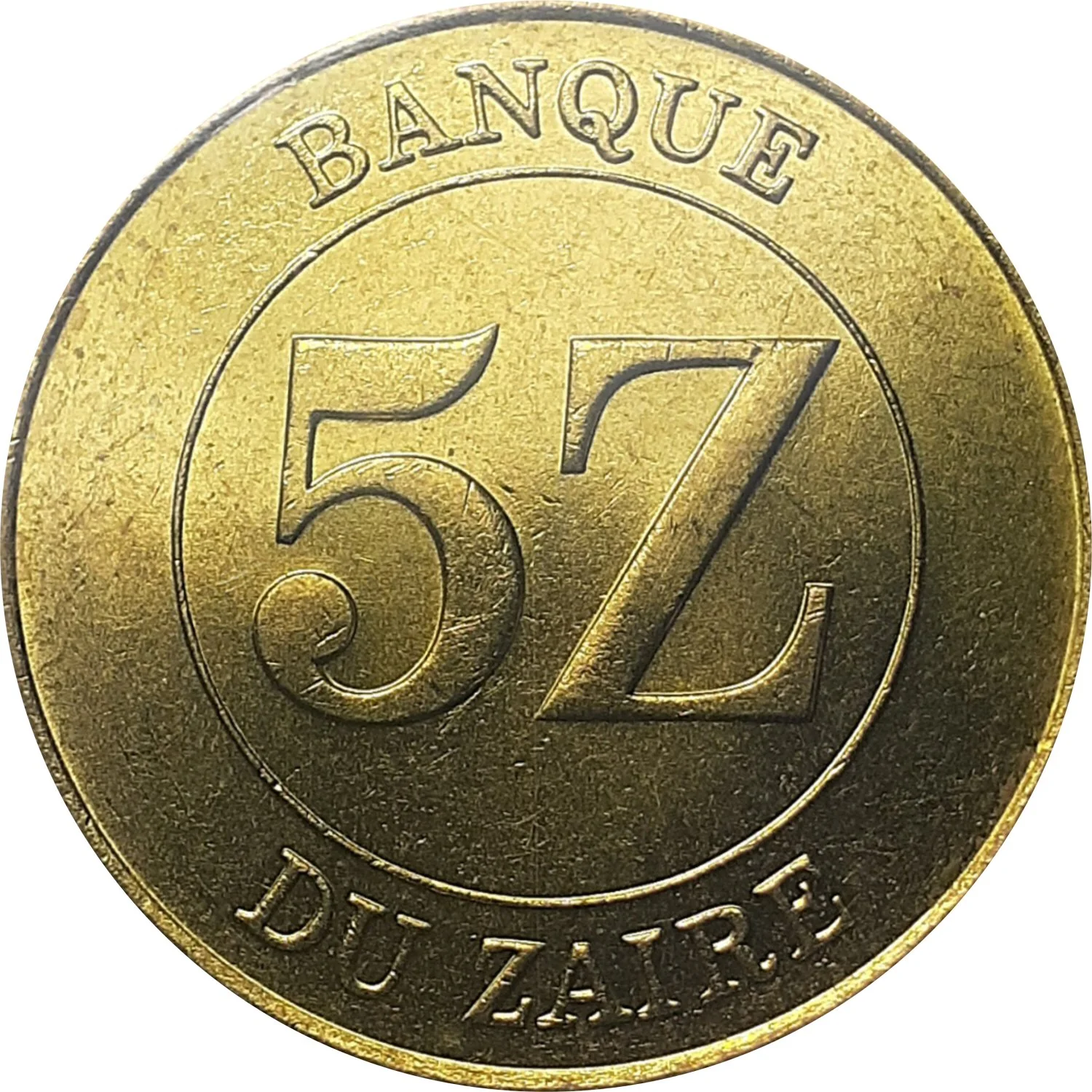
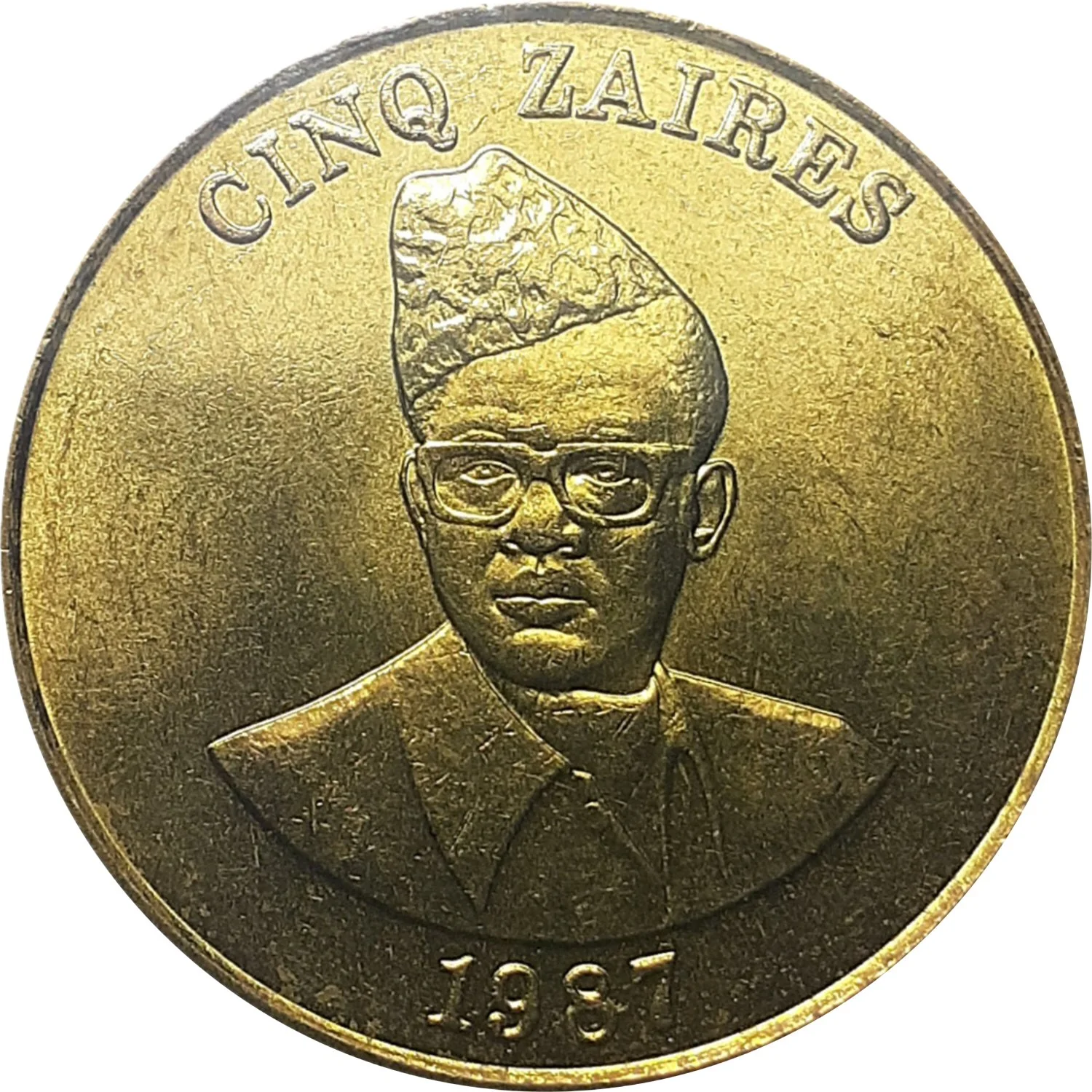
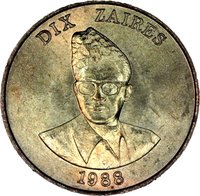
5 Zaïres – Zaire
Democratic Republic of the Congo
Context
Year: 1987
Country: Democratic Republic of the Congo 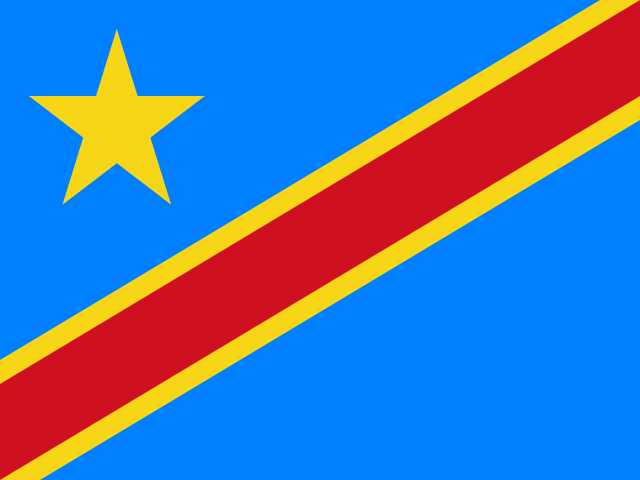
Issuer: Zaire
Issuing organization: Bank of Zaire
Period:
(1971—1997)
Currency:
(1967—1993)
Demonetized: Yes
Material
References
KM: #Click to copy to clipboard14
Numista: #4432
Value
Exchange value: 5 ZRZ
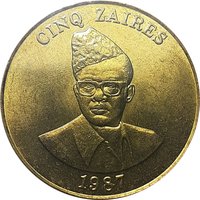
Obverse
Reverse
Edge
Plain
Mints
| Name | Mark |
|---|---|
| Royal Mint | — |
Mintings
| Year | Mint Mark | Mintage | Quality | Collection |
|---|---|---|---|---|
| 1987 | — | — |
Historical background
In 1987, Zaire (today the Democratic Republic of the Congo) was in the throes of a profound and chronic currency crisis under the long-standing rule of President Mobutu Sese Seko. The national currency, the zaire, was virtually worthless, suffering from hyperinflation that eroded purchasing power and savings. This economic collapse was a direct result of systemic mismanagement: rampant corruption, the wholesale looting of state resources by the political elite, and disastrous economic policies that included printing money to cover massive budget deficits. The formal economy had largely broken down, leading to a reliance on barter and a vibrant black market for everyday transactions.
The government's attempts to control the situation were ineffective and contradictory. While officially maintaining a fixed exchange rate, the reality was a vast disparity with the parallel market rate, where the zaire traded for a fraction of its official value. This created a two-tier economy where access to scarce foreign currency, primarily US dollars, became essential for importing goods and conducting serious business. The few who had political connections profited enormously from arbitrage, buying dollars at the state rate and selling them on the black market, further entrenching inequality and undermining any legitimate economic activity.
Consequently, the currency situation in 1987 was a primary symptom of Zaire's broader state failure. The collapse of the zaire reflected the disintegration of public institutions and the government's loss of monetary control. For ordinary citizens, it meant immense hardship, as wages paid in local currency became meaningless, fueling social unrest and deepening poverty. This economic chaos set the stage for the eventual radical, but equally disastrous, currency reform of 1993, when the "new zaire" was introduced in a failed attempt to reset the financial system.
The government's attempts to control the situation were ineffective and contradictory. While officially maintaining a fixed exchange rate, the reality was a vast disparity with the parallel market rate, where the zaire traded for a fraction of its official value. This created a two-tier economy where access to scarce foreign currency, primarily US dollars, became essential for importing goods and conducting serious business. The few who had political connections profited enormously from arbitrage, buying dollars at the state rate and selling them on the black market, further entrenching inequality and undermining any legitimate economic activity.
Consequently, the currency situation in 1987 was a primary symptom of Zaire's broader state failure. The collapse of the zaire reflected the disintegration of public institutions and the government's loss of monetary control. For ordinary citizens, it meant immense hardship, as wages paid in local currency became meaningless, fueling social unrest and deepening poverty. This economic chaos set the stage for the eventual radical, but equally disastrous, currency reform of 1993, when the "new zaire" was introduced in a failed attempt to reset the financial system.
🌱 Very Common