


5 euro – Portugal
Add to wishlist
Portugal
Context
Material
Diameter: 30 mm
Weight: 14 g
Thickness: 2.5 mm
Shape: Round
Composition: Copper-nickel
Technique: Milled
Alignment: Medal alignment
flip

References
KM: #
Numista: #442177
Value
Exchange value: 5 EUR
Inflation-adjusted value: 5.08 EUR
Obverse
Description:
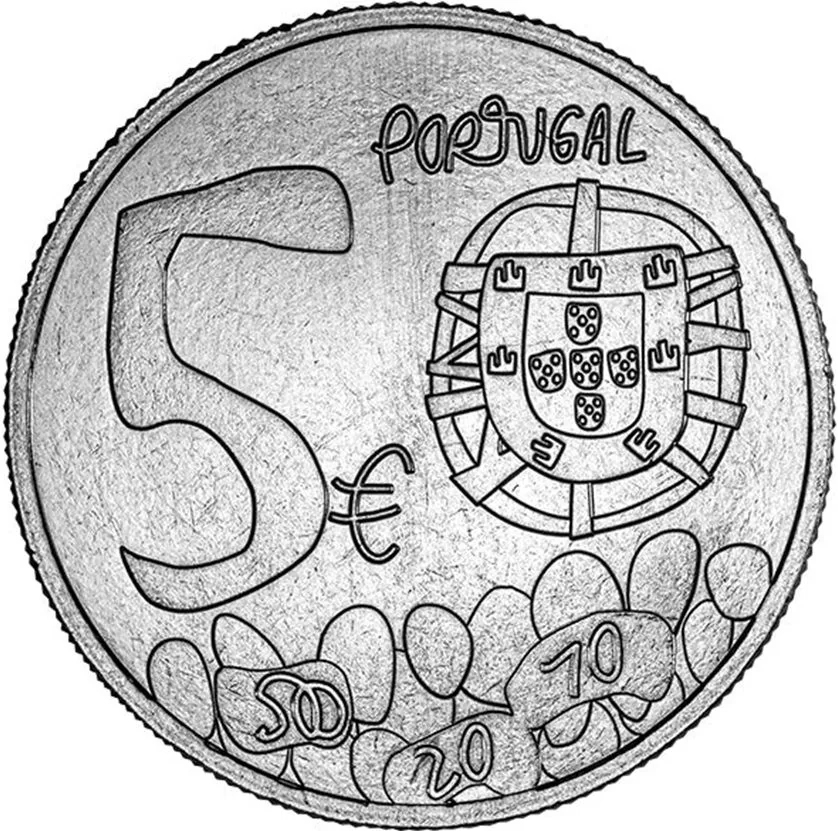
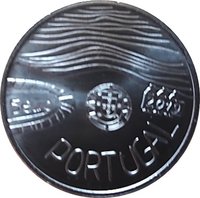
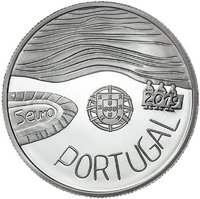
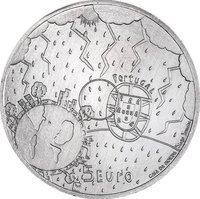
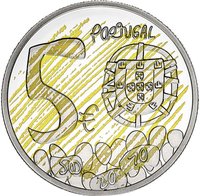
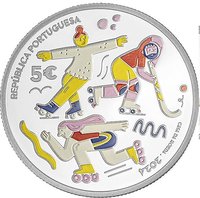
Face value left, coat of arms right. "Portugal" above, images of 500, 20, and 10 currency units below.
Inscription:
PORTUGAL
5 €
500 20 10
5 €
500 20 10
Script: Latin
Designer: Antonio Cerqueira
Reverse
Description:
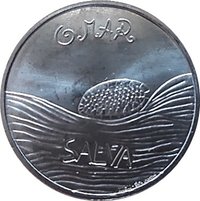
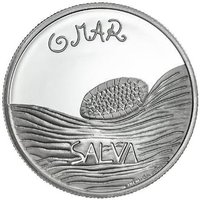
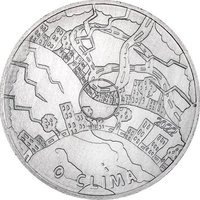
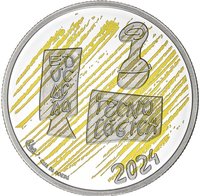
Right: a flask with "Educação" and "Tecnológica" on school boards. Lower left: author's name and "Casa da Moeda". Lower right: "2024".
Inscription:
ED
UC
AÇ
ÃO
TECNO
LÓGICA
CASA DA MOEDA
2024
UC
AÇ
ÃO
TECNO
LÓGICA
CASA DA MOEDA
2024
Translation:
Technological Education
Mint of Portugal
2024
Mint of Portugal
2024
Script: Latin
Language: Portuguese
Designer: Antonio Cerqueira
Edge
Reeded
Categories
| Education |
| Object> Container or tableware |
| Symbols> Coat of Arms |
| Science> Technology |
Mints
| Name | Mark |
|---|---|
| Imprensa Nacional - Casa da Moeda | — |
Mintings
| Year | Mint Mark | Mintage | Quality | Collection |
|---|---|---|---|---|
| 2024 | — | 20,000 |
Historical background
Portugal's currency situation in 2024 is firmly anchored within the Eurozone framework, using the euro (€) as its sole legal tender. As a member of the European Union and a participant in the Economic and Monetary Union (EMU), Portugal's monetary policy is set by the European Central Bank (ECB). The primary domestic concerns, therefore, revolve around navigating the ECB's interest rate policies aimed at curbing eurozone inflation, which impact national borrowing costs, mortgages, and business investment. The country's economic stability is intrinsically linked to the common currency, which provides exchange rate stability and deep financial market integration but also removes the tool of independent monetary policy to address local economic conditions.
The key focus for Portugal in 2024 is managing the lingering effects of higher interest rates on its public and private debt. While inflation has receded from its peaks, the ECB's restrictive stance continues to pressure a nation with a high level of household and public debt. The government's budgetary strategy is constrained by the need to balance fiscal consolidation under EU rules with support for vulnerable sectors and continued investment fueled by the EU's Recovery and Resilience Plan (RRP). Portugal's economic performance, including its strong tourism sector and growing tech industry, influences its credit ratings and the risk premium on its sovereign bonds within the euro area.
Looking ahead, the currency debate in Portugal is less about abandoning the euro—a move supported by only a small minority—and more about advocating for its interests within the Eurozone's fiscal and monetary governance. Discussions center on ensuring that ECB policy considers the varying economic conditions across the bloc and on pushing for further EU-level integration, such as a completed banking union and common fiscal tools, to better shield smaller economies like Portugal from asymmetric shocks. The stability of the euro remains a foundational pillar for the Portuguese economy, even as it navigates the challenges of a one-size-fits-all monetary policy.
The key focus for Portugal in 2024 is managing the lingering effects of higher interest rates on its public and private debt. While inflation has receded from its peaks, the ECB's restrictive stance continues to pressure a nation with a high level of household and public debt. The government's budgetary strategy is constrained by the need to balance fiscal consolidation under EU rules with support for vulnerable sectors and continued investment fueled by the EU's Recovery and Resilience Plan (RRP). Portugal's economic performance, including its strong tourism sector and growing tech industry, influences its credit ratings and the risk premium on its sovereign bonds within the euro area.
Looking ahead, the currency debate in Portugal is less about abandoning the euro—a move supported by only a small minority—and more about advocating for its interests within the Eurozone's fiscal and monetary governance. Discussions center on ensuring that ECB policy considers the varying economic conditions across the bloc and on pushing for further EU-level integration, such as a completed banking union and common fiscal tools, to better shield smaller economies like Portugal from asymmetric shocks. The stability of the euro remains a foundational pillar for the Portuguese economy, even as it navigates the challenges of a one-size-fits-all monetary policy.
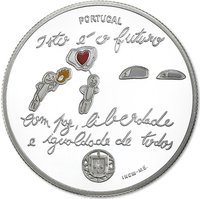
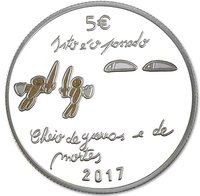
Series: Draw a coin


⭐ Somewhat Rare