

1 florin – New Zealand
Add to wishlist
New Zealand
Context
Years: 1948–1951
Issuer: New Zealand
Ruler: George VI
Currency:
(1840—1967)
Demonetization: 31 October 2006
Total mintage: 10,750,000
Material
Diameter: 28.58 mm
Weight: 11.31 g
Thickness: 2.3 mm
Shape: Round
Composition: Copper-nickel
Technique: Milled
Alignment: Medal alignment
flip
References
KM: #
Numista: #4415
Obverse
Description:
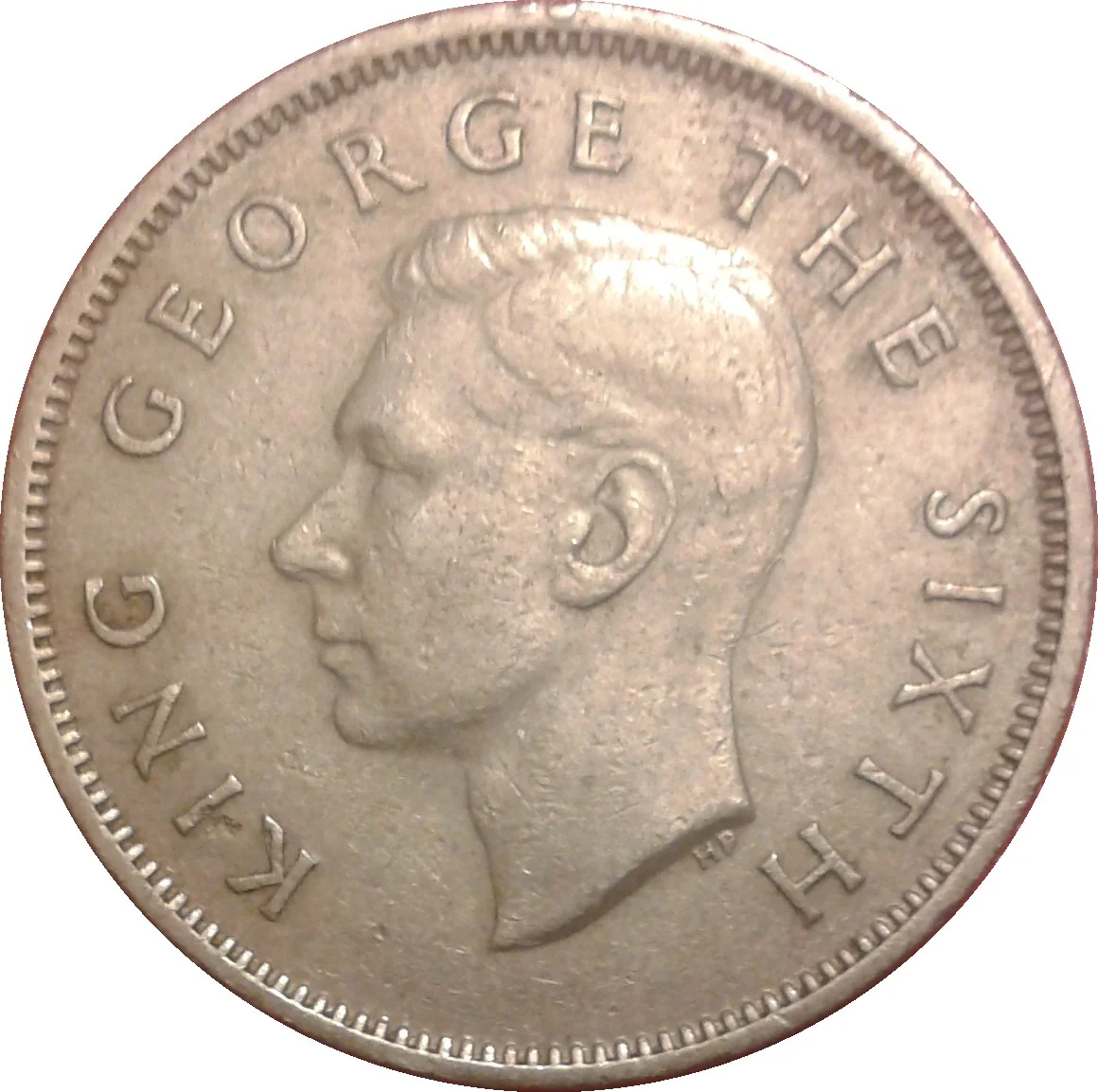
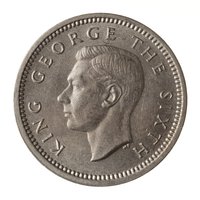
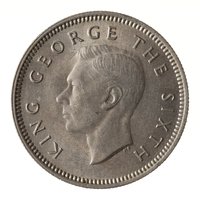
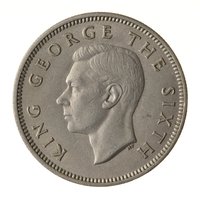
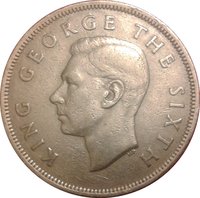
King George VI, uncrowned, left-facing portrait, legend encircling.
Inscription:
KING GEORGE THE SIXTH
HP
HP
Script: Latin
Engraver: Thomas Humphrey Paget
Reverse
Description:
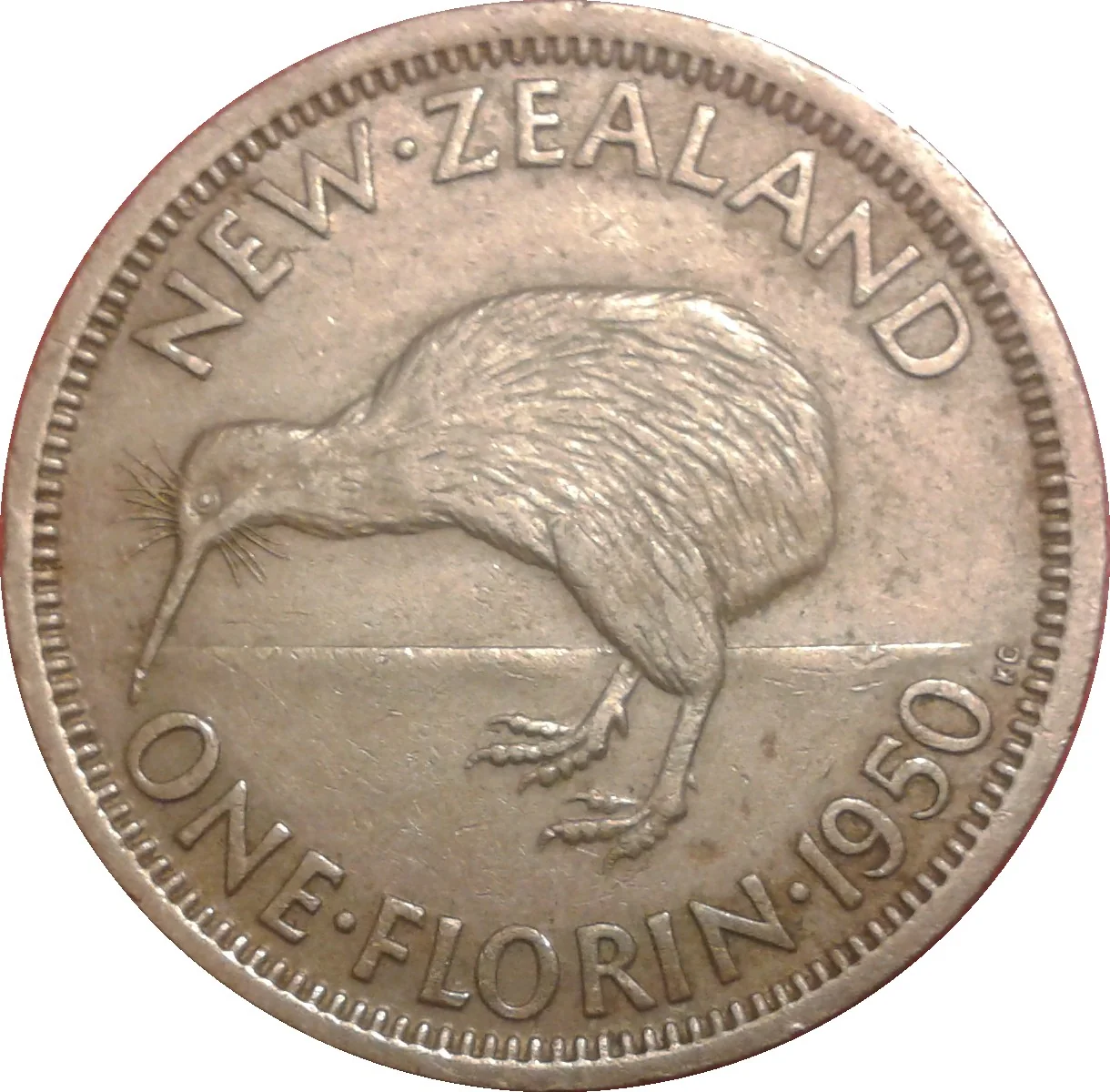
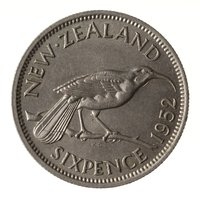
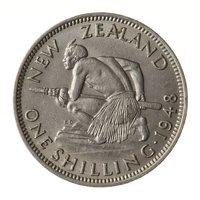
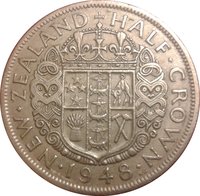
Kiwi left, legend above, denomination and date below.
Inscription:
NEW·ZEALAND
ONE·FLORIN·1950
KG
ONE·FLORIN·1950
KG
Script: Latin
Engraver: George Kruger Gray
Edge
Reeded
Mints
| Name | Mark |
|---|---|
| Royal Mint (Tower Hill) | — |
Mintings
| Year | Mint Mark | Mintage | Quality | Collection |
|---|---|---|---|---|
| 1948 | — | 1,750,000 | ||
| 1948 | — | — | Proof | |
| 1949 | — | 3,500,000 | ||
| 1949 | — | — | Proof | |
| 1950 | — | — | Proof | |
| 1950 | — | 3,500,000 | ||
| 1951 | — | 2,000,000 | ||
| 1951 | — | — | Proof |
Historical background
In 1948, New Zealand's currency was firmly embedded within the Sterling Area and operated under a system of exchange controls established during World War II. The New Zealand pound (NZ£) was pegged at parity with the British pound sterling (GB£), meaning the two currencies were officially equal in value. This close linkage meant New Zealand's monetary policy and economic stability were heavily influenced by Britain, as the bulk of the country's export income (primarily from wool, meat, and dairy) was earned in sterling and held in London. The Reserve Bank of New Zealand, established in 1934, managed these reserves and enforced strict controls on the purchase of foreign exchange, particularly "hard currencies" like US dollars, to protect the sterling reserves.
The post-war period was one of economic strain and gradual transition. While the war had ended, the exchange controls of the 1938 Reserve Bank Amendment Act remained in force to manage a persistent balance of payments crisis and shield limited foreign reserves. Import licensing was stringent, prioritising essential goods for reconstruction and development. This protective framework aimed to foster local industry and manage demand, but it also led to shortages of some imported goods and constrained economic flexibility. The year 1948 fell within a long period of regulated commerce that would define New Zealand's economy for decades.
Looking ahead, the devaluation of sterling in September 1949 would be a pivotal moment, forcing New Zealand to follow suit and devalue the NZ£ against the US dollar by 30.5% to maintain its parity with Britain. This move in 1949, just a year after the period in question, underscored the profound dependency of the 1948 currency situation on British economic fortunes. Thus, the currency regime of 1948 was characteristic of a Dominion tightly bound to its colonial economic centre, navigating post-war challenges through control and caution, while the winds of change that would eventually lead to decimalisation and a floating dollar were still decades away.
The post-war period was one of economic strain and gradual transition. While the war had ended, the exchange controls of the 1938 Reserve Bank Amendment Act remained in force to manage a persistent balance of payments crisis and shield limited foreign reserves. Import licensing was stringent, prioritising essential goods for reconstruction and development. This protective framework aimed to foster local industry and manage demand, but it also led to shortages of some imported goods and constrained economic flexibility. The year 1948 fell within a long period of regulated commerce that would define New Zealand's economy for decades.
Looking ahead, the devaluation of sterling in September 1949 would be a pivotal moment, forcing New Zealand to follow suit and devalue the NZ£ against the US dollar by 30.5% to maintain its parity with Britain. This move in 1949, just a year after the period in question, underscored the profound dependency of the 1948 currency situation on British economic fortunes. Thus, the currency regime of 1948 was characteristic of a Dominion tightly bound to its colonial economic centre, navigating post-war challenges through control and caution, while the winds of change that would eventually lead to decimalisation and a floating dollar were still decades away.
🌱 Very Common