

50 centimos – Spain
Add to wishlist
Spain
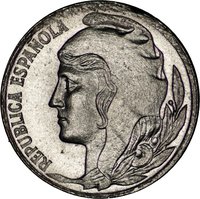
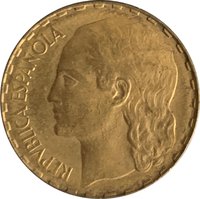
Obverse
Description:
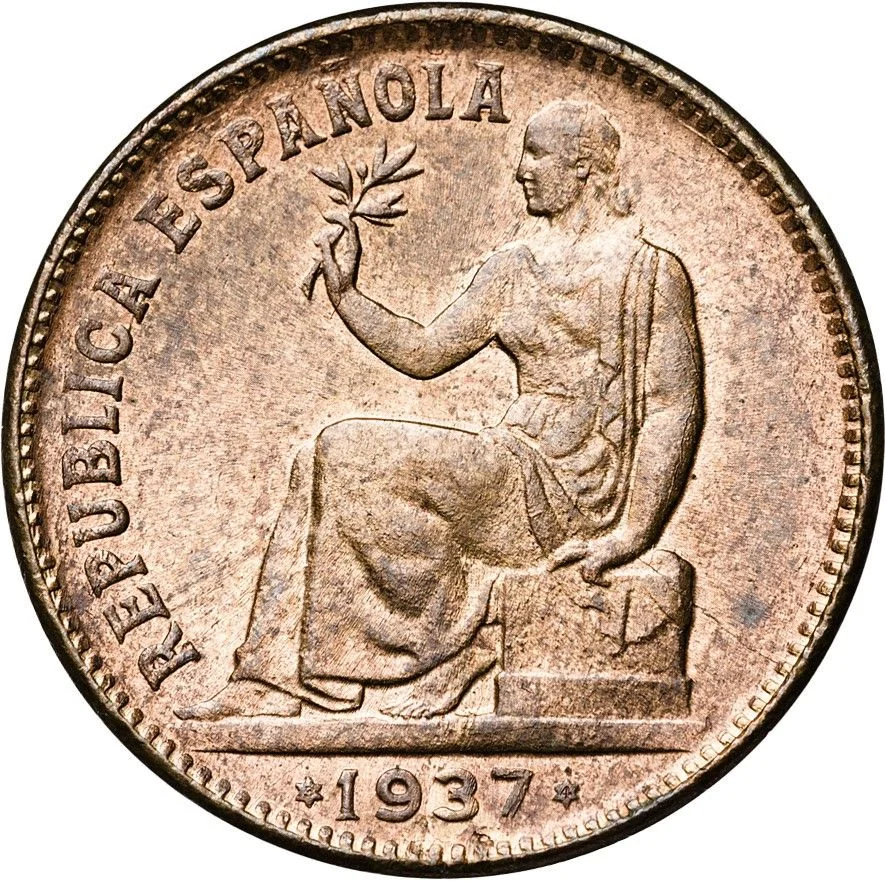
Hispania seated left, holding olive branch.
Inscription:
REPUBLICA ESPAÑOLA
* 1937 *
* 1937 *
Translation:
SPANISH REPUBLIC
* 1937 *
* 1937 *
Script: Latin
Language: Spanish
Engraver: José Eusebio Espinós Gisbert
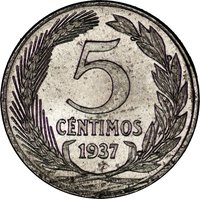
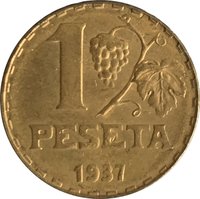
Reverse
Description:
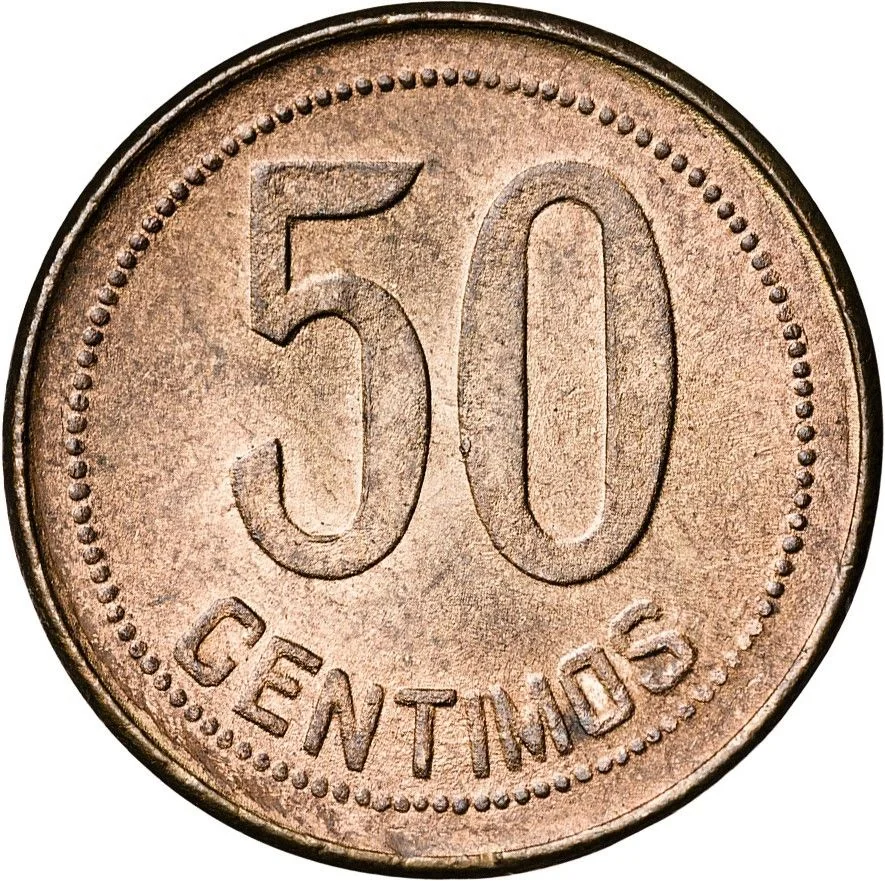
Denomination within round or square dotted border.
Inscription:
50
CENTIMOS
CENTIMOS
Script: Latin
Engraver: José Eusebio Espinós Gisbert
Edge
Plain
Mints
| Name | Mark |
|---|---|
| Royal Mint of Madrid | — |
Mintings
| Year | Mint Mark | Mintage | Quality | Collection |
|---|---|---|---|---|
| 1937 | — | — | ||
| 1937 | 34 | 50,000,000 | ||
| 1937 | 36 | 1,000,000 |
Historical background
In 1937, Spain was in the midst of a devastating civil war (1936-1939), and its currency situation reflected the fractured and chaotic nature of the conflict. The country was divided between the Republican zone, loyal to the democratically elected government, and the Nationalist zone, controlled by the rebel forces under General Franco. Crucially, there was no single Spanish currency; both sides issued their own money while attempting to undermine the other's. The Republicans, holding the official gold reserves (which had been sent to the Soviet Union for safekeeping), continued to print pesetas, but these experienced hyperinflation due to massive war-driven issuance and a collapsing economy. The Nationalists, based in Burgos, also issued their own pesetas, which were initially weaker but gained stability as they secured foreign support and territory.
The economic and monetary fragmentation was profound. Within the Republican zone, local committees, trade unions, and regional governments (like Catalonia) often issued their own emergency currency or vouchers, leading to a bewildering variety of scrip and severe inflation. The Nationalist zone, financed by loans from fascist Italy and Nazi Germany and benefiting from greater agricultural production, enforced a more centralized monetary policy. They declared Republican currency void in conquered territories, forcing exchanges to their own notes, a policy that impoverished those holding Republican money. This created a stark divide where the value of a peseta depended entirely on which army controlled the region you were in.
Internationally, both currencies faced severe devaluation and limited acceptance. The Republican peseta collapsed on foreign exchange markets, while the Nationalist peseta, though not officially recognized by many nations, became the preferred currency for international transactions with the insurgents due to their perceived eventual victory. By 1937, the monetary chaos was a direct symptom of the war, serving as both a financial weapon and a consequence of the breakdown of the state. The competing currencies not only financed the war effort but also became powerful tools of propaganda and control, with each side using their banknotes to promote their political iconography and legitimacy.
The economic and monetary fragmentation was profound. Within the Republican zone, local committees, trade unions, and regional governments (like Catalonia) often issued their own emergency currency or vouchers, leading to a bewildering variety of scrip and severe inflation. The Nationalist zone, financed by loans from fascist Italy and Nazi Germany and benefiting from greater agricultural production, enforced a more centralized monetary policy. They declared Republican currency void in conquered territories, forcing exchanges to their own notes, a policy that impoverished those holding Republican money. This created a stark divide where the value of a peseta depended entirely on which army controlled the region you were in.
Internationally, both currencies faced severe devaluation and limited acceptance. The Republican peseta collapsed on foreign exchange markets, while the Nationalist peseta, though not officially recognized by many nations, became the preferred currency for international transactions with the insurgents due to their perceived eventual victory. By 1937, the monetary chaos was a direct symptom of the war, serving as both a financial weapon and a consequence of the breakdown of the state. The competing currencies not only financed the war effort but also became powerful tools of propaganda and control, with each side using their banknotes to promote their political iconography and legitimacy.
Series: 1937 Spain circulation coins
🌱 Very Common