

½ penny – Isle of Man
Add to wishlist
Context
Years: 1981–1983
Country: British Crown dependencies
Issuer: Isle of Man
Ruler: Elizabeth II
Currency:
(since 1971)
Demonetized: Yes
Total mintage: 25,000
Material
References
KM: #
Numista: #440513
Value
Exchange value: 0.005 IMP
Bullion value: $4.85
Obverse
Description:
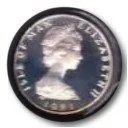
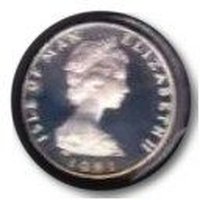
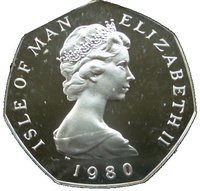
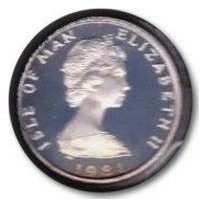
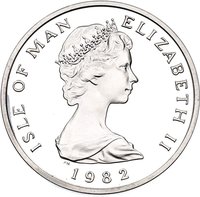
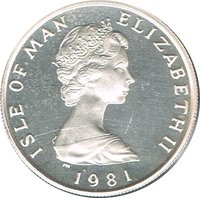
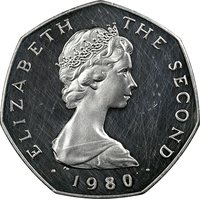
Queen Elizabeth II facing right, wearing the Girls of Great Britain and Ireland Tiara, with legend surrounding and date beneath.
Inscription:
ISLE OF MAN ELIZABETH II
PM
1981
PM
1981
Translation:
ISLE OF MAN ELIZABETH II
PM
1981
PM
1981
Script: Latin
Language: English
Engraver: Arnold Machin
Reverse
Edge
Plain
Mints
| Name | Mark |
|---|---|
| Pobjoy Mint | (PM) |
Mintings
| Year | Mint Mark | Mintage | Quality | Collection |
|---|---|---|---|---|
| 1981 | PM | 10,000 | Proof | |
| 1982 | PM | 10,000 | Proof | |
| 1983 | PM | 5,000 | Proof |
Historical background
In 1981, the Isle of Man enjoyed a unique and stable currency situation, underpinned by its long-standing constitutional relationship with the United Kingdom. As a Crown Dependency, the Isle of Man was not part of the UK or the European Economic Community, granting it a high degree of domestic autonomy, including in monetary affairs. The official currency was the Manx pound, which was issued by the Isle of Man Government Treasury and maintained a fixed parity of 1:1 with the British pound sterling. This parity was a practical necessity, as sterling was the dominant currency for trade and economic activity on the island.
The year saw the continued circulation of distinctive Manx banknotes and coins, which were legal tender only on the island itself. These notes, featuring local iconography like the Manx triskelion and wildlife, circulated alongside UK sterling notes and coins, which were also universally accepted. This created a dual-system where both currencies were used interchangeably in daily life, though change was often given in Manx issue. The island's currency was fully backed by sterling reserves held in London, ensuring absolute convertibility and financial confidence.
This arrangement provided significant economic stability, insulating the island from direct monetary policy shifts from the Bank of England while benefiting from the strength and international recognition of sterling. The system also served as a symbol of the Isle of Man's unique identity—politically separate yet economically aligned with the UK. There were no major currency crises or debates in 1981; the situation was one of settled continuity, providing a secure foundation for the island's growing efforts to develop its offshore finance sector during that period.
The year saw the continued circulation of distinctive Manx banknotes and coins, which were legal tender only on the island itself. These notes, featuring local iconography like the Manx triskelion and wildlife, circulated alongside UK sterling notes and coins, which were also universally accepted. This created a dual-system where both currencies were used interchangeably in daily life, though change was often given in Manx issue. The island's currency was fully backed by sterling reserves held in London, ensuring absolute convertibility and financial confidence.
This arrangement provided significant economic stability, insulating the island from direct monetary policy shifts from the Bank of England while benefiting from the strength and international recognition of sterling. The system also served as a symbol of the Isle of Man's unique identity—politically separate yet economically aligned with the UK. There were no major currency crises or debates in 1981; the situation was one of settled continuity, providing a secure foundation for the island's growing efforts to develop its offshore finance sector during that period.
Series: 1980 series - silver
✨ Legendary