

200 pesetas – Spain
Add to wishlist
Circulating commemorative coins
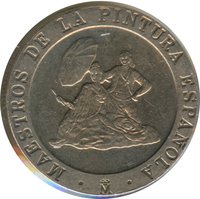
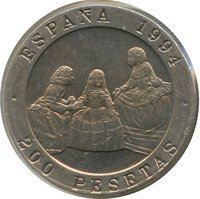
Commemoration: Murillo and El Greco
Series: Masters of Spanish Painting
Spain
Context
Year: 1995
Issuer: Spain
Ruler: Juan Carlos I
Currency:
(1868—2001)
Demonetization: 28 February 2002
Total mintage: 1,022,000
Material
References
KM: #
Numista: #14674
Value
Exchange value: 200 ESP
Inflation-adjusted value: 417.37 ESP
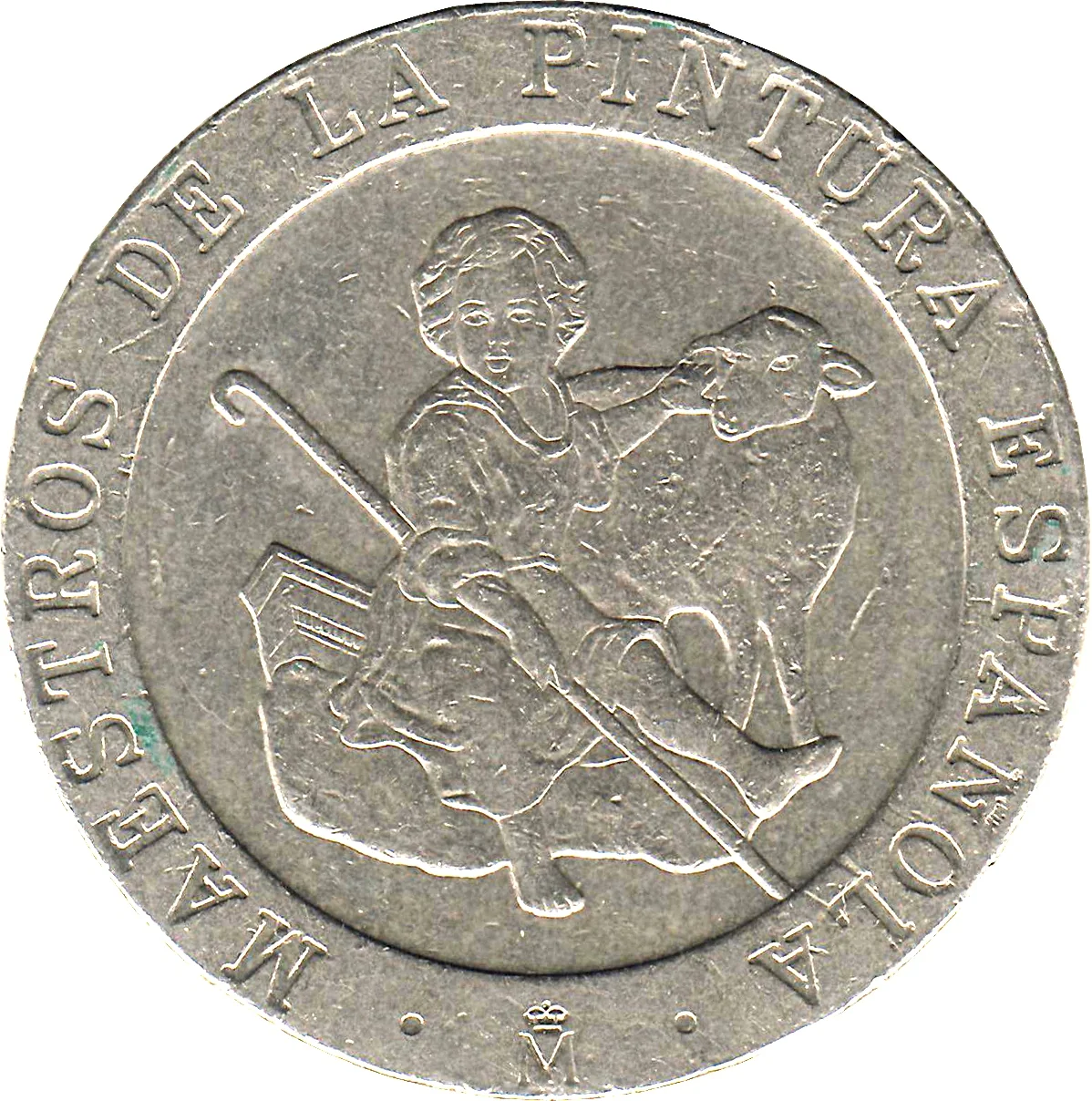
Obverse
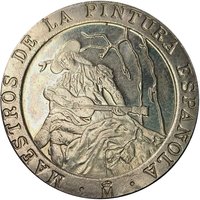
Description:
Detail from Murillo's "El Buen Pastor."
Inscription:
MAESTROS DE LA PINTURA ESPAÑOLA
M
M
Translation:
Masters of Spanish Painting
Script: Latin
Language: Spanish
Engraver: Esther González Pastor
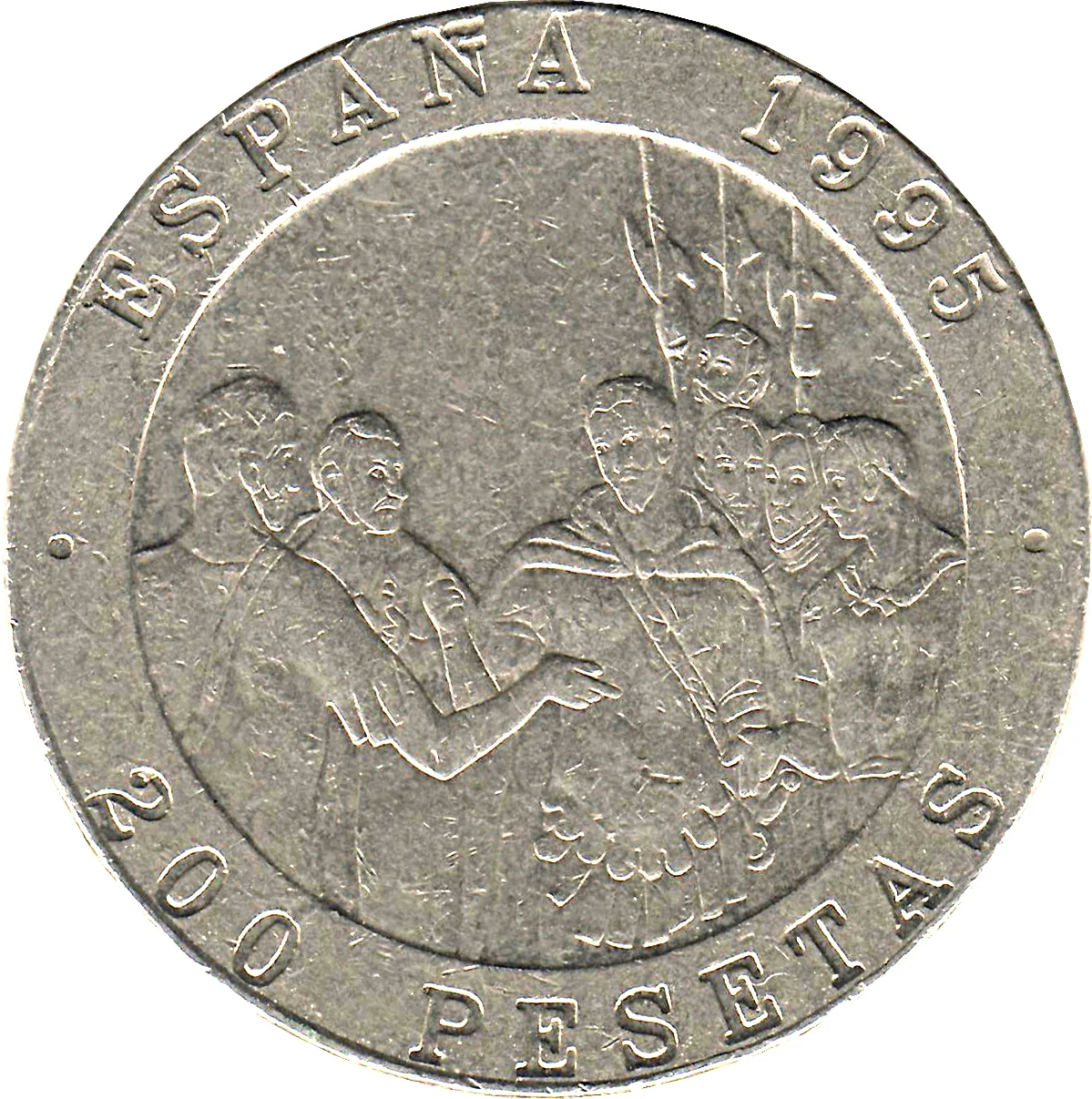
Reverse
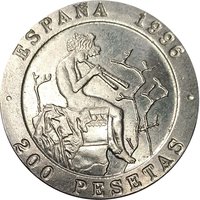
Description:
Detail from "The Martyrdom of Saint Maurice" by El Greco.
Inscription:
ESPAÑA 1995
200 PESETAS
200 PESETAS
Translation:
Spain 1995
200 Pesetas
200 Pesetas
Script: Latin
Language: Spanish
Engraver: Esther González Pastor
Edge
Segmented reeding.
Mints
| Name | Mark |
|---|---|
| Royal Mint of Madrid | (M) |
Mintings
| Year | Mint Mark | Mintage | Quality | Collection |
|---|---|---|---|---|
| 1995 | M | 1,022,000 |
Historical background
In 1995, Spain's currency situation was defined by its pivotal position within the European Monetary System (EMS) and its determined march toward European Economic and Monetary Union (EMU). The Spanish peseta was a member of the EMS Exchange Rate Mechanism (ERM), which required it to fluctuate within set bands against other member currencies, primarily the German Deutsche Mark. This period followed the severe ERM crises of 1992-93, which had forced a devaluation of the peseta and the widening of the fluctuation bands to ±15%, providing much-needed breathing room for the Spanish economy.
Domestically, the year was characterized by a challenging economic climate that put pressure on the currency. Spain was recovering from a deep recession, grappling with high unemployment exceeding 20%, and working to consolidate public finances to meet the strict Maastricht Treaty convergence criteria for EMU entry. These criteria, especially those concerning budget deficits, inflation, and exchange rate stability, were the central focus of economic policy. The Bank of Spain maintained relatively high interest rates to defend the peseta's parity, curb inflation, and signal commitment to monetary stability, even at the cost of slower growth.
Ultimately, 1995 was a year of successful stabilization and strategic preparation. The widened ERM bands allowed the peseta to adjust without speculative attacks, while stringent fiscal and monetary policies gradually restored confidence. By year's end, Spain had demonstrated sufficient progress on convergence, setting the stage for its formal inclusion in the euro project. The peseta's journey in 1995 was thus the final, disciplined chapter before its eventual replacement by the euro in 1999.
Domestically, the year was characterized by a challenging economic climate that put pressure on the currency. Spain was recovering from a deep recession, grappling with high unemployment exceeding 20%, and working to consolidate public finances to meet the strict Maastricht Treaty convergence criteria for EMU entry. These criteria, especially those concerning budget deficits, inflation, and exchange rate stability, were the central focus of economic policy. The Bank of Spain maintained relatively high interest rates to defend the peseta's parity, curb inflation, and signal commitment to monetary stability, even at the cost of slower growth.
Ultimately, 1995 was a year of successful stabilization and strategic preparation. The widened ERM bands allowed the peseta to adjust without speculative attacks, while stringent fiscal and monetary policies gradually restored confidence. By year's end, Spain had demonstrated sufficient progress on convergence, setting the stage for its formal inclusion in the euro project. The peseta's journey in 1995 was thus the final, disciplined chapter before its eventual replacement by the euro in 1999.
🌱 Common