

10 Francs – Madagascar
Madagascar
Context
Year: 1953
Issuer: Madagascar 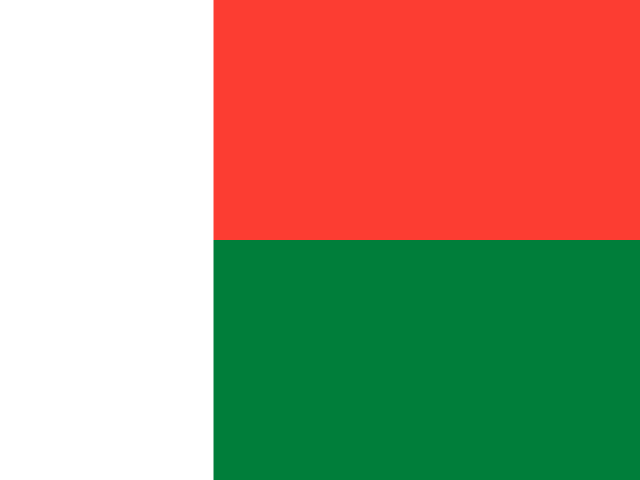
Period:
(1946—1958)
Currency:
(1945—1963)
Demonetized: Yes
Total mintage: 25,000,000
Material
Diameter: 20 mm
Weight: 3 g
Thickness: 1.5 mm
Shape: Round
Composition: Aluminium bronze
Magnetic: No
Technique: Milled
Alignment: Coin alignment
flip
References
KM: #Click to copy to clipboard6
Numista: #4395
Obverse
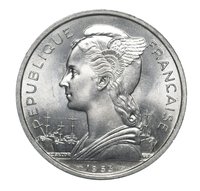
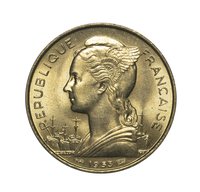
Description:
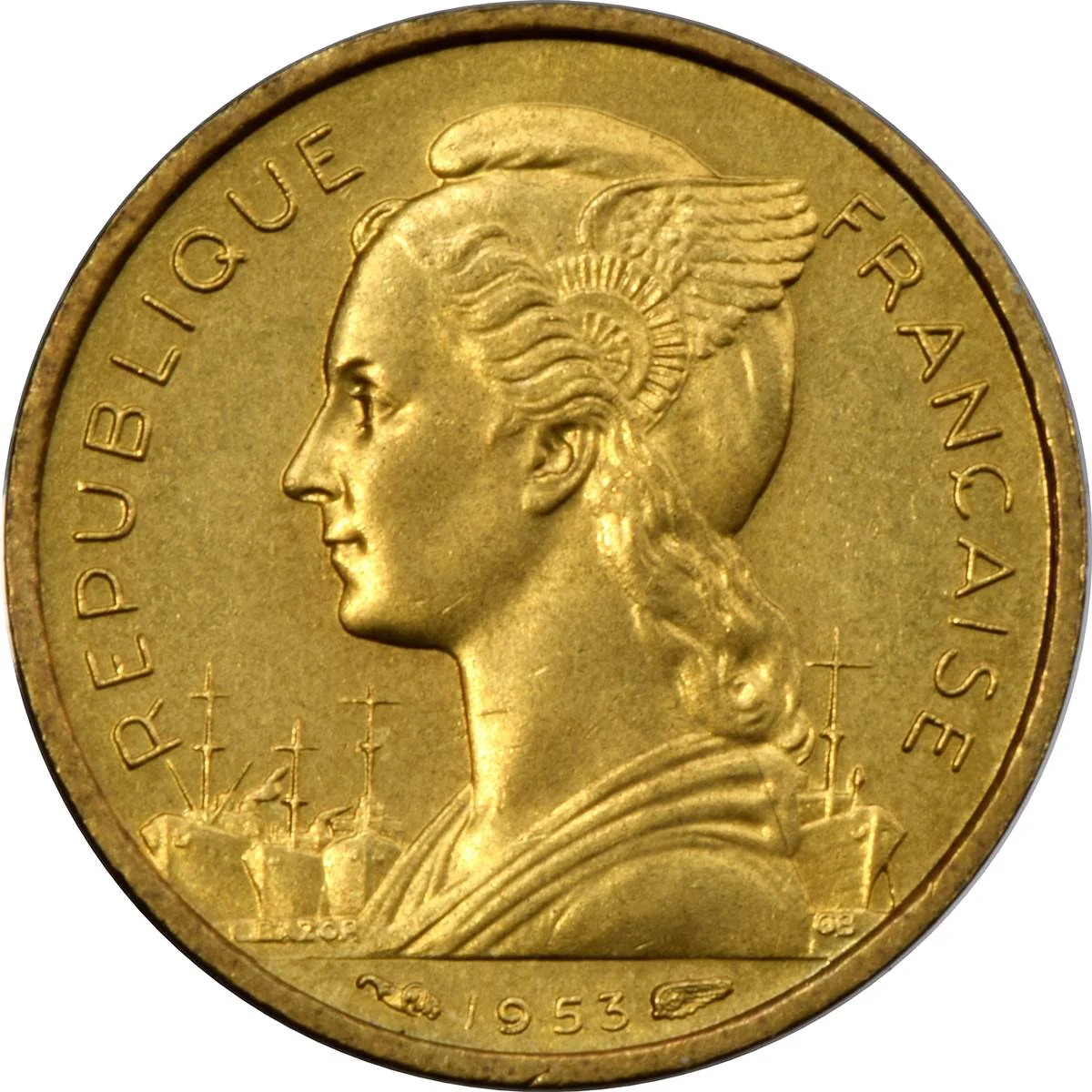
Female personification of France in winged Phrygian cap, French flag left. Cargo ships in background. Date and privy mark below. Note: Some coins have vertical ESSAI behind head before FRANCAISE.
Inscription:
REPUBLIQUE FRANÇAISE
GB
L. BAZOR
1953
GB
L. BAZOR
1953
Translation:
FRENCH REPUBLIC
GB
L. BAZOR
1953
GB
L. BAZOR
1953
Script: Latin
Language: French
Engraver: Lucien Georges Bazor
Reverse
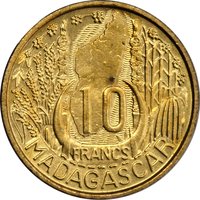
Description:
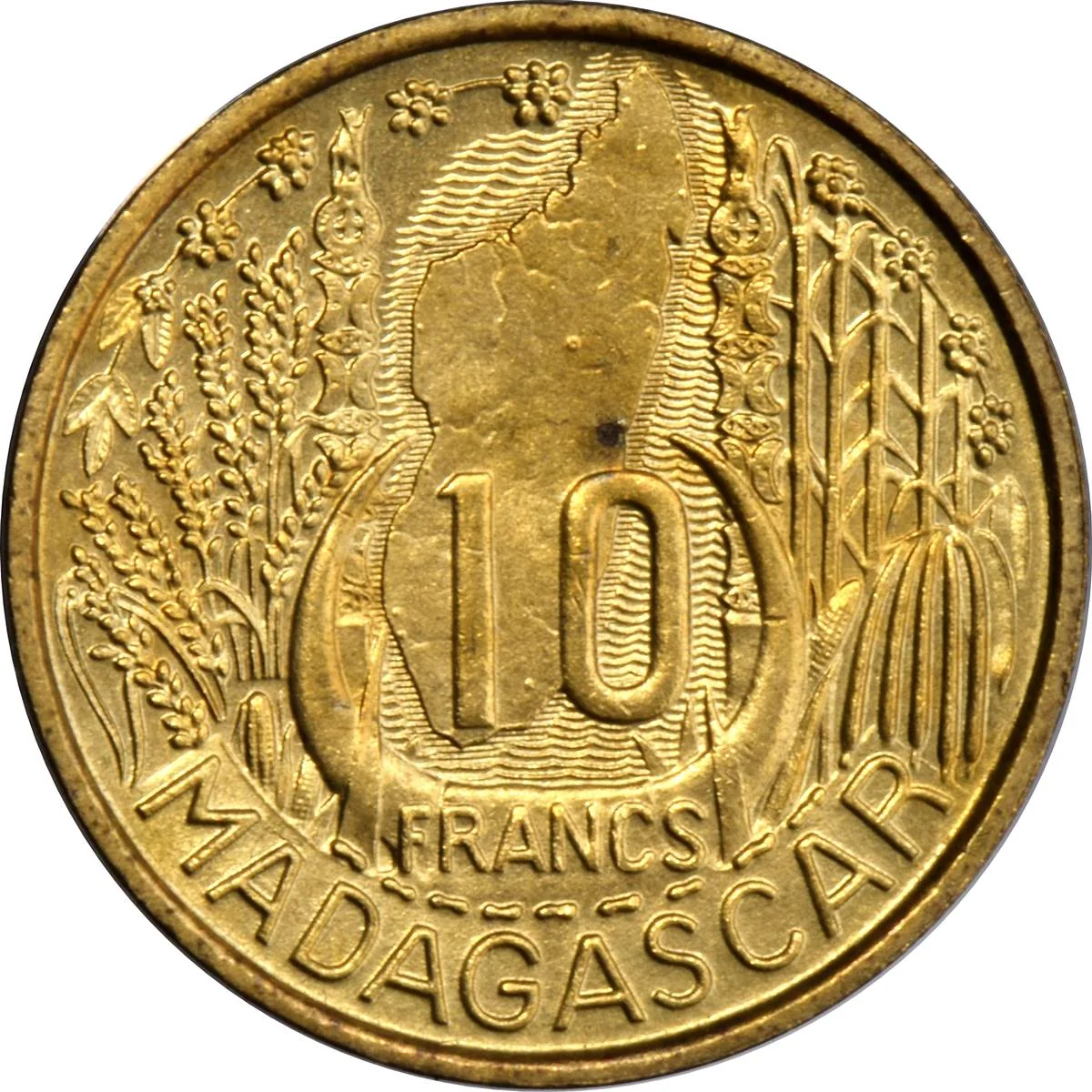
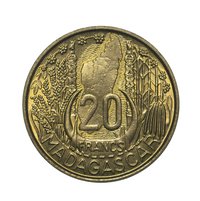
Zebu bull horns flanked by sprigs, with national map above value.
Inscription:
10
FRANCS
MADAGASCAR
FRANCS
MADAGASCAR
Script: Latin
Engraver: Lucien Georges Bazor
Edge
Plain
Categories
| Map |
| Symbol> Phrygian cap |
| Transportation> Watercraft |
Mints
| Name | Mark |
|---|---|
| Monnaie de Paris | — |
Mintings
| Year | Mint Mark | Mintage | Quality | Collection |
|---|---|---|---|---|
| 1953 | — | 25,000,000 |
Historical background
In 1953, Madagascar's currency situation was firmly embedded within the colonial framework of French West Africa. The official currency was the CFA franc (Colonies Françaises d'Afrique), which had been introduced across French African territories in 1945. This currency was not sovereign; it was pegged to the French franc at a fixed rate and guaranteed by the French Treasury, ensuring monetary stability but at the cost of full economic control residing in Paris. The system facilitated trade with France and provided price stability, but it also meant Madagascar had no independent monetary policy to address its specific economic conditions.
Economically, the period was one of post-war recovery and rising discontent. The fixed exchange rate primarily benefited French commercial interests and the export of Madagascar's primary commodities—like coffee, vanilla, and cloves—to the metropole. However, this system was increasingly criticized by the growing Malagasy nationalist movement as a tool of economic exploitation, limiting local development and perpetuating dependency. Infrastructure projects and administrative costs led to budget deficits, which were often covered by French subsidies or loans, further deepening financial ties to the colonial power.
Politically, 1953 fell within a tense decade that would culminate in independence in 1960. While the CFA franc provided a stable medium of exchange, its existence symbolized the overarching colonial control that Malagasy political parties, particularly the Mouvement Démocratique de la Rénovation Malgache (MDRM), sought to dismantle. The currency regime was part of a broader colonial economic structure that nationalists aimed to reform or replace. Thus, the monetary situation in 1953 was characterized by a stable but externally imposed system, operating against a backdrop of rising political agitation for self-determination and economic autonomy.
Economically, the period was one of post-war recovery and rising discontent. The fixed exchange rate primarily benefited French commercial interests and the export of Madagascar's primary commodities—like coffee, vanilla, and cloves—to the metropole. However, this system was increasingly criticized by the growing Malagasy nationalist movement as a tool of economic exploitation, limiting local development and perpetuating dependency. Infrastructure projects and administrative costs led to budget deficits, which were often covered by French subsidies or loans, further deepening financial ties to the colonial power.
Politically, 1953 fell within a tense decade that would culminate in independence in 1960. While the CFA franc provided a stable medium of exchange, its existence symbolized the overarching colonial control that Malagasy political parties, particularly the Mouvement Démocratique de la Rénovation Malgache (MDRM), sought to dismantle. The currency regime was part of a broader colonial economic structure that nationalists aimed to reform or replace. Thus, the monetary situation in 1953 was characterized by a stable but externally imposed system, operating against a backdrop of rising political agitation for self-determination and economic autonomy.
🌱 Very Common