

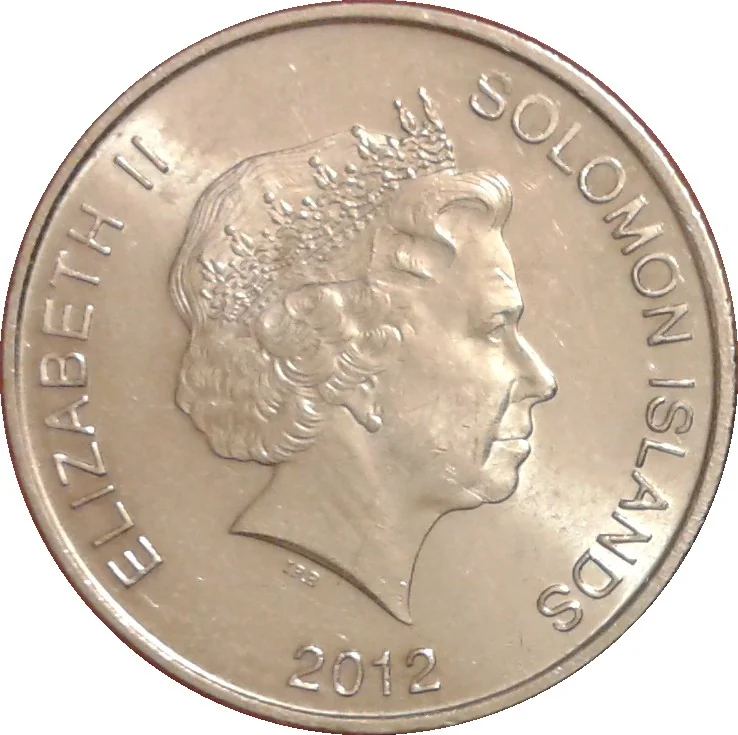

20 cents – Solomon Islands
Add to wishlist
Solomon Islands
Context
Year: 2012
Issuer: Solomon Islands
Ruler: Elizabeth II
Currency:
(since 1977)
Total mintage: 19,977,000
Material

References
KM: #
Numista: #43918
Value
Exchange value: 0.20 SBD
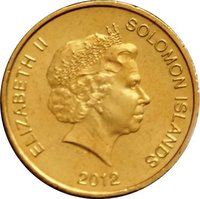
Obverse
Description:
King facing right
Inscription:
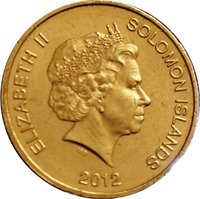
ELIZABETH II SOLOMON ISLANDS
2012
2012
Translation:
ELIZABETH II SOLOMON ISLANDS
2012
2012
Script: Latin
Language: English
Engraver: Ian Rank-Broadley
Reverse
Description:
Malaita pendant: circular design, dual denomination inscription.
Inscription:
20 CENTS 20 CENTS
Script: Latin
Engraver: David Thomas
Edge
Reeded
Mints
| Name | Mark |
|---|---|
| Royal Australian Mint | — |
Mintings
| Year | Mint Mark | Mintage | Quality | Collection |
|---|---|---|---|---|
| 2012 | — | 19,977,000 |
Historical background
In 2012, the currency situation in Solomon Islands was characterized by stability and relative strength, underpinned by a managed floating exchange rate regime. The Solomon Islands dollar (SBD) was pegged to a basket of currencies, heavily weighted towards the Australian dollar (AUD) and the US dollar (USD), with the Central Bank of Solomon Islands (CBSI) actively intervening to manage volatility. This period followed a decade of recovery from the ethnic tensions and economic collapse of the early 2000s, with the currency's stability being a key indicator of regained macroeconomic control and growing confidence from development partners.
The economy's heavy reliance on commodity exports, particularly logging, was a dominant factor influencing foreign exchange inflows. High global commodity prices, especially for timber, led to strong export earnings, which bolstered the country's foreign reserves and supported the value of the SBD. However, this created a dual-edged situation: while reserves were healthy, the economy faced persistent inflationary pressures, partly imported due to the AUD peg and partly driven by the narrow, resource-dependent economic base. Inflation remained a concern for the CBSI, hovering around 5-7%, eroding purchasing power despite currency stability.
Looking forward, 2012 highlighted underlying vulnerabilities. Economic analysts and institutions like the IMF noted that the currency's stability was precarious, as it depended heavily on a temporary logging boom that was unsustainable. There were growing calls for economic diversification and building resilience against external shocks. Furthermore, the peg to the Australian dollar, while providing stability, also meant that monetary policy was largely reactive to Australian economic conditions, limiting the CBSI's independent tools to address domestic inflationary pressures and foster broader-based growth.
The economy's heavy reliance on commodity exports, particularly logging, was a dominant factor influencing foreign exchange inflows. High global commodity prices, especially for timber, led to strong export earnings, which bolstered the country's foreign reserves and supported the value of the SBD. However, this created a dual-edged situation: while reserves were healthy, the economy faced persistent inflationary pressures, partly imported due to the AUD peg and partly driven by the narrow, resource-dependent economic base. Inflation remained a concern for the CBSI, hovering around 5-7%, eroding purchasing power despite currency stability.
Looking forward, 2012 highlighted underlying vulnerabilities. Economic analysts and institutions like the IMF noted that the currency's stability was precarious, as it depended heavily on a temporary logging boom that was unsustainable. There were growing calls for economic diversification and building resilience against external shocks. Furthermore, the peg to the Australian dollar, while providing stability, also meant that monetary policy was largely reactive to Australian economic conditions, limiting the CBSI's independent tools to address domestic inflationary pressures and foster broader-based growth.


🌱 Common