

25 Santeem – Ethiopian Empire
Ethiopia
Context
Year: 1944
Ethiopian Year: 1936
Country: Ethiopia 
Issuer: Ethiopian Empire
Ruler: Haile Selassie I
Currency:
(1945—1976)
Demonetization: September 1976
Total mintage: 30,000,000
Material
References
KM: #Click to copy to clipboard36
Numista: #4391
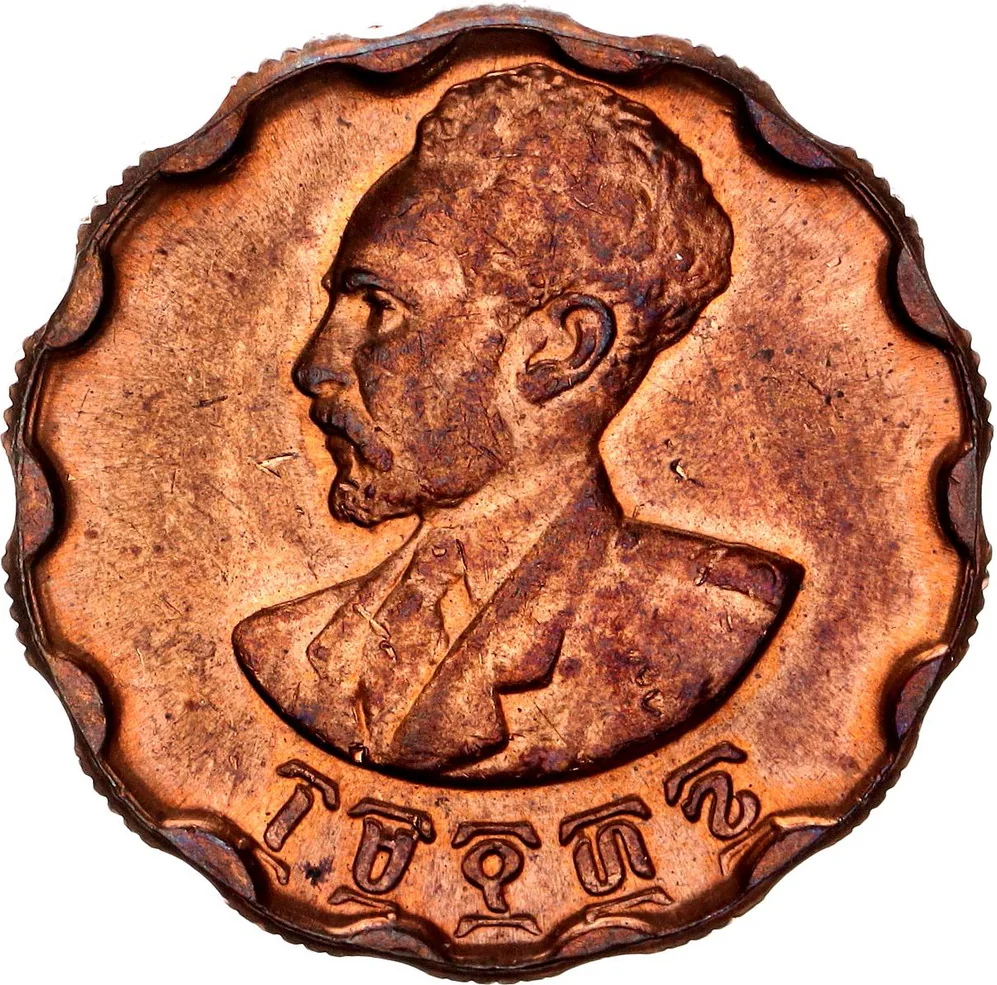
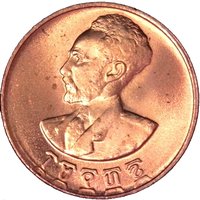
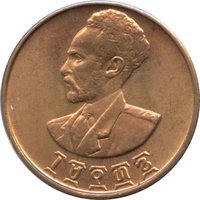
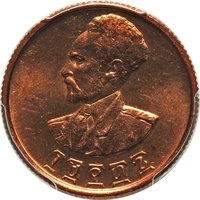
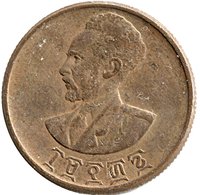
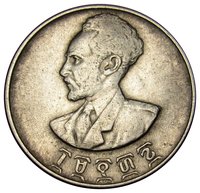
Obverse
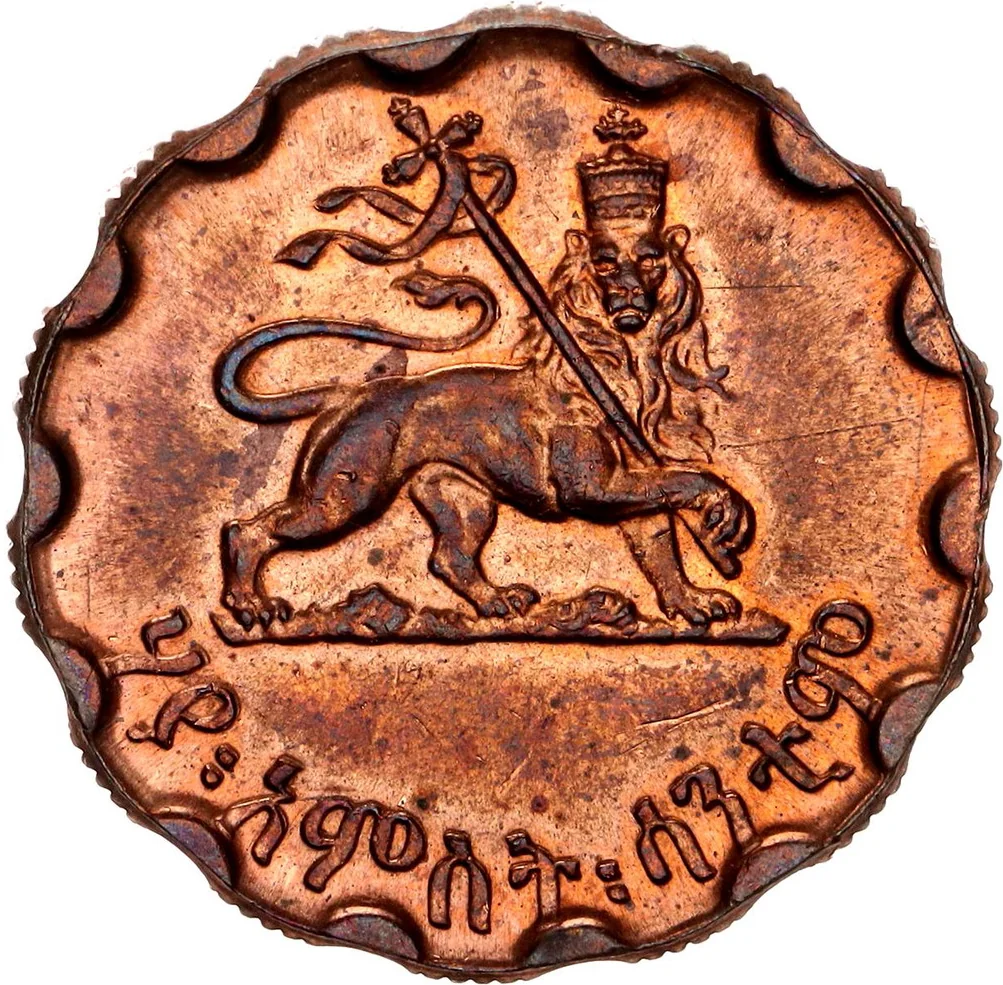
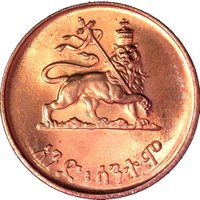
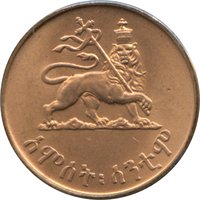
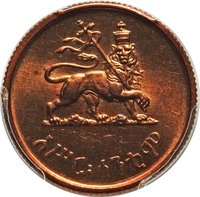
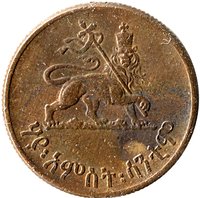
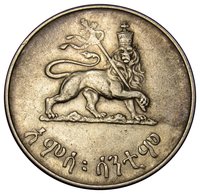
Reverse
Edge
Smooth notches with reeded peaks
Mints
| Name | Mark |
|---|---|
| United States Mint of Philadelphia | — |
Mintings
| Year | Mint Mark | Mintage | Quality | Collection |
|---|---|---|---|---|
| 1944 | — | 30,000,000 |
Historical background
In 1944, the Ethiopian Empire was navigating a complex and transitional currency situation following its liberation from Italian occupation in 1941. The monetary system was fragmented, with several forms of legal tender circulating simultaneously. The official currency was the Ethiopian dollar (also known as the birr), issued by the State Bank of Ethiopia, which had been established in 1942 with British assistance. However, the East African shilling, introduced by the British Military Administration during the war, remained in widespread use, especially for larger transactions and in areas with a strong British military presence. This duality created practical challenges for commerce and government finance.
The primary economic pressure stemmed from severe inflation, a legacy of the occupation and the war economy. The circulation of unbacked Italian lire and the costs of reconstruction strained the new currency's stability. Emperor Haile Selassie's government, with British financial advisors, was focused on establishing monetary sovereignty and stabilizing the economy. A key objective was to phase out the East African shilling and consolidate the Ethiopian dollar as the sole legal tender, a move essential for national prestige and economic independence.
Furthermore, the currency situation was intrinsically linked to Ethiopia's strategic position and foreign influence. British support was crucial for the new bank and currency, but it also came with expectations. The 1944 Anglo-Ethiopian Agreement, which replaced the initial 1942 military pact, included financial clauses and began to reduce British oversight. Thus, the monetary landscape of 1944 was not merely an economic issue but a symbol of Ethiopia's struggle to reassert its full sovereignty while managing the immediate postwar realities of inflation, reconstruction, and lingering external influence.
The primary economic pressure stemmed from severe inflation, a legacy of the occupation and the war economy. The circulation of unbacked Italian lire and the costs of reconstruction strained the new currency's stability. Emperor Haile Selassie's government, with British financial advisors, was focused on establishing monetary sovereignty and stabilizing the economy. A key objective was to phase out the East African shilling and consolidate the Ethiopian dollar as the sole legal tender, a move essential for national prestige and economic independence.
Furthermore, the currency situation was intrinsically linked to Ethiopia's strategic position and foreign influence. British support was crucial for the new bank and currency, but it also came with expectations. The 1944 Anglo-Ethiopian Agreement, which replaced the initial 1942 military pact, included financial clauses and began to reduce British oversight. Thus, the monetary landscape of 1944 was not merely an economic issue but a symbol of Ethiopia's struggle to reassert its full sovereignty while managing the immediate postwar realities of inflation, reconstruction, and lingering external influence.
🌱 Very Common