

1 kopeck – Soviet Union
Add to wishlist
Russia
Context
Years: 1924–1925
Country: Russia
Issuer: Soviet Union
Period:
(1922—1991)
Currency:
(1924—1947)
Demonetized: Yes
Total mintage: 141,806,000
Material
References
Y: #
Numista: #14662
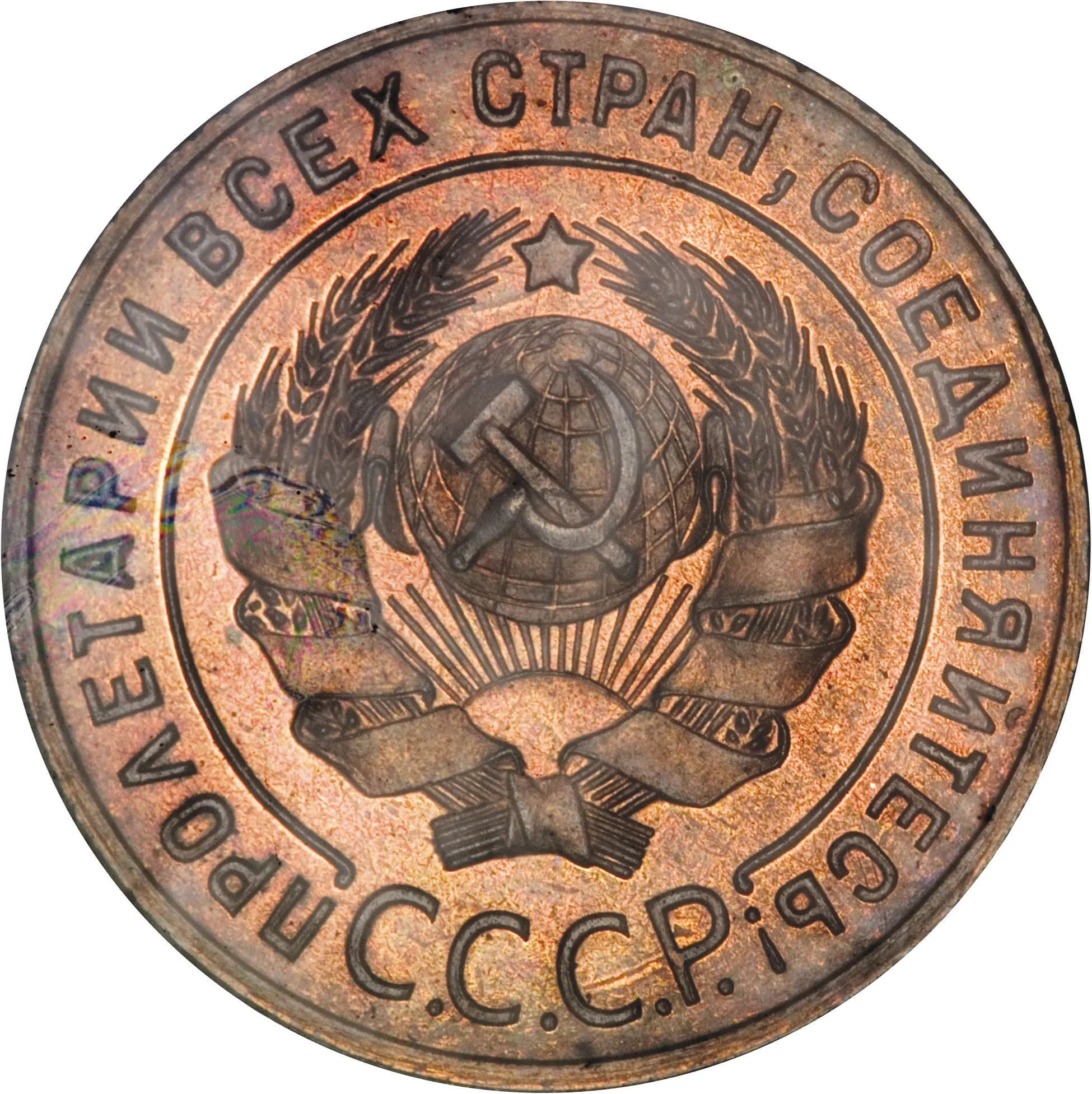
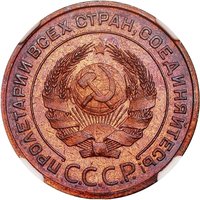
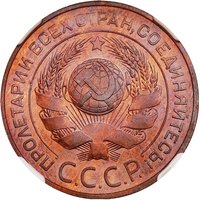
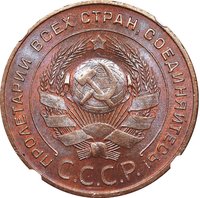
Obverse
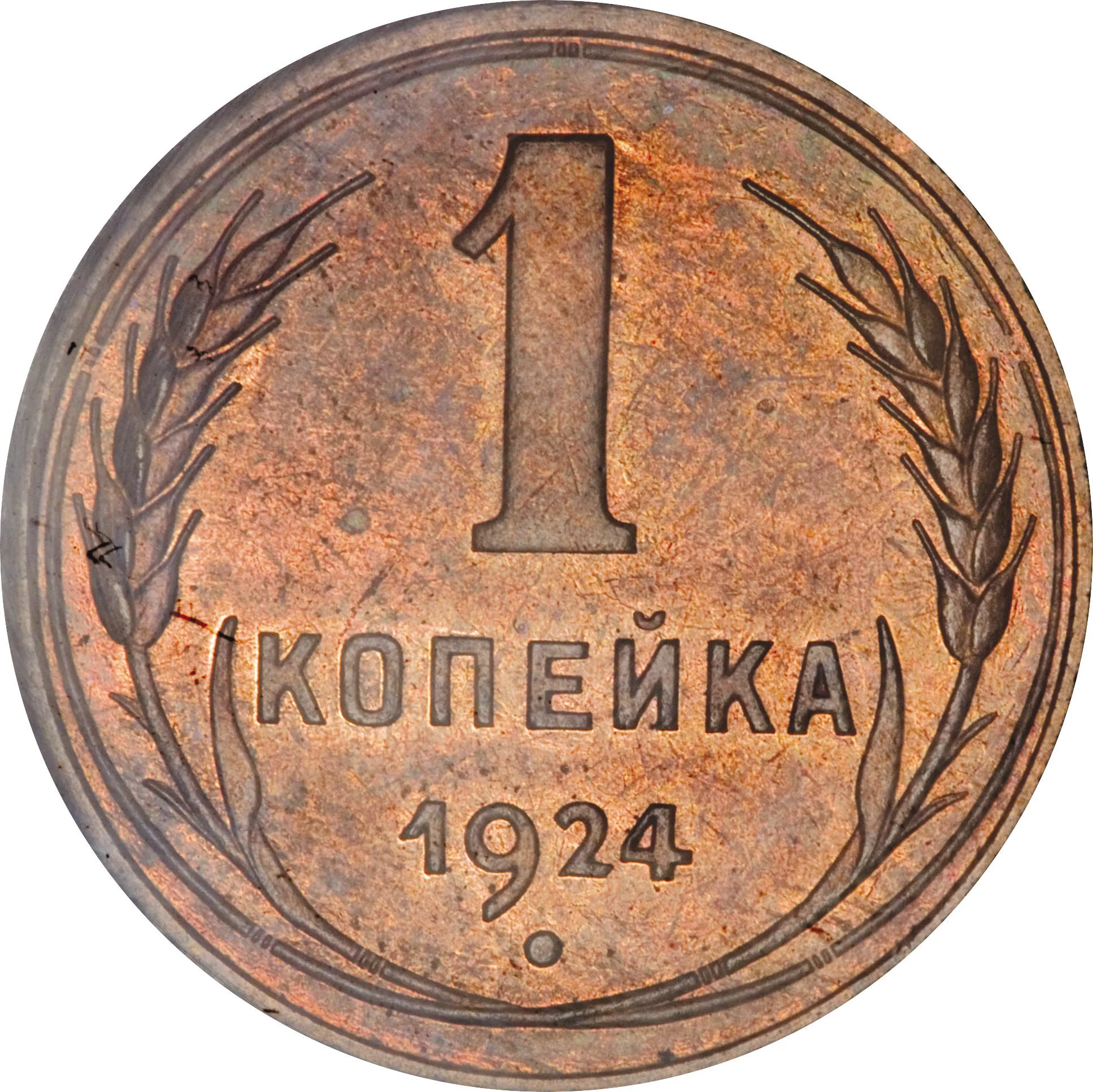
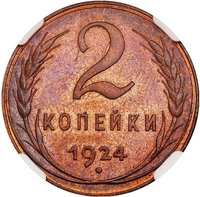
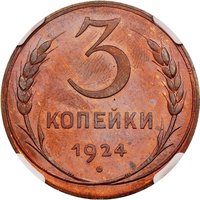
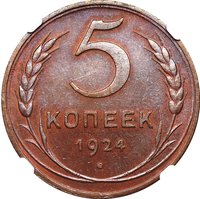
Reverse
Edge
Reeded and plain edge varieties
Categories
| Symbol> Hammer and sickle |
Mintings
| Year | Mint Mark | Mintage | Quality | Collection |
|---|---|---|---|---|
| 1924 | — | — | ||
| 1924 | — | — | Proof | |
| 1925 | — | 141,806,000 |
Historical background
By 1924, the Soviet Union had finally achieved a measure of monetary stability after nearly a decade of chaos. The period following the Revolution and Civil War saw the complete collapse of the Tsarist ruble, replaced by a dizzying array of local currencies, "Sovznaks" (Soviet notes), and even direct barter. Hyperinflation of the Sovznak rendered it virtually worthless, with the state essentially financing itself by printing money, which severely distorted the economy under the New Economic Policy (NEP).
To end this crisis, the government executed a decisive currency reform in 1922-1924, masterminded by Finance Commissar Grigory Sokolnikov. This involved the introduction of a parallel, hard currency—the chervonets—first issued in 1922. Backed by gold (25% coverage) and stable foreign exchange, the chervonets was intended for industrial and wholesale transactions, restoring confidence. In 1924, the reform was completed: the inflationary Sovznaks were demonetized and replaced at a staggering rate of 50 billion old rubles to one new gold ruble. Simultaneously, silver and copper coins were reintroduced for small change.
Thus, 1924 marked the culmination of this process, establishing a unified and stable "gold ruble" system. The new currency, comprised of chervonets notes (10 rubles) and state treasury notes in lower denominations (1, 3, 5 rubles), alongside metal coinage, successfully ended hyperinflation and provided the stable monetary foundation required for the NEP's mixed economy. However, this stability was carefully managed by the state, which retained strict control over the banking system and the flow of credit, ensuring that finance remained subordinated to socialist economic goals.
To end this crisis, the government executed a decisive currency reform in 1922-1924, masterminded by Finance Commissar Grigory Sokolnikov. This involved the introduction of a parallel, hard currency—the chervonets—first issued in 1922. Backed by gold (25% coverage) and stable foreign exchange, the chervonets was intended for industrial and wholesale transactions, restoring confidence. In 1924, the reform was completed: the inflationary Sovznaks were demonetized and replaced at a staggering rate of 50 billion old rubles to one new gold ruble. Simultaneously, silver and copper coins were reintroduced for small change.
Thus, 1924 marked the culmination of this process, establishing a unified and stable "gold ruble" system. The new currency, comprised of chervonets notes (10 rubles) and state treasury notes in lower denominations (1, 3, 5 rubles), alongside metal coinage, successfully ended hyperinflation and provided the stable monetary foundation required for the NEP's mixed economy. However, this stability was carefully managed by the state, which retained strict control over the banking system and the flow of credit, ensuring that finance remained subordinated to socialist economic goals.
🌱 Common