

2½ gulden – Netherlands
Add to wishlist
Netherlands
Context
Year: 1840
Issuer: Netherlands
Ruler: William I
Currency:
(1817—2001)
Demonetized: Yes
Total mintage: 44,376
Material
References
KM: #
Numista: #43773
Value
Exchange value: 2.5 NLG
Bullion value: $59.30
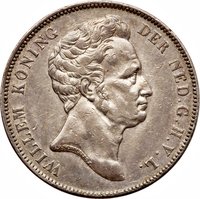
Obverse
Description:
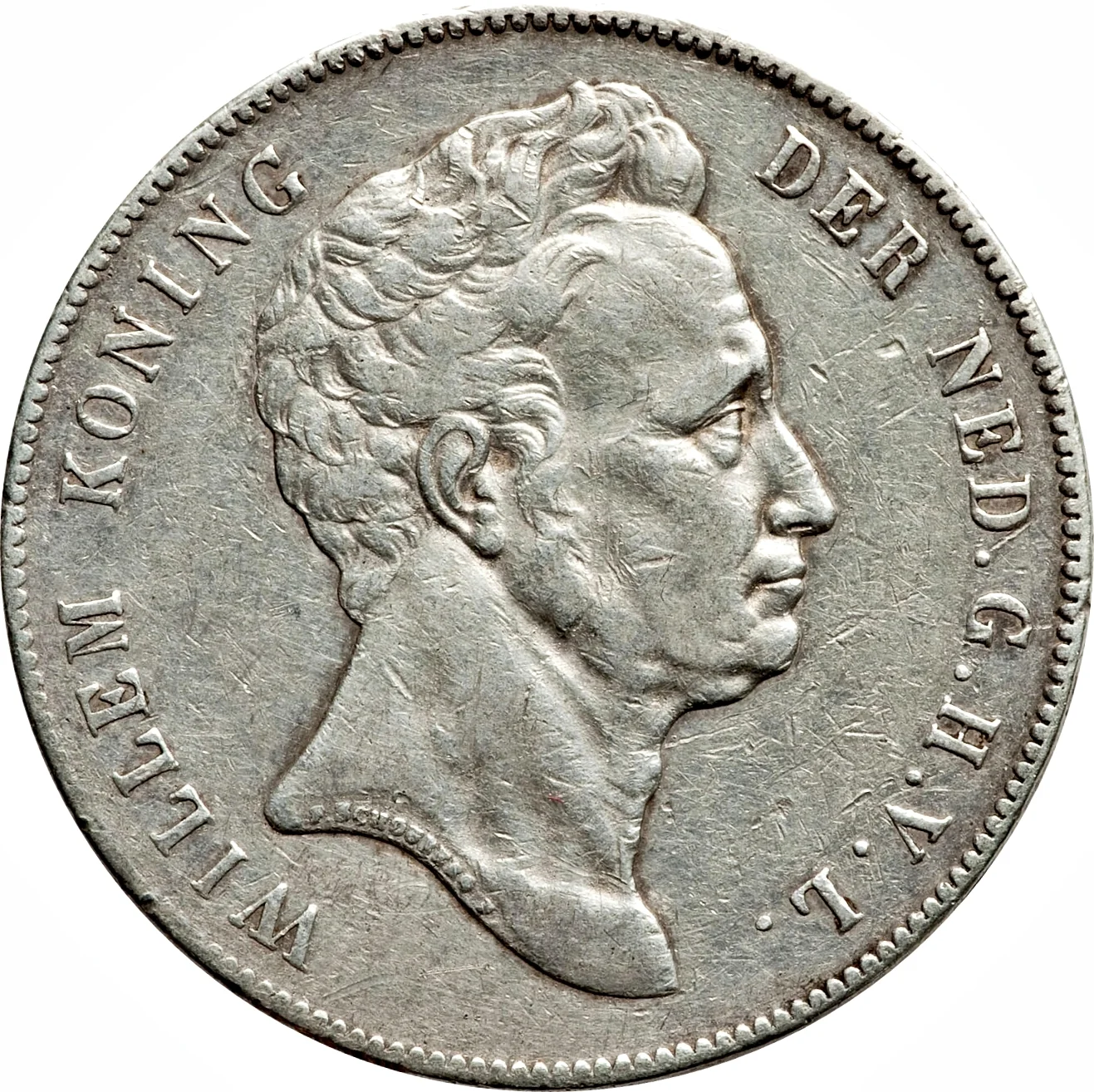
King Willem head, right profile
Inscription:
WILLEM KONING DER NED G. H. V. L.
I. P. SCHOUBERG F.
I. P. SCHOUBERG F.
Translation:
Willem King of the Netherlands Grand Duke of Luxembourg
J. P. Schouberg made this
J. P. Schouberg made this
Script: Latin
Engraver: Johannes Petrus Schouberg
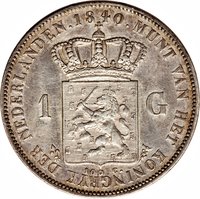
Reverse
Edge
Categories
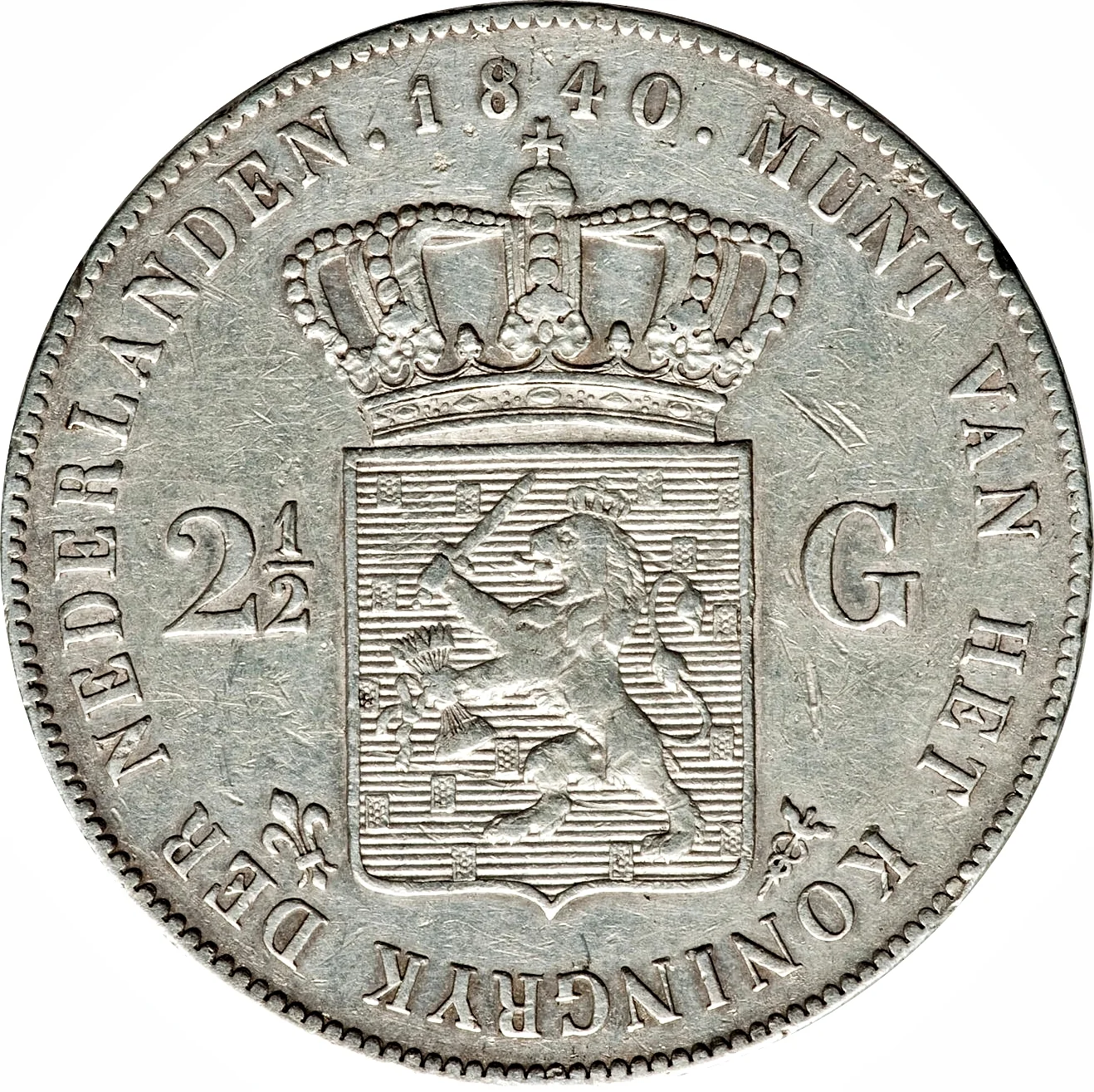
| Symbol> Crown |
| Symbols> Coat of Arms |
Mints
| Name | Mark |
|---|---|
| Royal Dutch Mint | — |
Mintings
| Year | Mint Mark | Mintage | Quality | Collection |
|---|---|---|---|---|
| 1840 | — | 44,376 | ||
| 1840 | — | — | Proof |
Historical background
In 1840, the Netherlands operated under a bimetallic monetary system, legally defined by the Money Act of 1816 (Muntwet). This system established both silver and gold as legal tender, with their values fixed in relation to the guilder (or gulden). The primary coin was the silver guilder, but gold coins, such as the ten-guilder piece, were also minted. However, the fixed legal ratio between silver and gold did not always align with fluctuating market prices, leading to practical challenges where one metal would often be undervalued and subsequently exported, causing a shortage.
The period leading up to 1840 was one of financial strain and transition. The costly Belgian Revolution (1830-1839) and the subsequent separation of Belgium had heavily drained the Dutch treasury, leading to significant state debt. Furthermore, the global economic climate was affecting the money supply. A notable phenomenon was the influx of silver from the Dutch East Indies (modern-day Indonesia), which began to increase the silver supply relative to gold, subtly undermining the bimetallic equilibrium. This contributed to a de facto silver standard, where silver became the principal basis for the currency in everyday use.
Consequently, by 1840, the currency system was stable in law but faced underlying pressures. The government maintained the official bimetallic standard, but in practice, the circulation of full-value silver coins was paramount. The financial burdens of the previous decade had also spurred discussions about banking and monetary reform, which would eventually lead to the establishment of the Dutch Bank (De Nederlandsche Bank) as a central bank with exclusive note-issuing rights in 1814, though its full modernizing influence on the currency was still developing. Thus, the situation was one of a formally sound system grappling with the practical realities of post-war finance and shifting bullion markets.
The period leading up to 1840 was one of financial strain and transition. The costly Belgian Revolution (1830-1839) and the subsequent separation of Belgium had heavily drained the Dutch treasury, leading to significant state debt. Furthermore, the global economic climate was affecting the money supply. A notable phenomenon was the influx of silver from the Dutch East Indies (modern-day Indonesia), which began to increase the silver supply relative to gold, subtly undermining the bimetallic equilibrium. This contributed to a de facto silver standard, where silver became the principal basis for the currency in everyday use.
Consequently, by 1840, the currency system was stable in law but faced underlying pressures. The government maintained the official bimetallic standard, but in practice, the circulation of full-value silver coins was paramount. The financial burdens of the previous decade had also spurred discussions about banking and monetary reform, which would eventually lead to the establishment of the Dutch Bank (De Nederlandsche Bank) as a central bank with exclusive note-issuing rights in 1814, though its full modernizing influence on the currency was still developing. Thus, the situation was one of a formally sound system grappling with the practical realities of post-war finance and shifting bullion markets.
⭐ Rare