

20 escudos – Cape Verde
Add to wishlist
Cape Verde
Context
Years: 1977–1982
Issuer: Cape Verde
Period:
(since 1975)
Currency:
(since 1914)
Demonetization: 1995
Material
Diameter: 31.1 mm
Weight: 12 g
Thickness: 2.2 mm
Shape: Round
Composition: Copper-nickel
Technique: Milled
Alignment: Coin alignment
flip
References
KM: #
Numista: #4376
Value
Exchange value: 20 CVE
Obverse
Description:
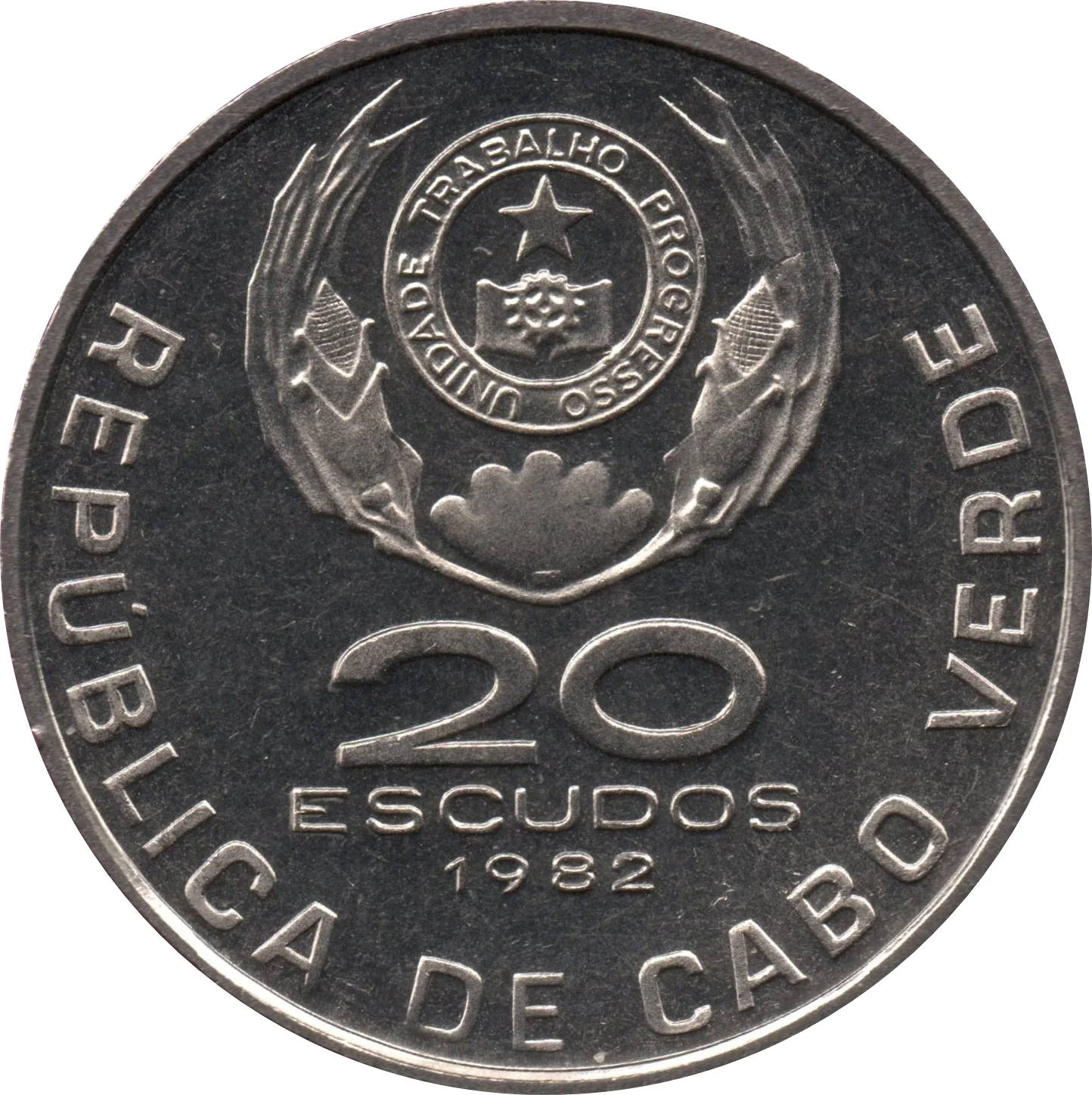
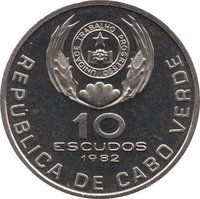
Emblem in wreath above value and year.
Inscription:
TRABALHO PROGRESSO UNIDADE
REPÚBLICA DE CABO VERDE
20
ESCUDOS
1982
REPÚBLICA DE CABO VERDE
20
ESCUDOS
1982
Translation:
Work Progress Unity
Republic of Cape Verde
20
Escudos
1982
Republic of Cape Verde
20
Escudos
1982
Script: Latin
Language: Portuguese
Reverse
Description:
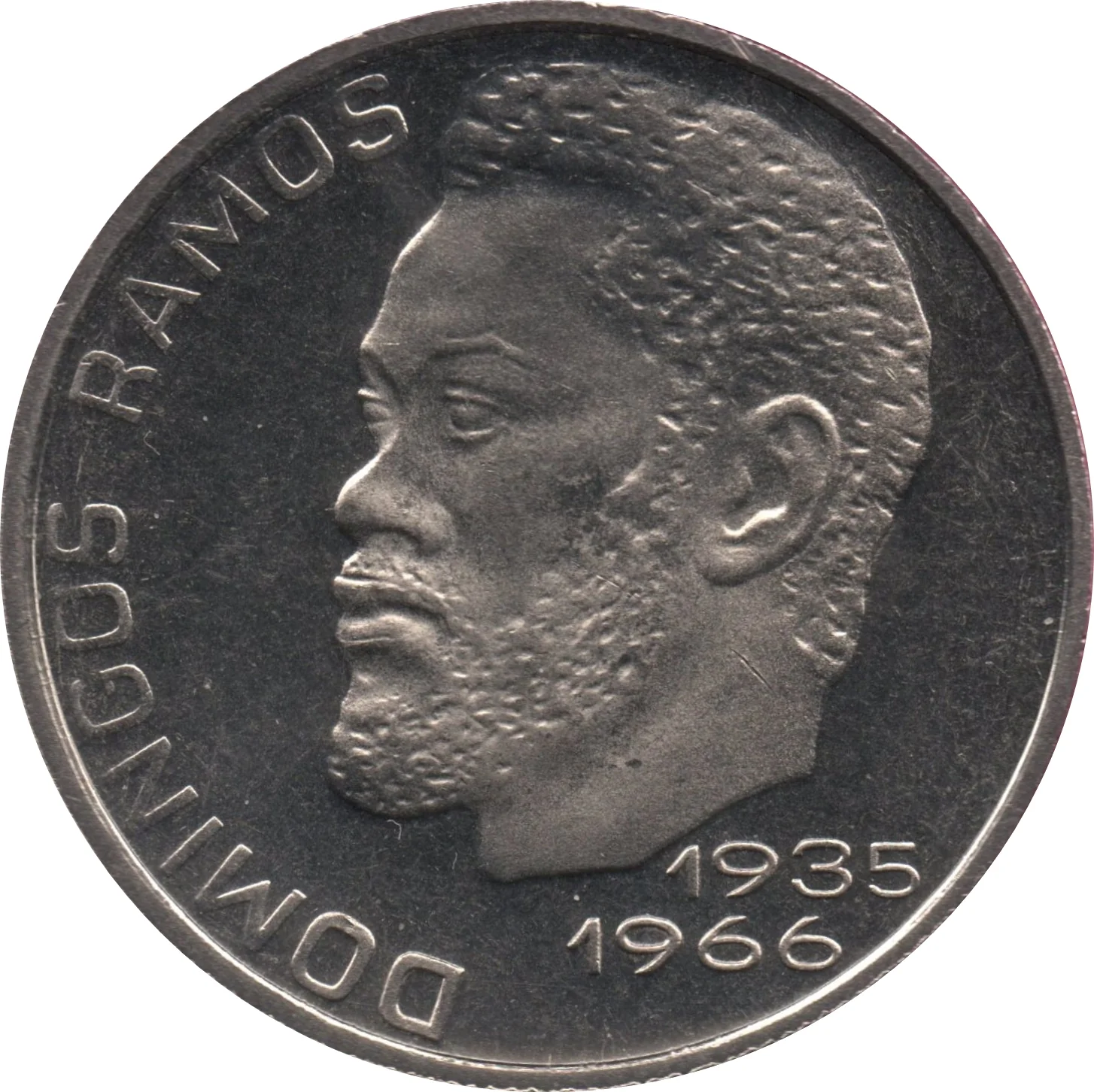
Domingos Ramos, a founding PAIGC commander.
Inscription:
DOMINGOS RAMOS
1935-1966
1935-1966
Script: Latin
Edge
Reeded
Mintings
| Year | Mint Mark | Mintage | Quality | Collection |
|---|---|---|---|---|
| 1977 | — | — | ||
| 1980 | — | — | ||
| 1982 | — | — |
Historical background
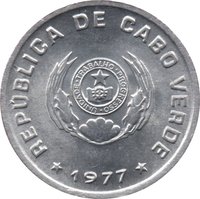
In 1977, the currency situation in Cape Verde was fundamentally defined by its recent independence from Portugal in 1975. The new nation inherited the Portuguese escudo as its official currency, operating within the escudo zone. This arrangement provided initial monetary stability and facilitated crucial trade with its former colonial power, which remained a primary economic partner. However, this system also symbolized a continued economic dependency, limiting the young government's autonomous control over its monetary policy and national financial sovereignty.
Economically, the country faced severe challenges that strained its currency framework. Cape Verde was grappling with the aftermath of a prolonged drought, widespread poverty, and a lack of natural resources, leading to heavy reliance on imports and foreign aid. The escudo's value and stability were therefore externally influenced, primarily by Portugal's economic conditions and the management of the Lisbon-based Banco de Portugal. This external dependency was a point of contention for a leadership seeking to build a distinct national identity and self-sufficient economy.
Consequently, 1977 was a period of transition and planning. The government, led by the African Party for the Independence of Cape Verde (PAICV), was actively laying the groundwork for a national currency as a cornerstone of economic independence. This process culminated in 1977 with the establishment of the Bank of Cape Verde (Banco de Cabo Verde), the nation's first central bank. While the Cape Verdean escudo would not be officially introduced until 1978, the foundational monetary institution created in 1977 was the critical first step in decoupling from the Portuguese escudo and asserting domestic control over the country's monetary affairs.
Economically, the country faced severe challenges that strained its currency framework. Cape Verde was grappling with the aftermath of a prolonged drought, widespread poverty, and a lack of natural resources, leading to heavy reliance on imports and foreign aid. The escudo's value and stability were therefore externally influenced, primarily by Portugal's economic conditions and the management of the Lisbon-based Banco de Portugal. This external dependency was a point of contention for a leadership seeking to build a distinct national identity and self-sufficient economy.
Consequently, 1977 was a period of transition and planning. The government, led by the African Party for the Independence of Cape Verde (PAICV), was actively laying the groundwork for a national currency as a cornerstone of economic independence. This process culminated in 1977 with the establishment of the Bank of Cape Verde (Banco de Cabo Verde), the nation's first central bank. While the Cape Verdean escudo would not be officially introduced until 1978, the foundational monetary institution created in 1977 was the critical first step in decoupling from the Portuguese escudo and asserting domestic control over the country's monetary affairs.
🌱 Common