

1000 won – North Korea
Add to wishlist
North Korea
Context
Year: 2022
Juche Year:: 111
Issuer: North Korea
Period:
(since 1948)
Currency:
(since 2009)
Demonetization: 9 February 2024
Material
Diameter: 24 mm
Weight: 5.6 g
Thickness: 1.9 mm
Shape: Round
Composition: Copper-nickel
Technique: Milled
Alignment: Medal alignment
flip
References
Numista: #437285
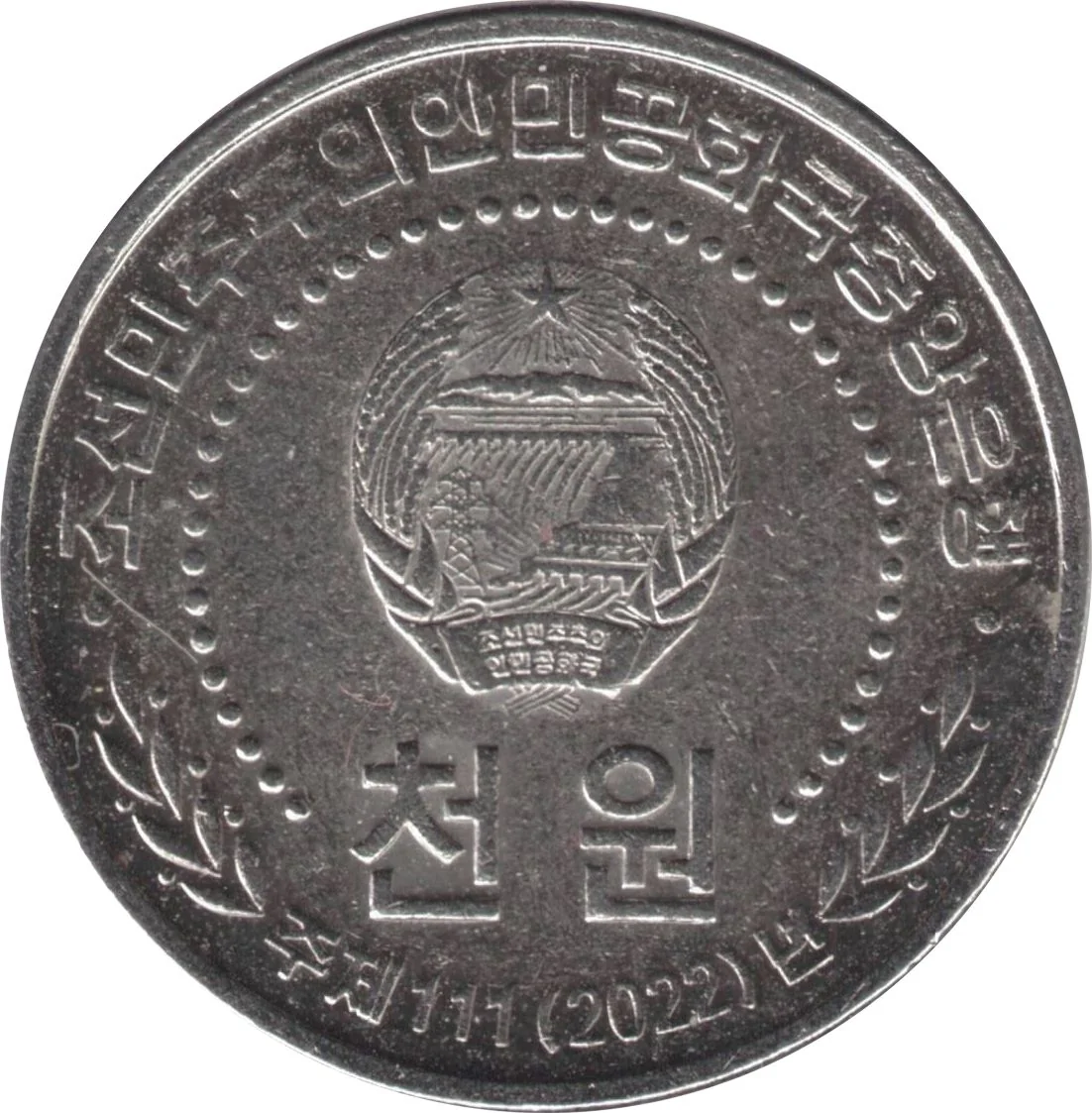
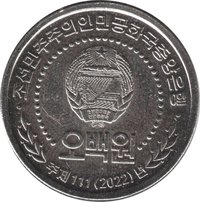
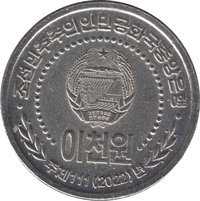
Obverse
Description:
National emblem.
Script: Hangul
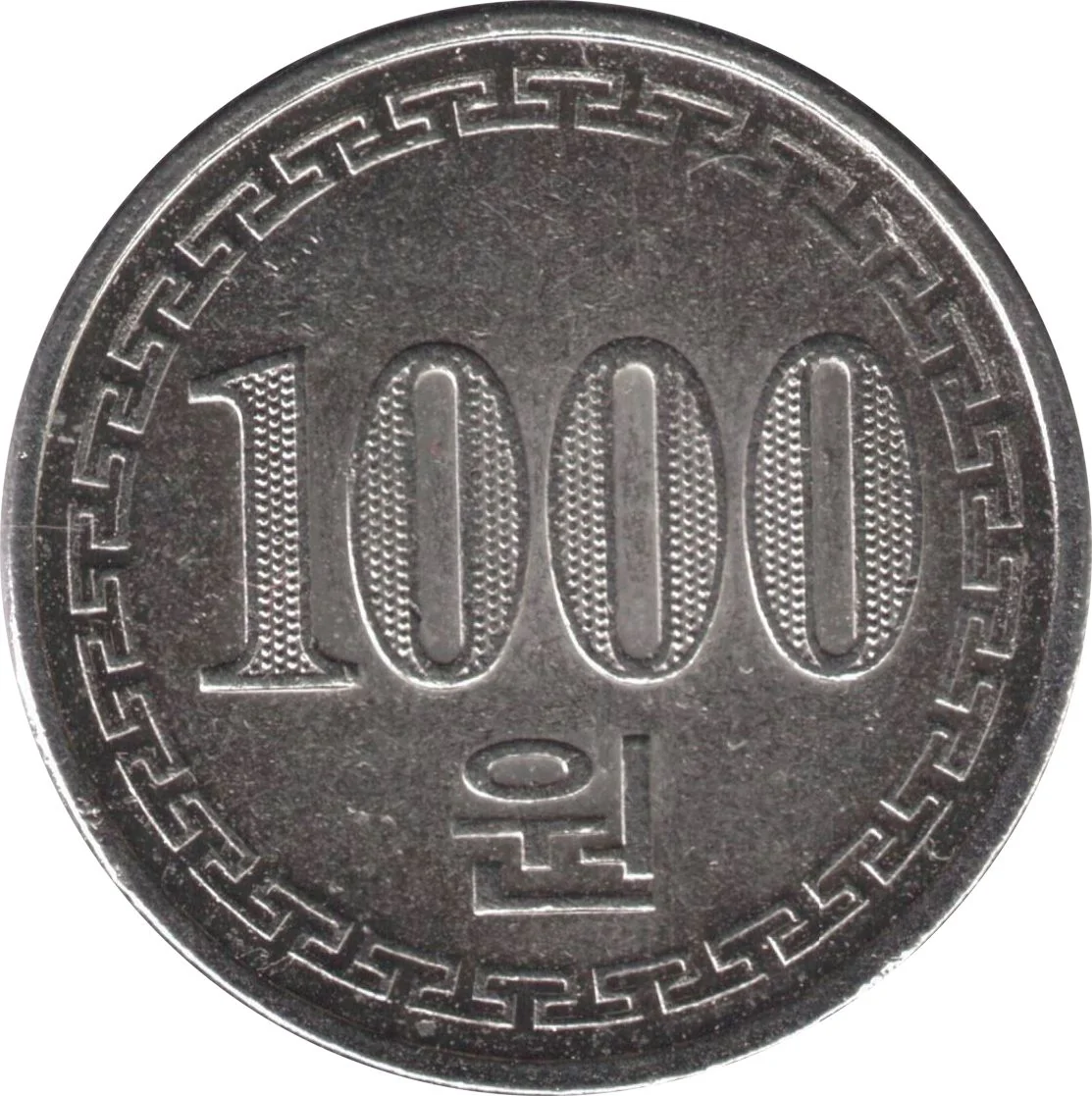
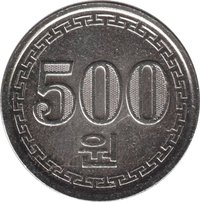
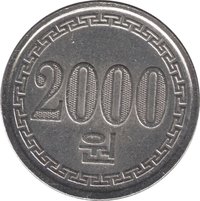
Reverse
Description:
Denomination.
Script: Hangul
Edge
Milled.
Categories
| Symbols> Coat of Arms |
Mints
| Name | Mark |
|---|---|
| Pugang Coins Corp | — |
Mintings
| Year | Mint Mark | Mintage | Quality | Collection |
|---|---|---|---|---|
| 2022 | — | — |
Historical background
In 2022, North Korea's currency situation remained characterized by extreme isolation, state control, and chronic instability. The national currency, the Korean People's Won (KPW), operates within a complex multi-tiered system with vastly different official and black-market exchange rates. The government maintains an official rate pegged artificially high, but this is used only for state accounting. The real value is set by the markets in Jangmadang (private markets), where the won had dramatically depreciated against foreign currencies like the US dollar and Chinese yuan, a trend accelerated by the pandemic. This severe devaluation reflected a lack of confidence in the currency and contributed to persistent inflation, eroding the purchasing power of ordinary citizens.
The economic landscape was dominated by the continued fallout from self-imposed border closures, begun in 2020 to combat COVID-19. These closures severely restricted legal foreign trade, exacerbating shortages of goods and further fueling demand for stable foreign currency to purchase imported items, both legally and on the black market. Consequently, a de facto dollarization (and yuan-ization) of the economy advanced, with foreign currency becoming essential for any significant transaction in the markets, even as the state periodically cracked down on its use. The regime's focus on funding its military and nuclear programs, coupled with international sanctions, diverted resources away from stabilizing the civilian economy and the currency.
The government's response involved tight control rather than liberalization. Authorities continued to enforce strict regulations on the use of foreign currency, while reportedly manipulating the exchange rate for select state enterprises and elite transactions. There were no signs of major currency reforms—a traumatic memory from the disastrous 2009 revaluation—but rather efforts to maintain the status quo through coercion and surveillance. Ultimately, the 2022 currency situation underscored the fundamental contradictions of the North Korean economy: a formally socialist system increasingly dependent on informal markets and foreign cash, with the won serving as a secondary currency for the general populace amidst widespread economic hardship.
The economic landscape was dominated by the continued fallout from self-imposed border closures, begun in 2020 to combat COVID-19. These closures severely restricted legal foreign trade, exacerbating shortages of goods and further fueling demand for stable foreign currency to purchase imported items, both legally and on the black market. Consequently, a de facto dollarization (and yuan-ization) of the economy advanced, with foreign currency becoming essential for any significant transaction in the markets, even as the state periodically cracked down on its use. The regime's focus on funding its military and nuclear programs, coupled with international sanctions, diverted resources away from stabilizing the civilian economy and the currency.
The government's response involved tight control rather than liberalization. Authorities continued to enforce strict regulations on the use of foreign currency, while reportedly manipulating the exchange rate for select state enterprises and elite transactions. There were no signs of major currency reforms—a traumatic memory from the disastrous 2009 revaluation—but rather efforts to maintain the status quo through coercion and surveillance. Ultimately, the 2022 currency situation underscored the fundamental contradictions of the North Korean economy: a formally socialist system increasingly dependent on informal markets and foreign cash, with the won serving as a secondary currency for the general populace amidst widespread economic hardship.

✨ Legendary