

1 Paisa – Bengal Presidency
India

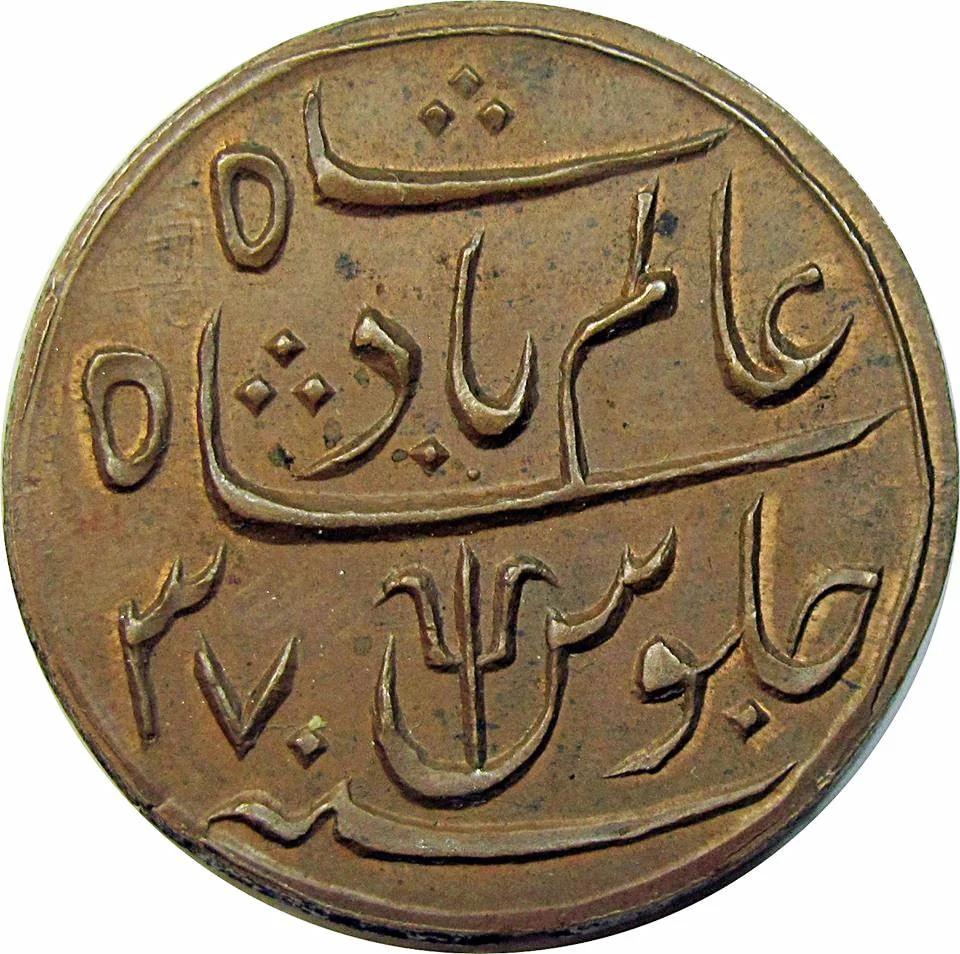
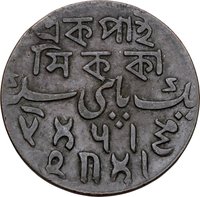
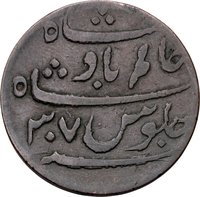
Obverse
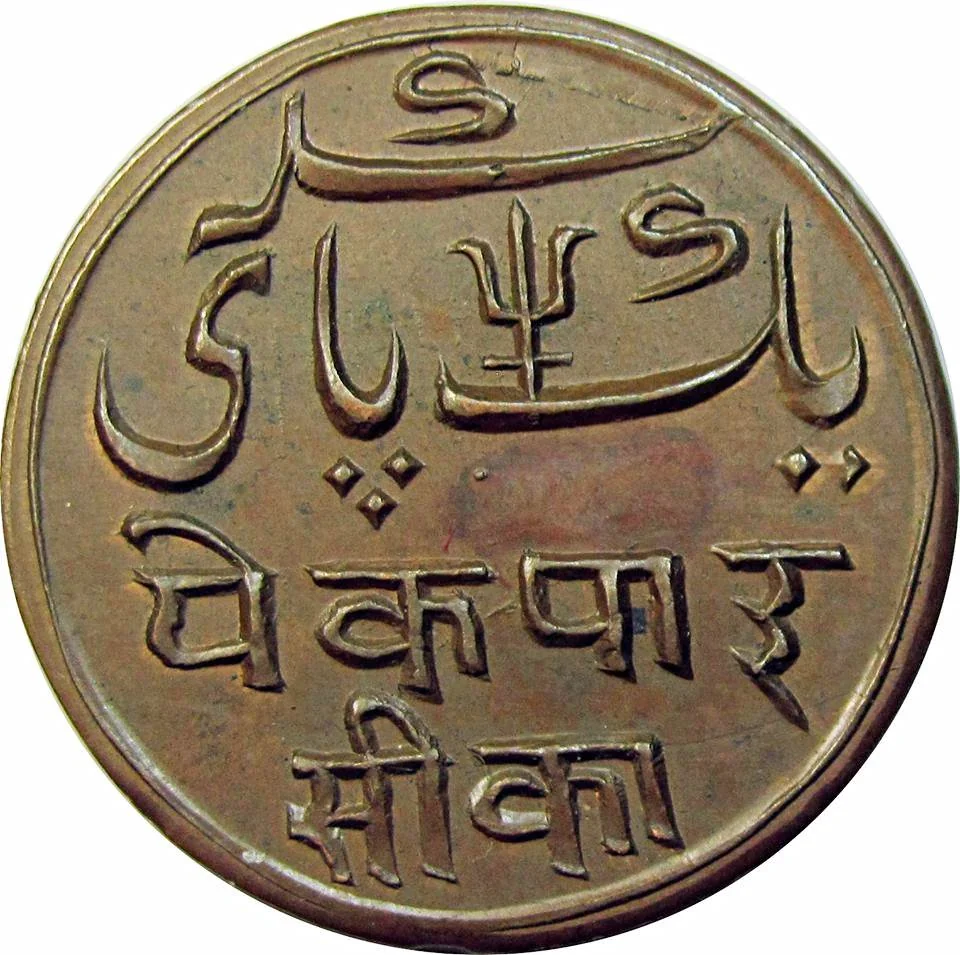
Reverse
Edge
Plain
Mintings
| Year | Mint Mark | Mintage | Quality | Collection |
|---|---|---|---|---|
| — | — | — |
Historical background
By 1827, the Bengal Presidency's currency situation was a complex and often chaotic system in transition, still bearing the scars of earlier crises. The official currency was the Company's silver rupee, but its value and circulation were undermined by a severe shortage of small change for daily transactions and the persistent circulation of obsolete and debased coins. A key problem was the scarcity of sicca rupees (the current standard) and the widespread use of older, lighter sicca rupees from the Calcutta mint, alongside a bewildering variety of regional and historical coins, leading to constant disputes over exchange rates and valuations in bazaars.
This monetary confusion was a direct legacy of reforms attempted earlier in the decade. In 1823, the British had introduced the "Company's Rupee" to replace the Mughal-style sicca, aiming for uniformity. However, the reform failed to provide an adequate supply of subsidiary copper coins (pice) and small silver fractions (annas). Consequently, the public continued to rely on a motley assortment of French, Portuguese, and Mughal-era coins, as well as privately minted and often debased tokens, creating a fertile ground for forgery and loss of public trust in the currency.
The situation in 1827 was therefore one of administrative frustration and economic inefficiency. The government recognized the problems—notably in the 1824-25 investigations by the Committee of Indian Currency—but was yet to implement a decisive solution. Trade and revenue collection were hampered by the need for complex calculations and assays. This unstable environment set the stage for the more comprehensive reforms that would follow, particularly the great recoinage of 1835, which finally imposed a uniform British Indian rupee across the Presidency and beyond.
This monetary confusion was a direct legacy of reforms attempted earlier in the decade. In 1823, the British had introduced the "Company's Rupee" to replace the Mughal-style sicca, aiming for uniformity. However, the reform failed to provide an adequate supply of subsidiary copper coins (pice) and small silver fractions (annas). Consequently, the public continued to rely on a motley assortment of French, Portuguese, and Mughal-era coins, as well as privately minted and often debased tokens, creating a fertile ground for forgery and loss of public trust in the currency.
The situation in 1827 was therefore one of administrative frustration and economic inefficiency. The government recognized the problems—notably in the 1824-25 investigations by the Committee of Indian Currency—but was yet to implement a decisive solution. Trade and revenue collection were hampered by the need for complex calculations and assays. This unstable environment set the stage for the more comprehensive reforms that would follow, particularly the great recoinage of 1835, which finally imposed a uniform British Indian rupee across the Presidency and beyond.
💎 Extremely Rare