

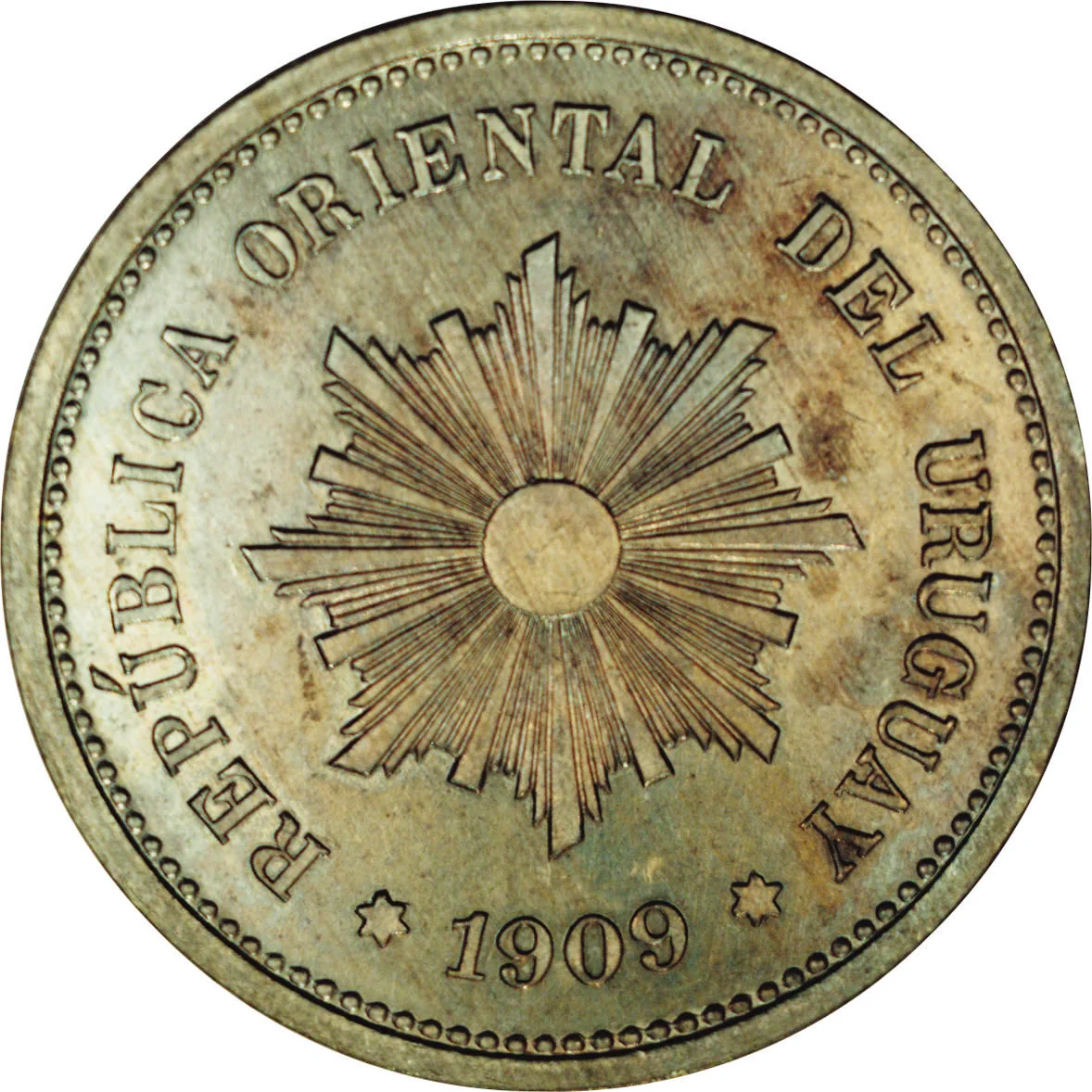
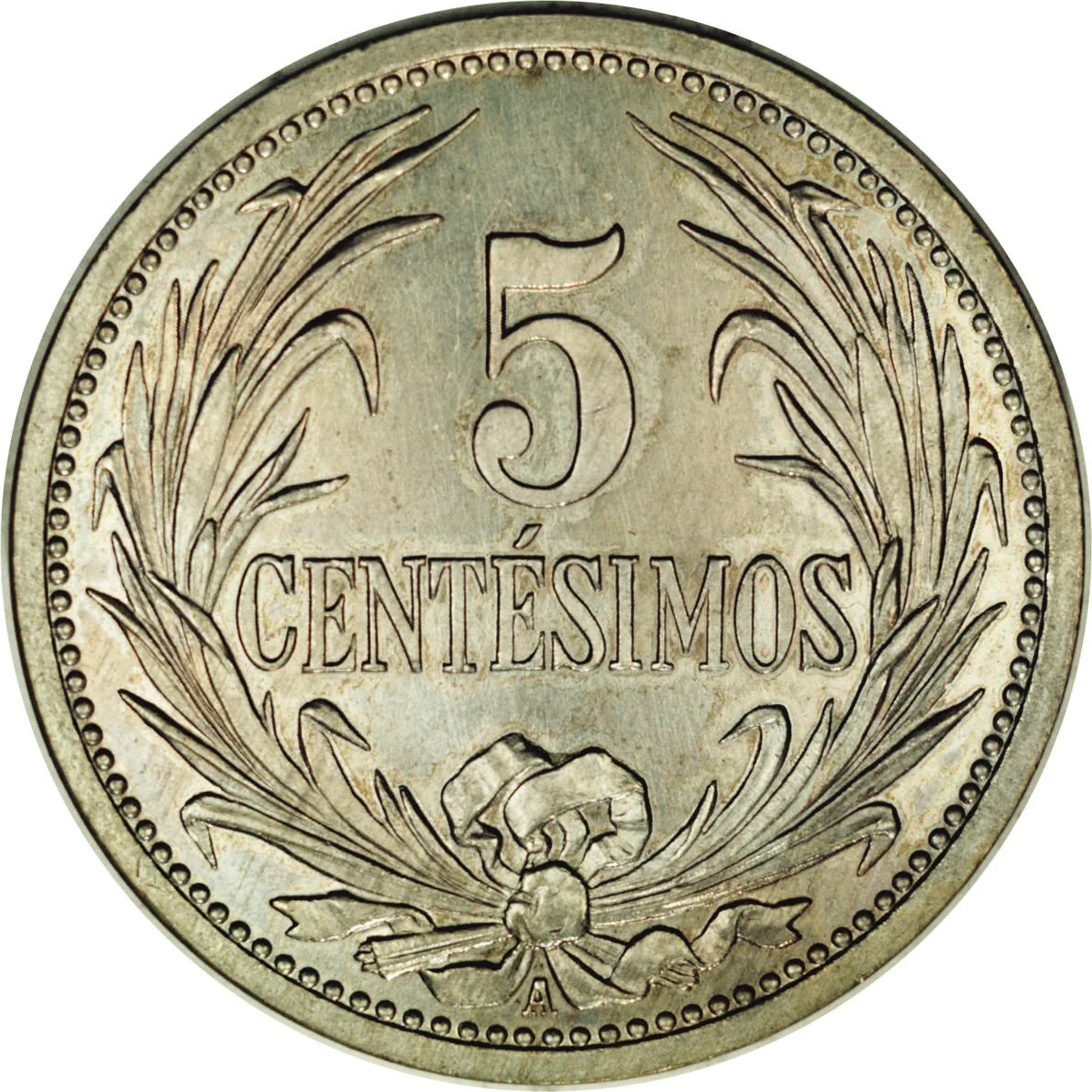
5 centésimos – Uruguay
Add to wishlist
Uruguay
Context
Years: 1901–1941
Issuer: Uruguay
Period:
(since 1825)
Currency:
(1863—1975)
Demonetization: 1954
Total mintage: 23,001,350
Material
References
KM: #
Numista: #4363
Value
Exchange value: 0.05 UYP
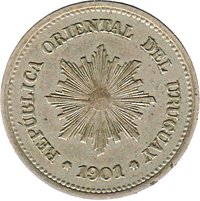
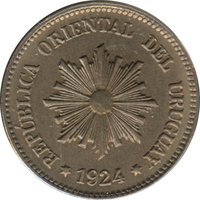
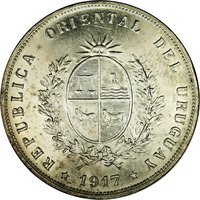
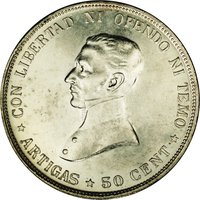
Obverse
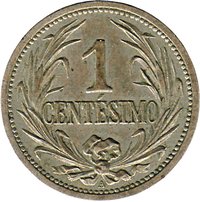
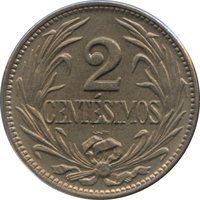
Reverse
Edge
Plain
Mints
| Name | Mark |
|---|---|
| Société Française de Monnayage | — |
| Aron Hirsch HKM | A |
| Münze Österreich | A |
| Casa de Moneda de Chile | (So) |
Mintings
Historical background
In 1901, Uruguay's currency situation was characterized by significant instability and transition, rooted in the economic policies of the late 19th century. Following a period of banknote over-issuance and fiscal deficits, the country had entered a deep financial crisis in the 1890s, leading to the collapse of its largest bank, the Banco Nacional, in 1891. By the turn of the century, the Uruguayan peso was severely depreciated and inconvertible, with its value fluctuating wildly based on political and economic sentiment rather than a solid metallic standard. The monetary system was a complex and unreliable patchwork of paper notes issued by various surviving private banks and the government itself.
This instability was a major impediment to economic growth and foreign investment. President Juan Lindolfo Cuestas (1899-1903) recognized the urgent need for reform, and his administration took decisive steps toward establishing a modern, unified, and stable currency. The pivotal moment came with the passage of the Law of Monetary Conversion in 1896, but its implementation was a central task during this period. The law aimed to return Uruguay to the gold standard, creating a new unit of currency, the peso oro (gold peso), which was defined as a specific weight of fine gold and intended to be fully convertible.
Consequently, the year 1901 was part of a critical consolidation phase. The government worked to centralize note issuance, retire the old depreciated paper, and build the gold reserves necessary to guarantee convertibility. This process, which would culminate in the creation of the Banco de la República Oriental del Uruguay as the sole issuer in 1896 (though its role was being solidified in this era), laid the essential groundwork for the monetary stability that Uruguay would enjoy in the early 20th century. Thus, the currency situation in 1901 was one of active reform, moving away from chaotic plurality and toward a state-managed, gold-backed system.
This instability was a major impediment to economic growth and foreign investment. President Juan Lindolfo Cuestas (1899-1903) recognized the urgent need for reform, and his administration took decisive steps toward establishing a modern, unified, and stable currency. The pivotal moment came with the passage of the Law of Monetary Conversion in 1896, but its implementation was a central task during this period. The law aimed to return Uruguay to the gold standard, creating a new unit of currency, the peso oro (gold peso), which was defined as a specific weight of fine gold and intended to be fully convertible.
Consequently, the year 1901 was part of a critical consolidation phase. The government worked to centralize note issuance, retire the old depreciated paper, and build the gold reserves necessary to guarantee convertibility. This process, which would culminate in the creation of the Banco de la República Oriental del Uruguay as the sole issuer in 1896 (though its role was being solidified in this era), laid the essential groundwork for the monetary stability that Uruguay would enjoy in the early 20th century. Thus, the currency situation in 1901 was one of active reform, moving away from chaotic plurality and toward a state-managed, gold-backed system.
Series: 1901 Uruguay circulation coins
🌱 Very Common