

50 centésimos – Uruguay
Add to wishlist
Uruguay
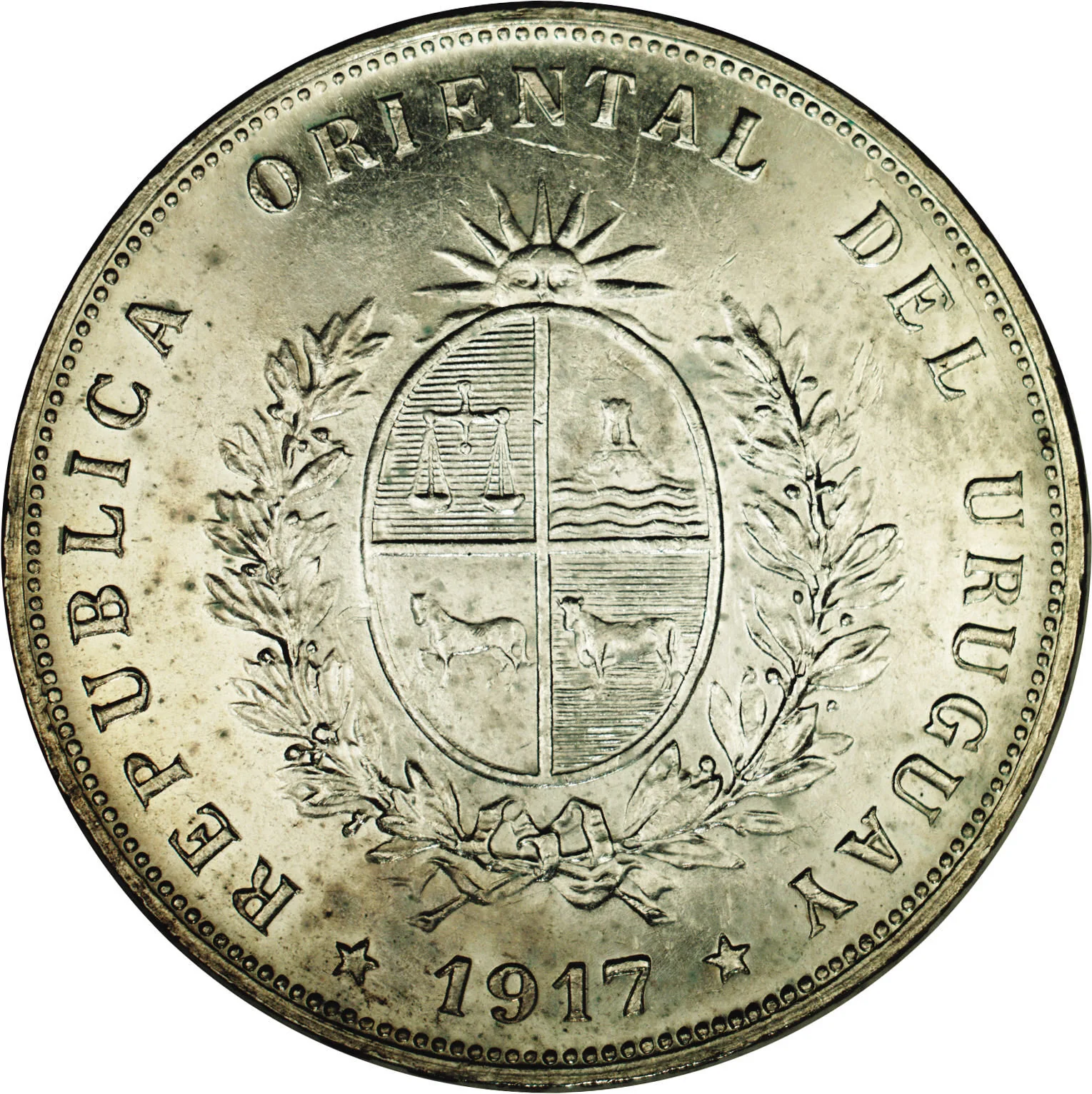
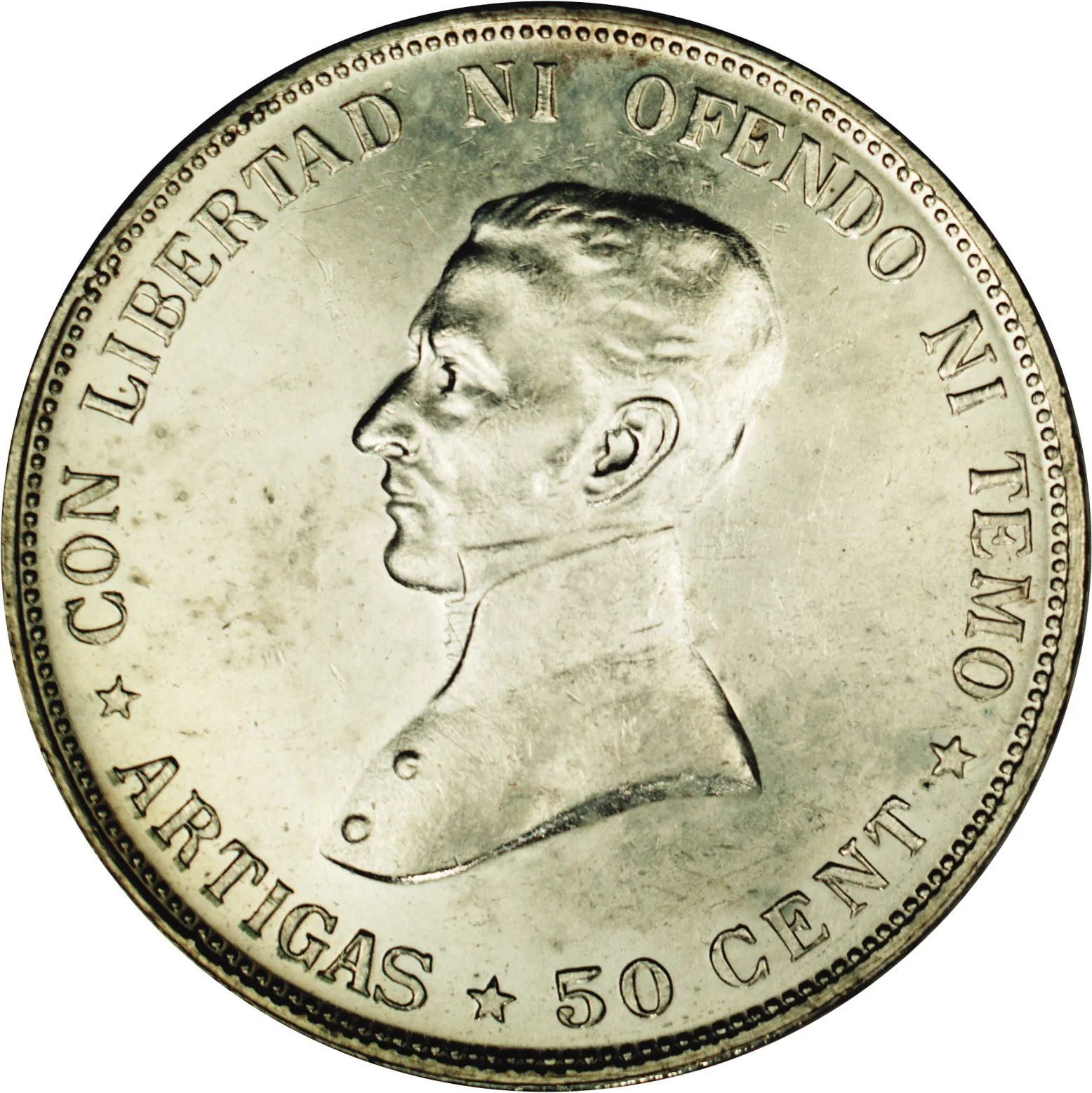
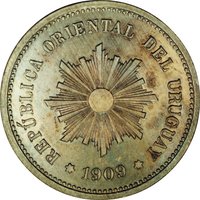
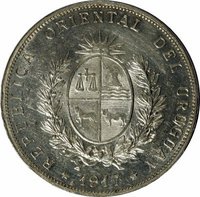
Obverse
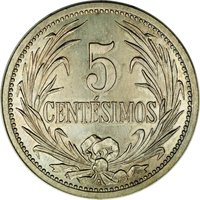
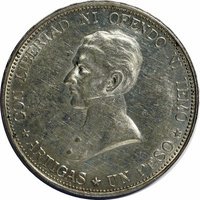
Reverse
Edge
Smooth with lettering
Legend:
REPUBLICA ORIENTAL DEL URUGUAY * 1917 *
Translation:
ORIENTAL REPUBLIC OF URUGUAY * 1917 *
Language: Spanish
Categories
| Person> Military leader |
| Person> Politician |
| Symbols> Coat of Arms |
| Symbol> Sun |
| Symbol> Wreath |
Mints
| Name | Mark |
|---|---|
| Buenos Aires | — |
Mintings
| Year | Mint Mark | Mintage | Quality | Collection |
|---|---|---|---|---|
| 1916 | — | 400,000 | ||
| 1917 | — | 5,600,000 |
Historical background
In 1916, Uruguay's currency situation was characterized by stability and confidence, a notable achievement within the historically volatile financial landscape of South America. This stability was largely the result of the Conversion Law of 1896, which had placed the country on the gold standard. The Uruguayan peso was pegged to a fixed quantity of gold, and the Caja de Conversión (Conversion Office) guaranteed the exchange of paper money for gold upon demand. This system, managed conservatively, had successfully attracted foreign investment and fostered economic growth, making the Uruguayan peso one of the most reliable currencies in the region at the time.
However, this stability existed against a backdrop of significant external pressure due to World War I. The conflict in Europe disrupted international trade and capital flows, creating a strain on Uruguay's gold reserves as export markets became uncertain. While the gold standard remained officially intact in 1916, the war caused a global retreat from gold convertibility, and Uruguay began to feel the pinch. The government, led by President Feliciano Viera, was forced to navigate carefully, balancing the commitment to monetary orthodoxy with the practical need to manage the economy through the wartime disruption.
Consequently, 1916 represents a pivotal moment of calm before a significant monetary shift. The solid foundations of the Conversion Law provided a buffer, and the currency itself remained strong. Yet, the pressures of the war ultimately proved unsustainable. Within a few years, in 1919, Uruguay would be compelled to suspend gold convertibility, marking the end of this era of classical monetary stability and ushering in a new period of managed currency and increased state intervention in the financial system to cope with postwar economic challenges.
However, this stability existed against a backdrop of significant external pressure due to World War I. The conflict in Europe disrupted international trade and capital flows, creating a strain on Uruguay's gold reserves as export markets became uncertain. While the gold standard remained officially intact in 1916, the war caused a global retreat from gold convertibility, and Uruguay began to feel the pinch. The government, led by President Feliciano Viera, was forced to navigate carefully, balancing the commitment to monetary orthodoxy with the practical need to manage the economy through the wartime disruption.
Consequently, 1916 represents a pivotal moment of calm before a significant monetary shift. The solid foundations of the Conversion Law provided a buffer, and the currency itself remained strong. Yet, the pressures of the war ultimately proved unsustainable. Within a few years, in 1919, Uruguay would be compelled to suspend gold convertibility, marking the end of this era of classical monetary stability and ushering in a new period of managed currency and increased state intervention in the financial system to cope with postwar economic challenges.
🌱 Fairly Common