

20 centésimos – Uruguay
Add to wishlist
Uruguay
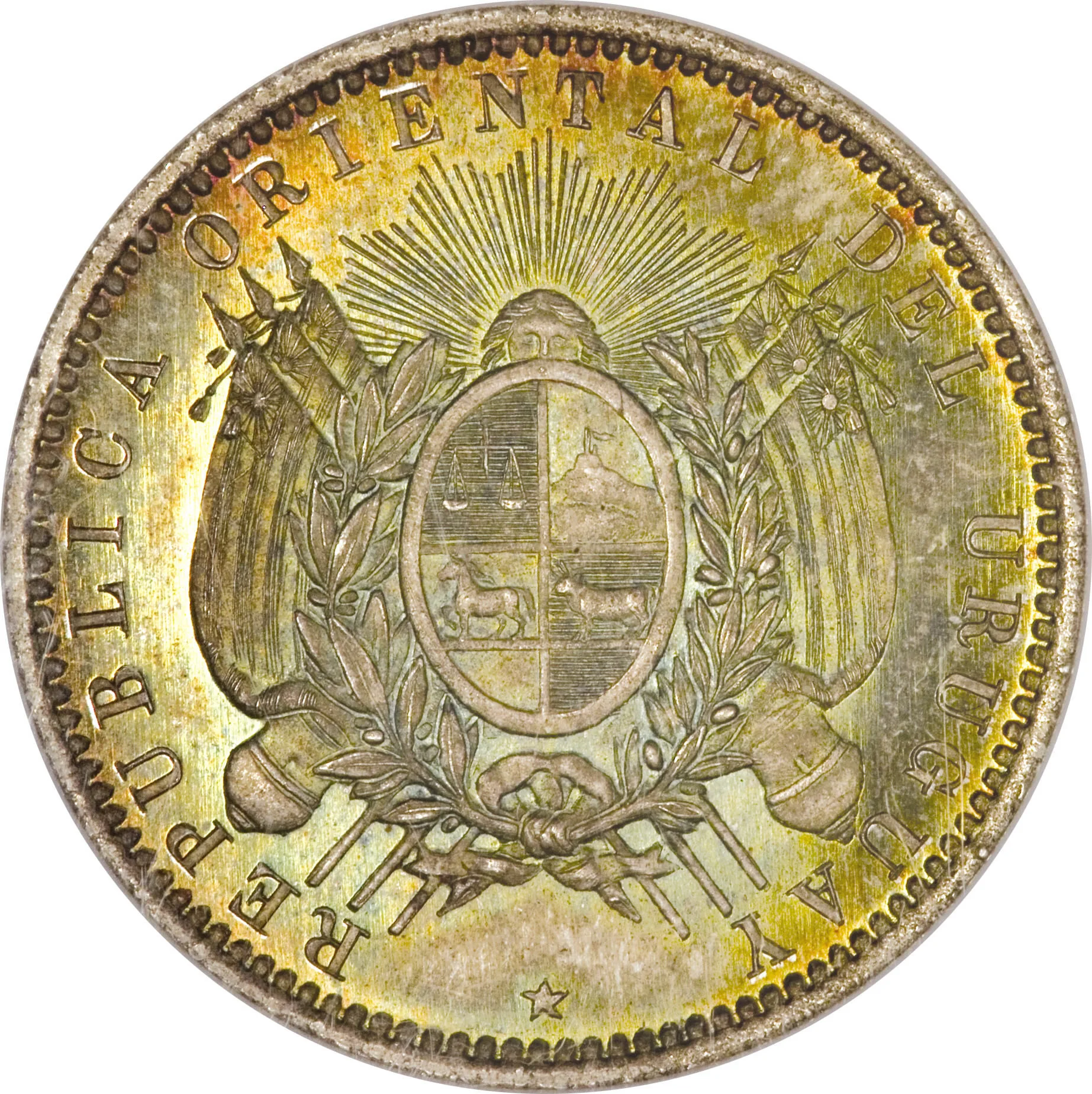
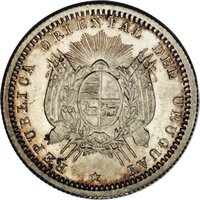
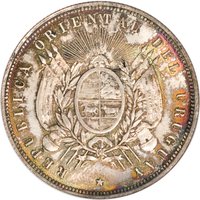
Obverse
Description:
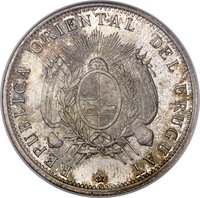
Historic coat of arms encircled by country name.
Inscription:
REPUBLICA ORIENTAL DEL URUGUAY
*
*
Translation:
Eastern Republic of the Uruguay
Script: Latin
Language: Spanish
Engraver: Désiré-Albert Barre
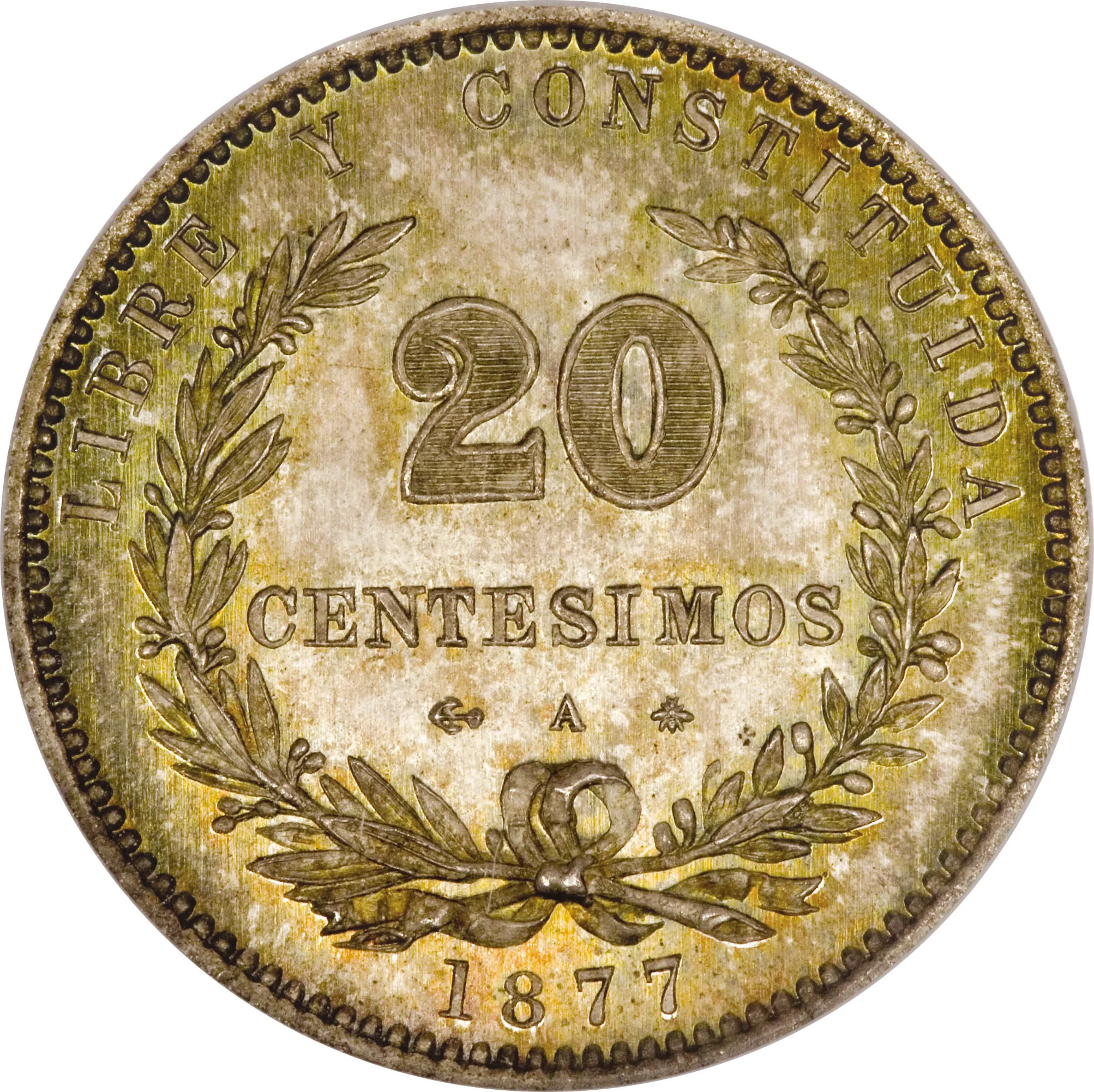
Reverse
Description:
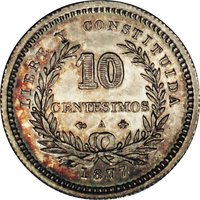
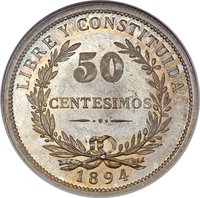
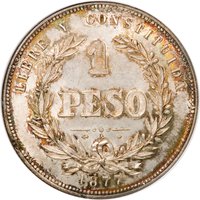
Center with value, encircled by laurel and olive wreaths tied below. Legend surrounds all, date in exergue.
1877: Paris mint, "A" below value, left anchor (engraver Barre), right bee (director de Bussière).
1893: Santiago mint, mint mark "So".
1877: Paris mint, "A" below value, left anchor (engraver Barre), right bee (director de Bussière).
1893: Santiago mint, mint mark "So".
Inscription:
LIBRE Y CONSTITUIDA
20
CENTESIMOS
A
1877
20
CENTESIMOS
A
1877
Script: Latin
Engraver: Désiré-Albert Barre
Edge
Reeded
Mints
| Name | Mark |
|---|---|
| Monnaie de Paris | A |
| Casa de Moneda de Chile | (So) |
Historical background
In 1877, Uruguay was grappling with a severe monetary crisis rooted in decades of fiscal instability and excessive paper currency issuance. Since independence, successive governments, particularly during the Great War (1839-1851) and the War of the Triple Alliance (1864-1870), had financed deficits by printing inconvertible paper pesos, known as pesos fuertes. This led to a chaotic dual currency system where gold-based coins (patacón) circulated at a significant premium to the vastly depreciated paper money, causing price distortions, hampering foreign trade, and eroding public trust.
The situation reached a critical point in the mid-1870s under the military government of Lorenzo Latorre, who seized power promising order and financial reform. The paper peso had depreciated to roughly one-fourth of its nominal gold value, and the state's finances were paralyzed by debt and a lack of metallic reserves. The crisis stifled economic growth, as merchants and foreign investors operated with great uncertainty, and the government struggled to meet its obligations on the international market.
Consequently, 1877 was a pivotal year of reckoning and proposed action. Latorre's government, advised by Minister of Finance José C. Bustamante, recognized that monetary stabilization was essential for legitimizing the regime and attracting foreign capital. This set the stage for the decisive monetary reform of 1880, which would eventually introduce the peso nacional and establish a gold standard. Thus, the currency situation in 1877 was characterized by the acute pressures of hyperinflation and disorder, forcing the authorities to lay the groundwork for the structural reforms that would define the following decade.
The situation reached a critical point in the mid-1870s under the military government of Lorenzo Latorre, who seized power promising order and financial reform. The paper peso had depreciated to roughly one-fourth of its nominal gold value, and the state's finances were paralyzed by debt and a lack of metallic reserves. The crisis stifled economic growth, as merchants and foreign investors operated with great uncertainty, and the government struggled to meet its obligations on the international market.
Consequently, 1877 was a pivotal year of reckoning and proposed action. Latorre's government, advised by Minister of Finance José C. Bustamante, recognized that monetary stabilization was essential for legitimizing the regime and attracting foreign capital. This set the stage for the decisive monetary reform of 1880, which would eventually introduce the peso nacional and establish a gold standard. Thus, the currency situation in 1877 was characterized by the acute pressures of hyperinflation and disorder, forcing the authorities to lay the groundwork for the structural reforms that would define the following decade.
Series: 1877 Uruguay circulation coins
🌱 Fairly Common