

5 Toman – Iran
Non-circulating coins
Commemoration: The 15th year of Fath Ali's reign.
Iran
Context
Year: 1812
Islamic (Hijri) Year: 1227
Issuer: Iran 
Ruler: Fath-Ali Shah
Currency:
(1825—1932)
Demonetized: Yes
Material
Weight: 26.87 g
Gold weight: 26.87 g
Shape: Irregular round
Composition: Gold
Magnetic: No
Technique: Hammered
Alignment: Coin alignment
flip
References
Numista: #435621
Value
Bullion value: $4474.78
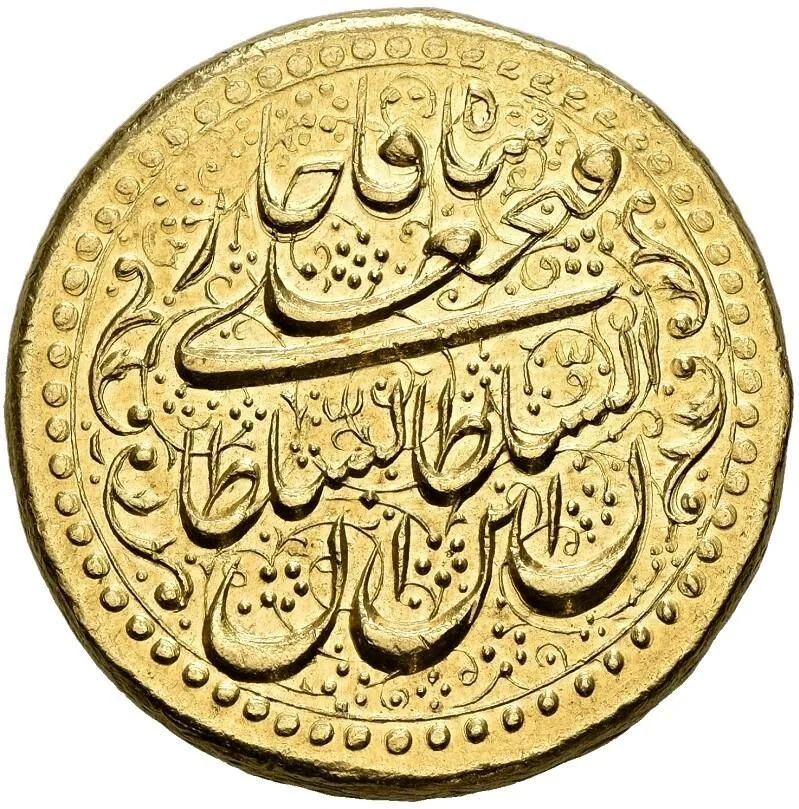
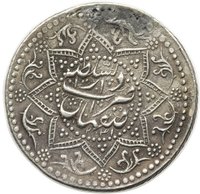
Obverse
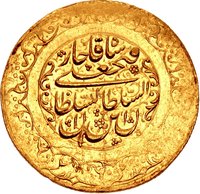
Inscription:
السّلطان ابن السّلطان فتحعلی شاه قاجار
Translation:
The Sultan, son of the Sultan, Fath-Ali Shah Qajar
Script: Persian (nastaliq)
Language: Arabic
Reverse
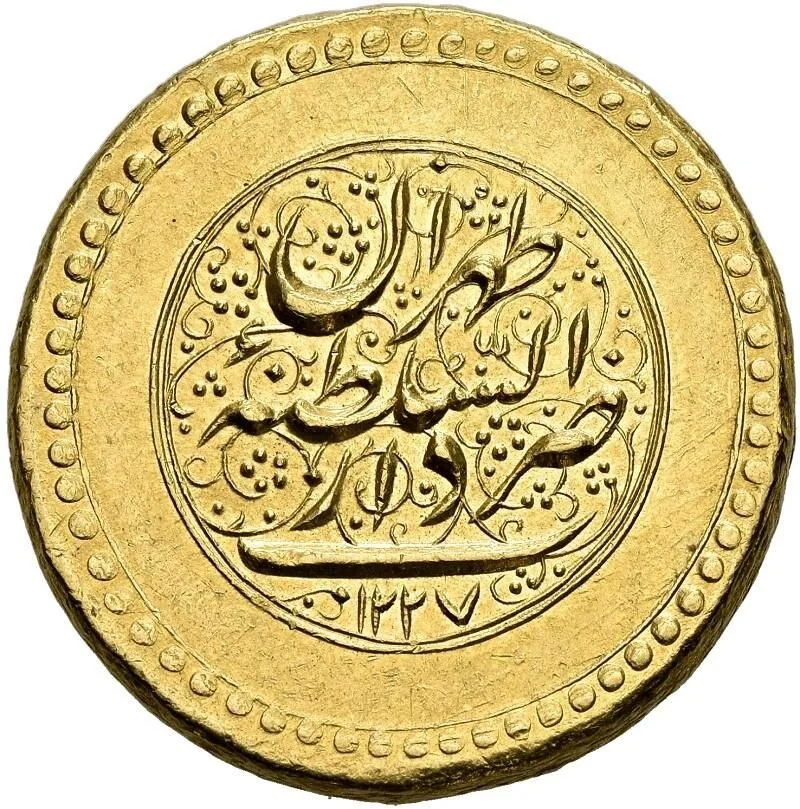
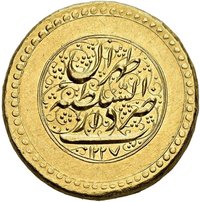
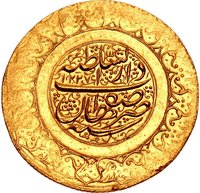
Inscription:
ضرب دارالسّلطنه طهران
۱۲۲۷
۱۲۲۷
Translation:
Struck in the Abode of the Sultanate, Tehran
1227
1227
Script: Persian (nastaliq)
Language: Persian
Edge
Mints
| Name | Mark |
|---|---|
| Tehran | طهران |
Mintings
| Year | Mint Mark | Mintage | Quality | Collection |
|---|---|---|---|---|
| 1812 | — | — |
Historical background
In 1812, Iran's currency system was characterized by a complex and debased bimetallic structure, heavily strained by both internal mismanagement and external conflict. The primary units were the silver qiran (also spelled kran) and the gold toman (worth 10 qiran), alongside a plethora of copper coins for small transactions. However, the state's chronic fiscal shortfalls, driven by extravagant court expenditures and a decentralized provincial tax system, led to repeated currency debasement. Rulers would frequently reduce the silver content in newly minted coins to generate immediate revenue, resulting in a severe loss of public confidence and a chaotic circulation of coins of varying intrinsic values from different mints and reigns.
This monetary instability was acutely exacerbated by the ongoing Russo-Persian War (1804-1813), which was nearing its disastrous conclusion for Iran. The war effort had drained the Qajar treasury, forcing Fath-Ali Shah to resort to even more extreme debasement to pay his armies and buy tribal loyalties. Furthermore, the conflict disrupted trade routes and economic productivity, diminishing the tax base and creating shortages of precious metals. The situation was compounded by the widespread use of foreign coins, particularly Russian rubles and Maria Theresa thalers, in border regions and major trading centers, which further undermined the national currency's authority.
Consequently, by 1812, Iran suffered from severe inflation, a lack of standardized coinage, and a deep monetary crisis that reflected the broader weakness of the Qajar state. The currency's instability hampered commerce, eroded state finances, and placed a heavy burden on the peasantry and urban poor. This precarious economic backdrop set the stage for the even greater hardships that would follow the signing of the Treaty of Gulistan in 1813, which imposed a massive indemnity of 20 million rubles on Iran, further depleting its silver reserves and deepening the monetary disorder for decades to come.
This monetary instability was acutely exacerbated by the ongoing Russo-Persian War (1804-1813), which was nearing its disastrous conclusion for Iran. The war effort had drained the Qajar treasury, forcing Fath-Ali Shah to resort to even more extreme debasement to pay his armies and buy tribal loyalties. Furthermore, the conflict disrupted trade routes and economic productivity, diminishing the tax base and creating shortages of precious metals. The situation was compounded by the widespread use of foreign coins, particularly Russian rubles and Maria Theresa thalers, in border regions and major trading centers, which further undermined the national currency's authority.
Consequently, by 1812, Iran suffered from severe inflation, a lack of standardized coinage, and a deep monetary crisis that reflected the broader weakness of the Qajar state. The currency's instability hampered commerce, eroded state finances, and placed a heavy burden on the peasantry and urban poor. This precarious economic backdrop set the stage for the even greater hardships that would follow the signing of the Treaty of Gulistan in 1813, which imposed a massive indemnity of 20 million rubles on Iran, further depleting its silver reserves and deepening the monetary disorder for decades to come.
✨ Legendary