

1 Qiran – Iran
Iran
Context
Year: 1816
Islamic (Hijri) Year: 1231
Issuer: Iran 
Ruler: Fath-Ali Shah
Currency:
(1825—1932)
Demonetized: Yes
Material
References
Numista: #139411
Value
Bullion value: $19.87
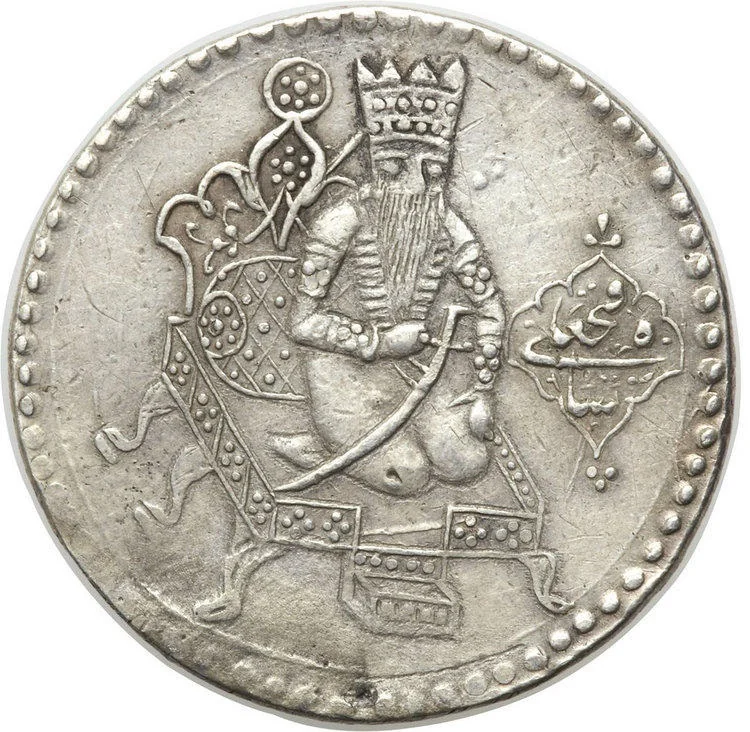
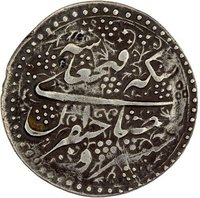
Obverse
Description:
Fath Ali kneeling on his throne.
Inscription:
فتحعلی شاه
Translation:
Victorious Ali Shah
Language: Persian
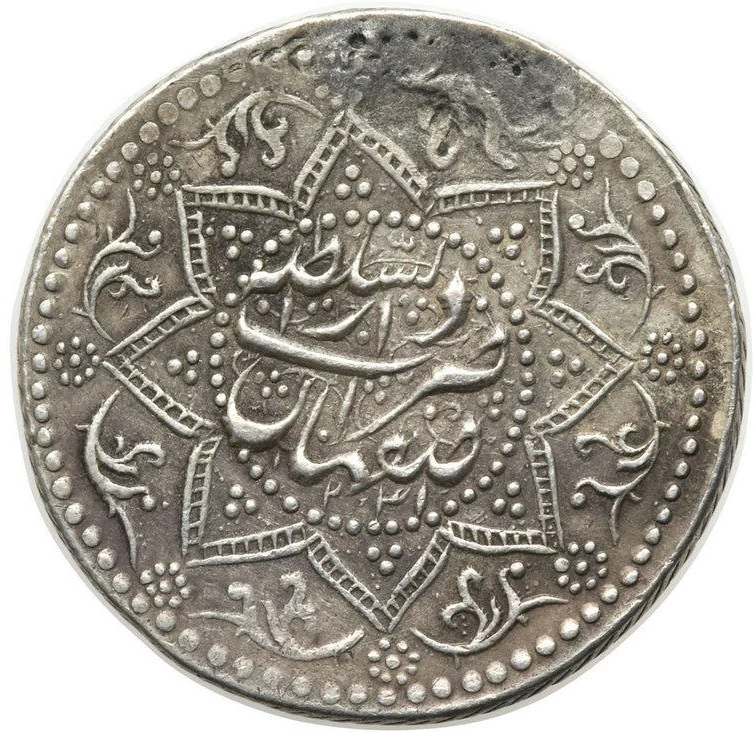
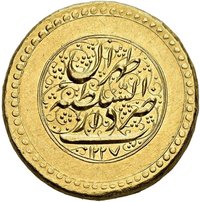
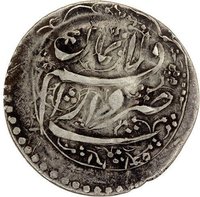
Reverse
Inscription:
ضرب دارالسلطنه اصفهان
۱۲۳۱
۱۲۳۱
Translation:
Struck in Dar al-Saltanah Isfahan
1231
1231
Language: Persian
Edge
Reeded
Mints
| Name | Mark |
|---|---|
| Isfahan | اصفهان |
Mintings
| Year | Mint Mark | Mintage | Quality | Collection |
|---|---|---|---|---|
| 1816 | — | — |
Historical background
In 1816, Iran’s currency system was a complex and fragmented reflection of the country’s political and economic instability under the Qajar dynasty, then ruled by Fath-Ali Shah. The central state minted silver coins, primarily the rial and the toman (equal to 10 rials), but their weight and purity were inconsistent due to technical limitations and fiscal pressures. More significantly, numerous provincial governors, powerful tribal khans, and even major cities operated their own mints, issuing coins of varying standards. This lack of uniform, trusted currency severely hampered national trade and state revenue collection, as merchants constantly had to weigh coins and assess their silver content.
The broader economic context was one of severe strain. Years of warfare, including recent conflicts with Russia that would culminate in the disastrous Treaty of Gulistan (1813), had drained the treasury. To finance military campaigns and the court’s lavish expenditures, the Qajar state increasingly resorted to debasement—reducing the silver content in newly minted coins while maintaining their face value. This practice, alongside the flood of heterogeneous coins, led to widespread inflation, a loss of public confidence in the currency, and the hoarding of older, purer coins. The monetary chaos was exacerbated by the circulation of many foreign coins, particularly Ottoman and Russian currencies, in border regions.
Consequently, Iran in 1816 lacked a modern, unified monetary system. The currency situation was not merely an economic issue but a symptom of the Qajar state’s limited control over its territories and its reliance on decentralized power structures. Attempts at reform were sporadic and ineffective, as the fundamental need for political consolidation and fiscal discipline went unaddressed. This unstable monetary environment would persist for decades, continuing to constrain economic development and state-building efforts throughout the 19th century.
The broader economic context was one of severe strain. Years of warfare, including recent conflicts with Russia that would culminate in the disastrous Treaty of Gulistan (1813), had drained the treasury. To finance military campaigns and the court’s lavish expenditures, the Qajar state increasingly resorted to debasement—reducing the silver content in newly minted coins while maintaining their face value. This practice, alongside the flood of heterogeneous coins, led to widespread inflation, a loss of public confidence in the currency, and the hoarding of older, purer coins. The monetary chaos was exacerbated by the circulation of many foreign coins, particularly Ottoman and Russian currencies, in border regions.
Consequently, Iran in 1816 lacked a modern, unified monetary system. The currency situation was not merely an economic issue but a symptom of the Qajar state’s limited control over its territories and its reliance on decentralized power structures. Attempts at reform were sporadic and ineffective, as the fundamental need for political consolidation and fiscal discipline went unaddressed. This unstable monetary environment would persist for decades, continuing to constrain economic development and state-building efforts throughout the 19th century.
✨ Legendary