

Obverse
Description:
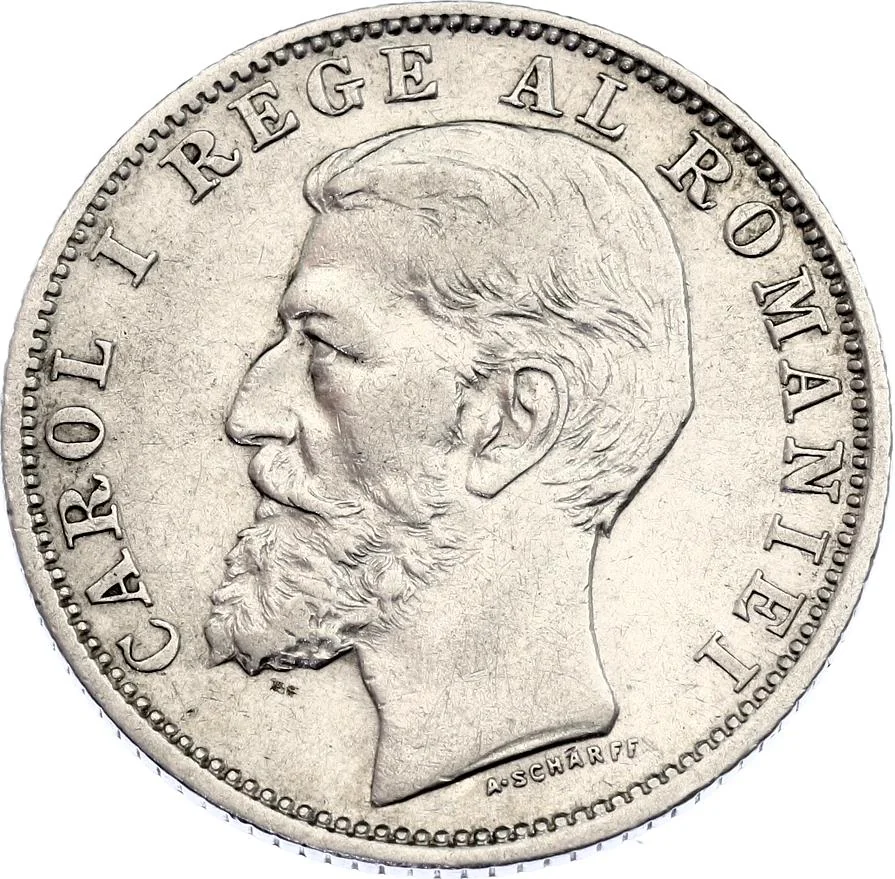
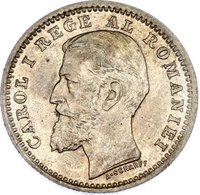
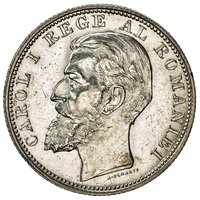
Carol I (1866–1914), left-facing portrait.
Inscription:
CAROL I REGE AL ROMANIEI
A SCHARFF
A SCHARFF
Translation:
CAROL I KING OF ROMANIA
A. SCHARFF
A. SCHARFF
Script: Latin
Engraver: Anton Scharff
Reverse
Description:
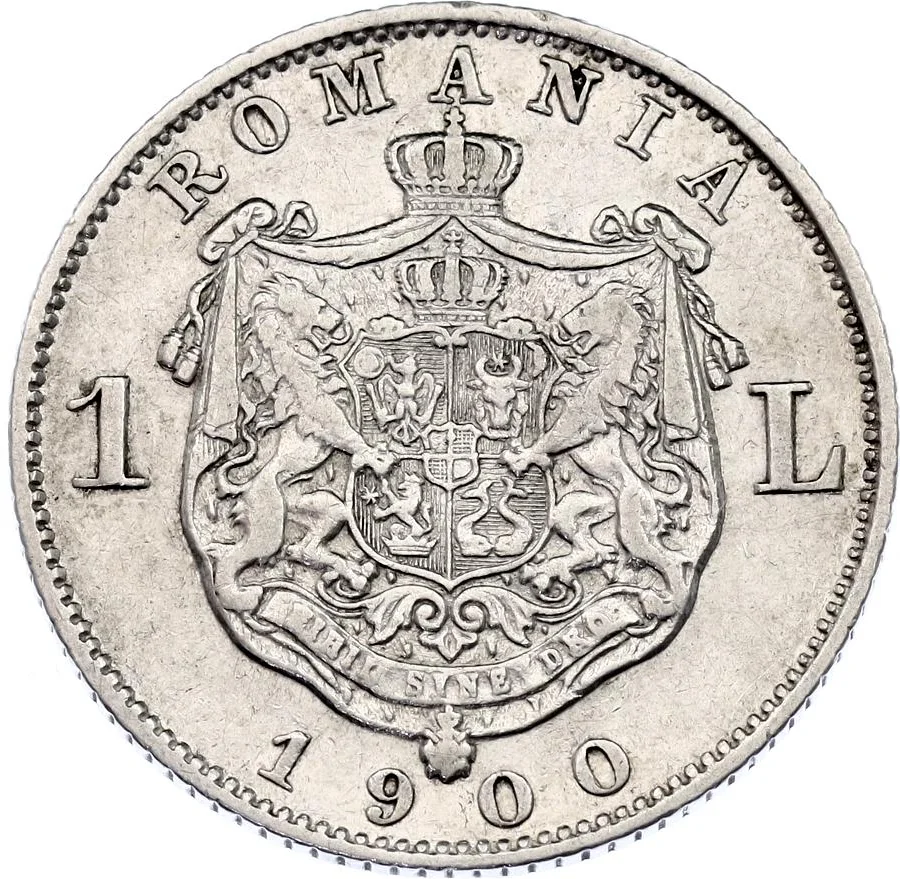
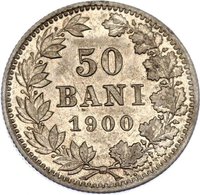
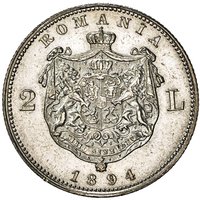
The Royal Coat of Arms with the motto *Nihil Sine Deo*.
Inscription:
ROMANIA
1 L
NIHIL SINE DEO
1900
1 L
NIHIL SINE DEO
1900
Translation:
Nothing without God
Script: Latin
Language: Latin
Engraver: Anton Scharff
Edge
Reeded
Categories
| Symbols> Coat of Arms |
| Person> Monarch |
Mints
| Name | Mark |
|---|---|
| Hamburgische Münze | — |
| Royal Mint of Belgium | — |
Mintings
| Year | Mint Mark | Mintage | Quality | Collection |
|---|---|---|---|---|
| 1894 | — | 1,500,000 | ||
| 1900 | — | 798,800 | BU | |
| 1901 | — | 369,614 | BU |
Historical background
In 1894, Romania operated under a bimetallic currency system, but one facing significant strain. The official standard, established by law in 1867, pegged the Romanian leu to both silver and gold, with the intent of aligning the national economy with the Latin Monetary Union. However, the global phenomenon of silver depreciation throughout the late 19th century had created a problematic divergence. While gold coins (such as the 20-lei piece) held their value, silver coinage saw its intrinsic metal value fall below its face value, leading to the widespread hoarding and export of gold from the country. This effectively pushed Romania onto a de facto silver standard, isolating it from the major European gold-based economies it sought to emulate.
The economic consequences were tangible. The instability and unfavorable exchange rates hampered foreign investment and complicated international trade, which was crucial for a developing nation rich in agricultural exports like grain. Furthermore, the state's finances were burdened by the need to constantly manage the coinage and cover the loss from minting overvalued silver. A failed attempt to introduce a paper leu convertible to gold in 1880 had eroded public confidence in fiduciary money, leaving the bimetallic system—however flawed—as the only operational one.
Therefore, 1894 stood as a pivotal year of deliberation, immediately preceding a major monetary reform. The government, led by Prime Minister Lascăr Catargiu, was actively preparing legislation to definitively abandon bimetallism. The following year, in 1895, Romania would formally adopt the gold standard, stabilizing the leu by pegging it solely to gold and definitively joining the European monetary mainstream, a move seen as essential for modernizing the economy and securing international loans.
The economic consequences were tangible. The instability and unfavorable exchange rates hampered foreign investment and complicated international trade, which was crucial for a developing nation rich in agricultural exports like grain. Furthermore, the state's finances were burdened by the need to constantly manage the coinage and cover the loss from minting overvalued silver. A failed attempt to introduce a paper leu convertible to gold in 1880 had eroded public confidence in fiduciary money, leaving the bimetallic system—however flawed—as the only operational one.
Therefore, 1894 stood as a pivotal year of deliberation, immediately preceding a major monetary reform. The government, led by Prime Minister Lascăr Catargiu, was actively preparing legislation to definitively abandon bimetallism. The following year, in 1895, Romania would formally adopt the gold standard, stabilizing the leu by pegging it solely to gold and definitively joining the European monetary mainstream, a move seen as essential for modernizing the economy and securing international loans.
🌱 Fairly Common