

1 Córdoba – Nicaragua
Nicaragua
Context
Year: 1972
Issuer: Nicaragua 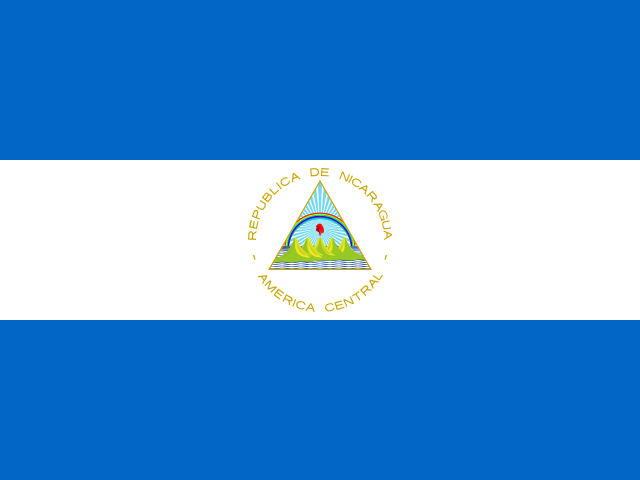
Issuing organization: Central Bank of Nicaragua
Period:
(since 1854)
Currency:
(1912—1987)
Demonetization: 15 February 1988
Total mintage: 20,040,000
Material
References
KM: #Click to copy to clipboard26
Numista: #4341
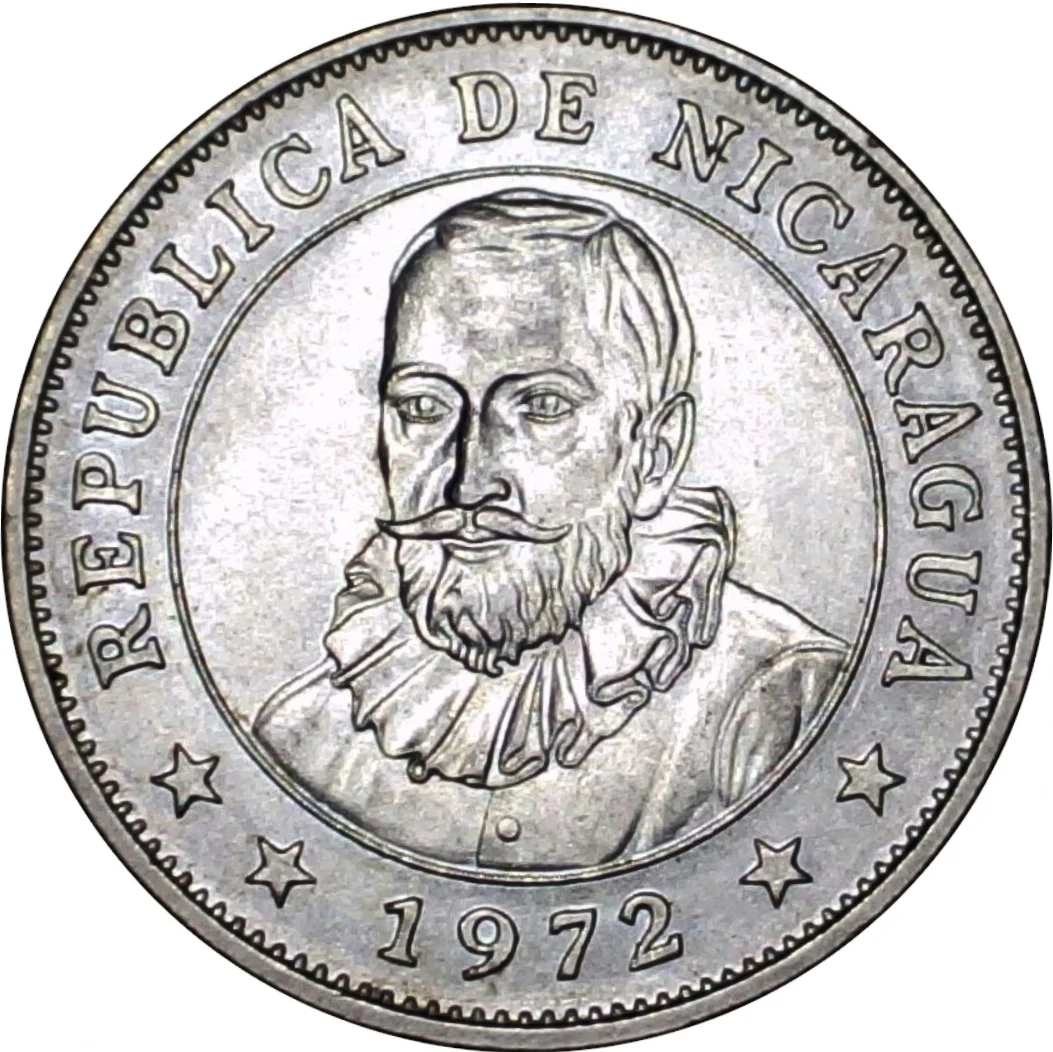
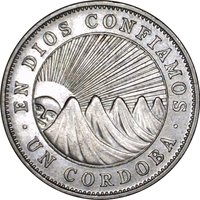
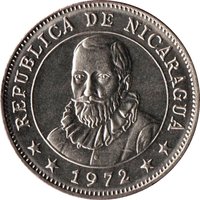
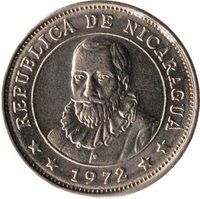
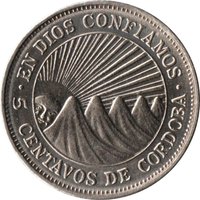
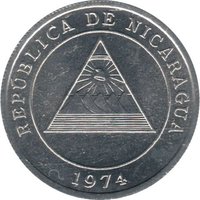
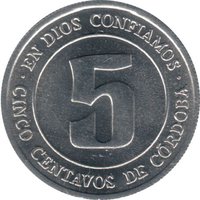
Obverse
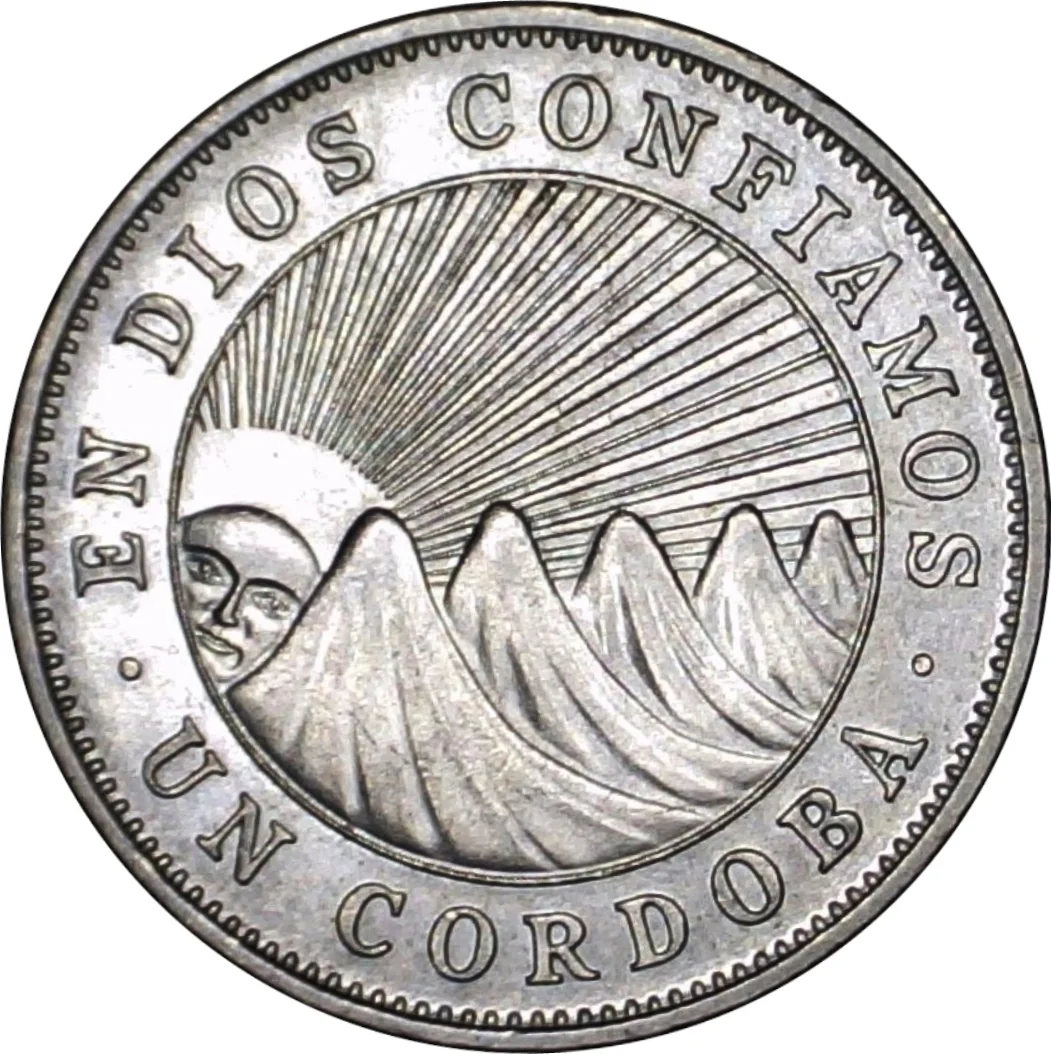
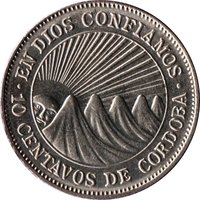
Reverse
Edge
Reeded
Mints
| Name | Mark |
|---|---|
| Staatliche Münze Baden-Württemberg | — |
Mintings
| Year | Mint Mark | Mintage | Quality | Collection |
|---|---|---|---|---|
| 1972 | — | 40,000 | Proof | |
| 1972 | — | 20,000,000 |
Historical background
In 1972, Nicaragua’s currency, the córdoba, was officially pegged to the US dollar at a fixed rate of 7 córdobas to 1 dollar under the long-standing dictatorship of the Somoza family. This peg, managed by the Central Bank of Nicaragua (founded in 1960), provided a veneer of monetary stability and facilitated trade, particularly with the United States. However, this stability was increasingly artificial and reliant on substantial foreign borrowing and the political control of the Somoza regime, which used economic policy to consolidate power and benefit its allies.
Beneath the surface, the economy faced significant structural weaknesses. The country was heavily dependent on agricultural exports like coffee, cotton, and sugar, making it vulnerable to commodity price swings. Furthermore, wealth and land ownership were highly concentrated, and a devastating earthquake would strike Managua in December 1972, causing catastrophic physical destruction and economic dislocation estimated at over half the country's annual GDP. This disaster would place immense immediate strain on public finances and the fixed exchange rate regime.
Consequently, while the official exchange rate remained fixed in 1972, the year ended as a precarious tipping point. The earthquake's aftermath exposed and accelerated underlying fiscal and economic pressures. These factors set the stage for the severe economic distortions, increased foreign debt, and eventual currency devaluations that would follow in the late 1970s, contributing to the Sandinista revolution that overthrew the Somoza dynasty in 1979.
Beneath the surface, the economy faced significant structural weaknesses. The country was heavily dependent on agricultural exports like coffee, cotton, and sugar, making it vulnerable to commodity price swings. Furthermore, wealth and land ownership were highly concentrated, and a devastating earthquake would strike Managua in December 1972, causing catastrophic physical destruction and economic dislocation estimated at over half the country's annual GDP. This disaster would place immense immediate strain on public finances and the fixed exchange rate regime.
Consequently, while the official exchange rate remained fixed in 1972, the year ended as a precarious tipping point. The earthquake's aftermath exposed and accelerated underlying fiscal and economic pressures. These factors set the stage for the severe economic distortions, increased foreign debt, and eventual currency devaluations that would follow in the late 1970s, contributing to the Sandinista revolution that overthrew the Somoza dynasty in 1979.
🌱 Common