

200 réis – Brazil
Add to wishlist
Brazil
Context
Years: 1889–1900
Issuer: Brazil
Issuing organization: National Treasury
Period:
(1889—1967)
Currency:
(1799—1942)
Demonetized: Yes
Total mintage: 22,842,500
Material
References
KM: #
Numista: #4332
Obverse
Description:
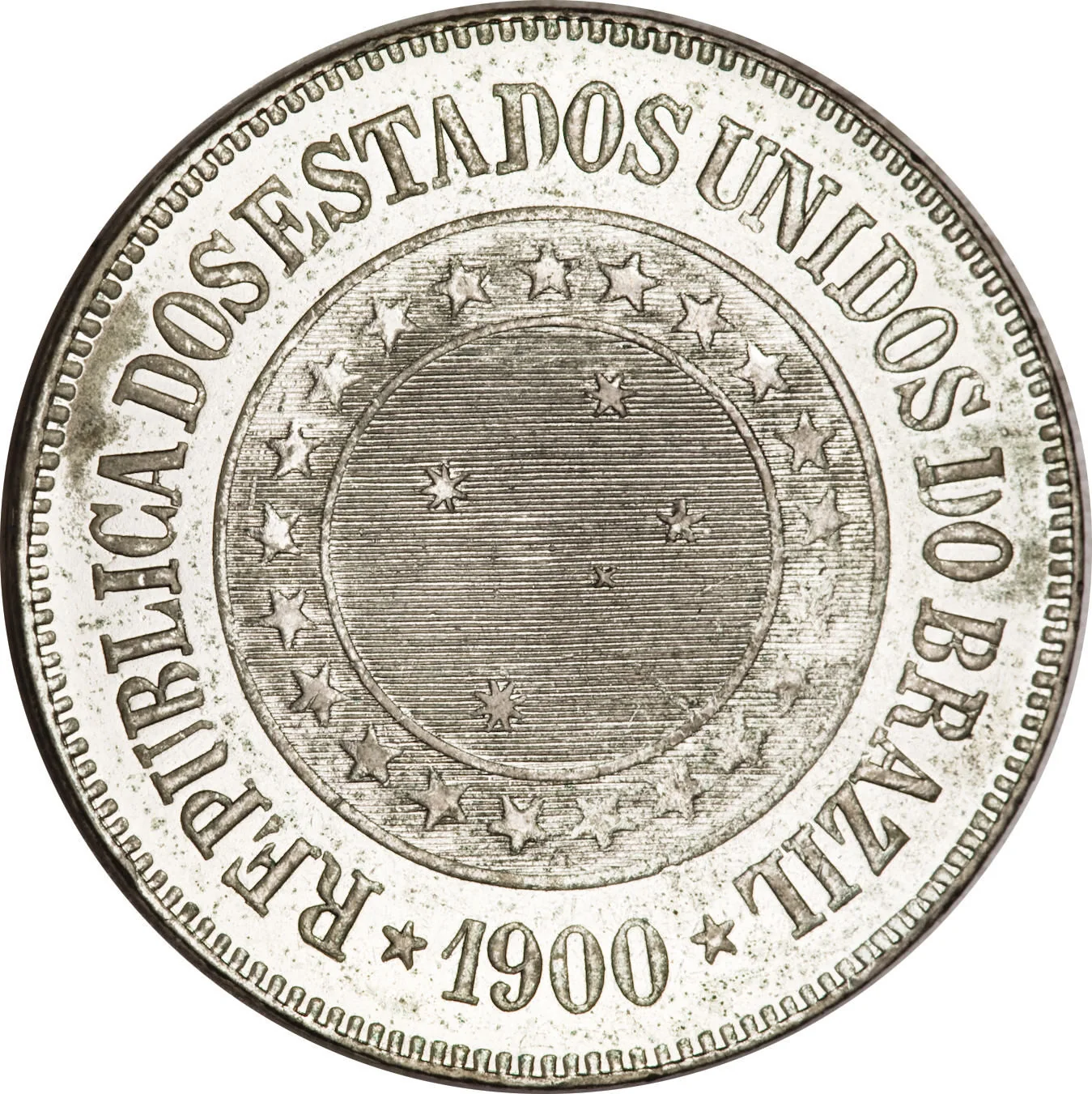
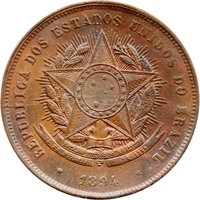
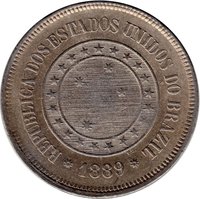
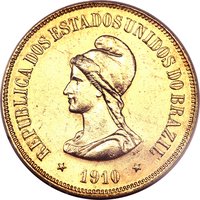
Necklace with 21 stars encircled by the inscription “REPUBLICA DOS ESTADOS UNIDOS DO BRAZIL” and the date, featuring a central five-star Southern Cross.
Inscription:
REPUBLICA DOS ESTADOS UNIDOS DO BRAZIL
*1900*
*1900*
Translation:
REPUBLIC OF THE UNITED STATES OF BRAZIL
*1900*
*1900*
Script: Latin
Language: Portuguese
Engraver: Francisco José Pinto Carneiro
Reverse
Description:
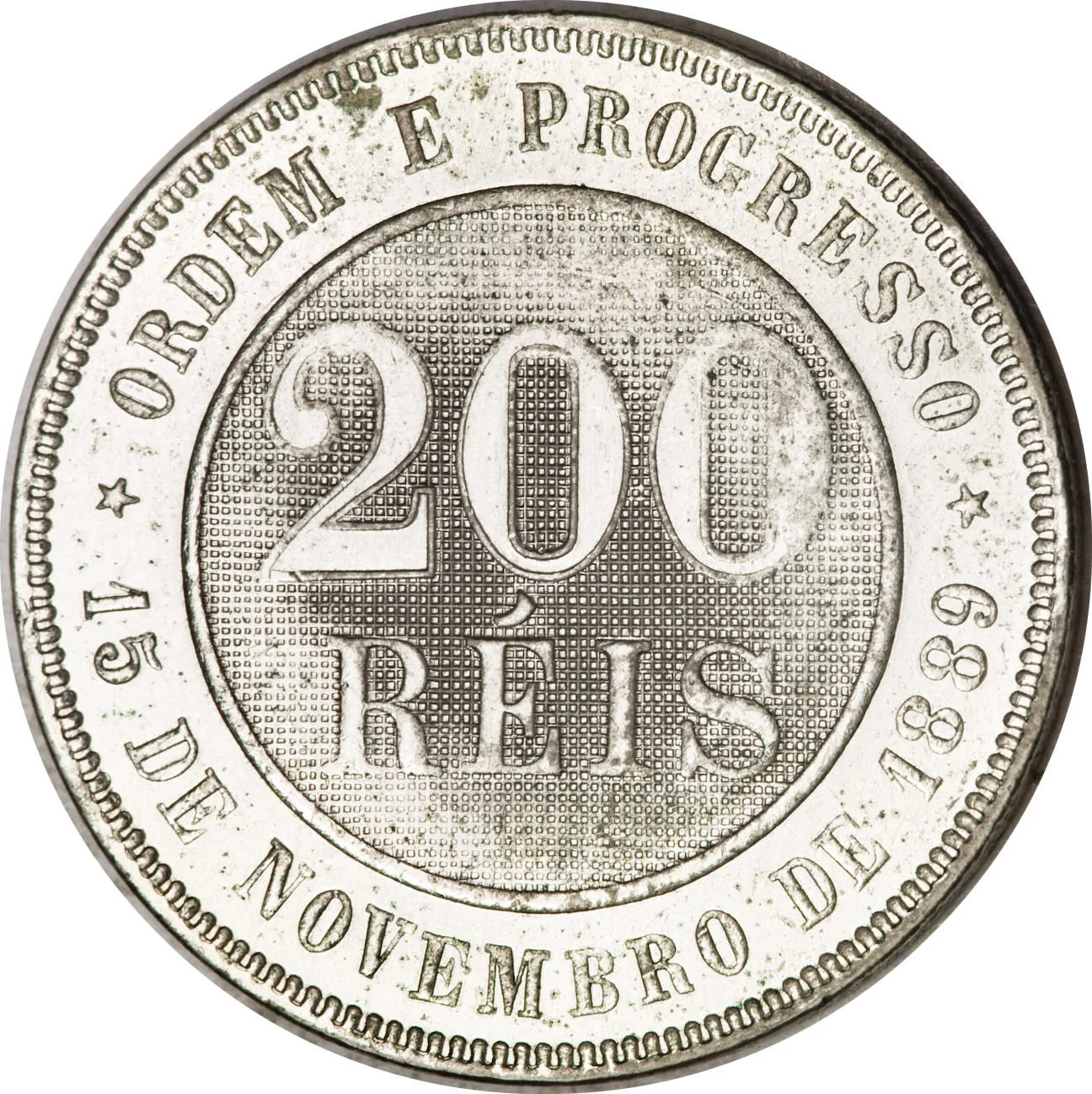
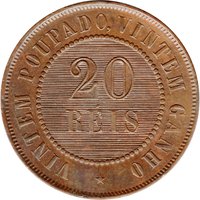
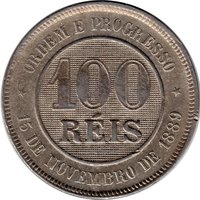
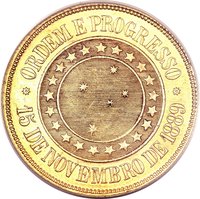
200 RÉIS face value on a lined background, bordered by "ORDEM E PROGRESSO * 15 DE NOVEMBRO DE 1889".
Inscription:
ORDEM E PROGRESSO
200
RÉIS
*15 DE NOVEMBRO DE 1889*
200
RÉIS
*15 DE NOVEMBRO DE 1889*
Translation:
Order and Progress
200
Reis
*November 15, 1889*
200
Reis
*November 15, 1889*
Script: Latin
Language: Portuguese
Engraver: Francisco José Pinto Carneiro
Edge
Plain
Mints
| Name | Mark |
|---|---|
| Casa da Moeda do Brasil | — |
Mintings
| Year | Mint Mark | Mintage | Quality | Collection |
|---|---|---|---|---|
| 1889 | — | 4,829,000 | ||
| 1893 | — | 2,585,500 | ||
| 1894 | — | 1,561,500 | ||
| 1895 | — | 1,633,000 | ||
| 1896 | — | 2,850,000 | ||
| 1897 | — | 2,405,000 | ||
| 1898 | — | 3,925,000 | ||
| 1899 | — | 2,723,500 | ||
| 1900 | — | 330,000 |
Historical background
In 1889, Brazil's currency situation was characterized by profound instability and inflationary pressures, a legacy of the Paraguayan War (1864-1870). To finance the conflict, the government had resorted to printing vast quantities of unbacked paper money, the mil-réis. This led to a severe divergence between the value of this circulating paper currency and the gold-backed mil-réis, creating a chaotic system of dual exchange rates. By the end of the war, the paper currency had depreciated significantly, and the government's subsequent attempts to contract the money supply and restore parity with gold proved politically and economically painful, failing to achieve stability.
The monetary chaos was exacerbated by a fragmented banking system. The Banco do Brasil, which acted as the government's financial agent, continued to issue notes without sufficient metallic backing, while regional banks also issued their own currencies. This proliferation of credit and paper money fueled speculation and wild fluctuations in exchange rates, harming foreign trade and creating uncertainty for both domestic and international merchants. The economy was effectively operating on an inconvertible paper standard, with the value of money dictated more by government fiscal needs and market speculation than by any tangible asset.
This unsustainable financial environment was a key factor undermining the credibility of the Imperial government of Pedro II. The monetary disorder directly impacted the powerful coffee-exporting oligarchy, who saw the value of their earnings eroded, and contributed to broader discontent with the regime's economic management. When the Republic was proclaimed in November 1889, the new government inherited this dire monetary crisis, making financial and currency reform one of its most immediate and critical challenges. The eventual solution would come with the encilhamento policy of the early 1890s, a disastrous period of speculative frenzy and rampant inflation that further complicated Brazil's path toward monetary stability.
The monetary chaos was exacerbated by a fragmented banking system. The Banco do Brasil, which acted as the government's financial agent, continued to issue notes without sufficient metallic backing, while regional banks also issued their own currencies. This proliferation of credit and paper money fueled speculation and wild fluctuations in exchange rates, harming foreign trade and creating uncertainty for both domestic and international merchants. The economy was effectively operating on an inconvertible paper standard, with the value of money dictated more by government fiscal needs and market speculation than by any tangible asset.
This unsustainable financial environment was a key factor undermining the credibility of the Imperial government of Pedro II. The monetary disorder directly impacted the powerful coffee-exporting oligarchy, who saw the value of their earnings eroded, and contributed to broader discontent with the regime's economic management. When the Republic was proclaimed in November 1889, the new government inherited this dire monetary crisis, making financial and currency reform one of its most immediate and critical challenges. The eventual solution would come with the encilhamento policy of the early 1890s, a disastrous period of speculative frenzy and rampant inflation that further complicated Brazil's path toward monetary stability.
Series: 1889 Brazil circulation coins
🌱 Very Common