

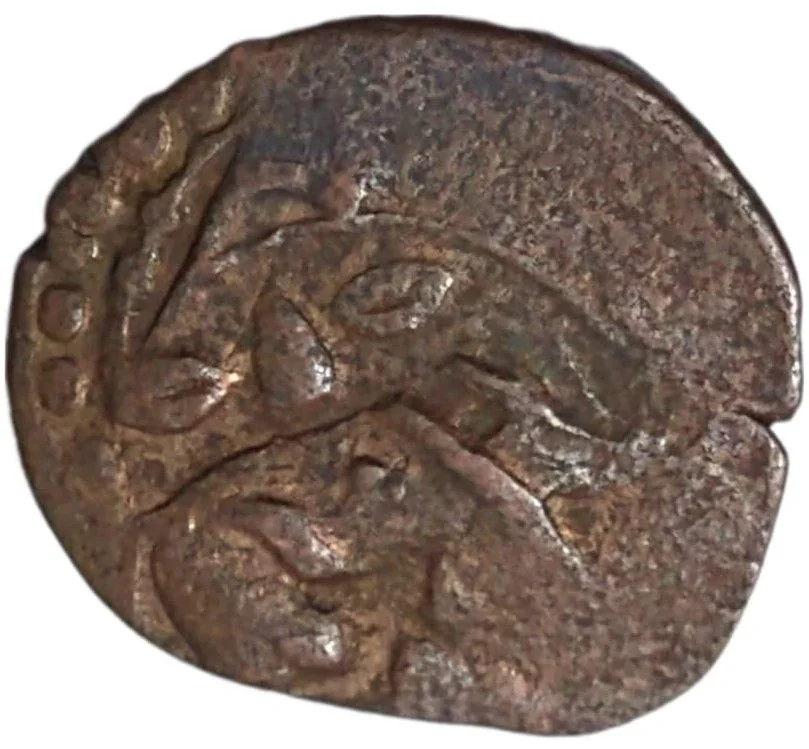
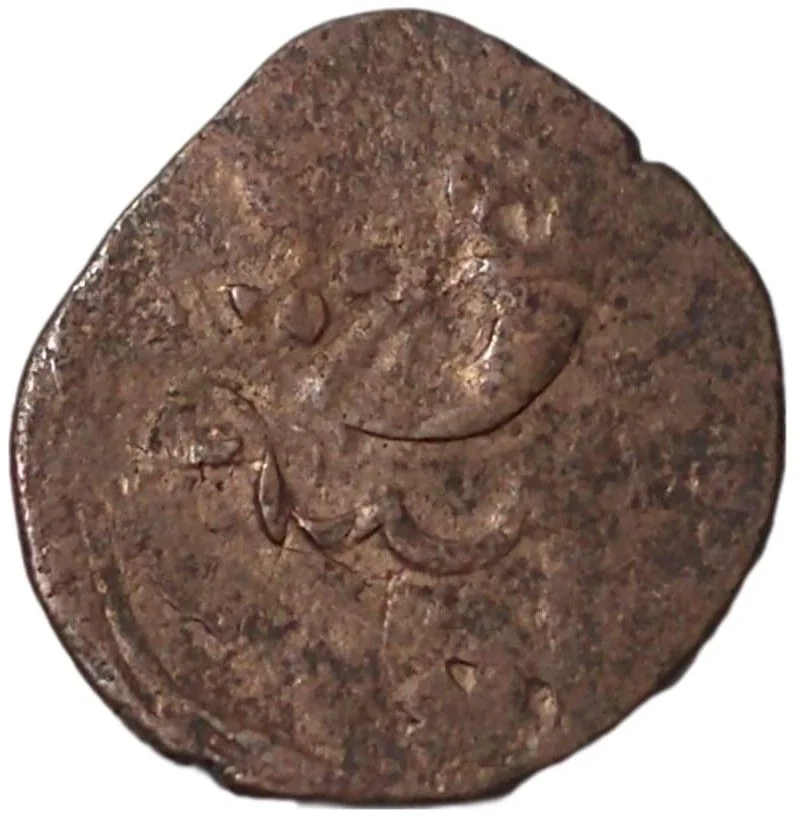
1 Falus – Uncertain Afghan city
Afghanistan
Context
Year: 1847
Islamic (Hijri) Year: 1263
Country: Afghanistan 
Issuer: Uncertain Afghan city
Currency:
(1747—1891)
Demonetized: Yes
Material
Diameter: 23 mm
Weight: 4.3 g
Shape: Irregular round
Composition: Copper
Magnetic: No
Technique: Hammered
References
Numista: #433017
Obverse
Description:
Sun symbol
Reverse
Edge
Mintings
| Year | Mint Mark | Mintage | Quality | Collection |
|---|---|---|---|---|
| 1847 | — | — |
Historical background
In the uncertain Afghan city of 1847, the currency situation was a chaotic reflection of the broader political instability following the First Anglo-Afghan War (1839-1842). The conflict shattered the monetary authority of the Durrani Empire, leaving no single, trusted currency in circulation. Instead, the city's bazaars became a numismatic crossroads, where older, clipped, and debased silver rupees from various Afghan rulers—stamped with names like Shah Shuja or Dost Mohammad—competed with a flood of foreign coins. These included British Indian rupees, Persian krans, Russian rubles, and even older Mughal mohurs, their value determined not by royal decree but by weight, metal purity, and the daily whims of money-changers (sarrafs).
This monetary anarchy was exacerbated by the absence of a functioning mint in the city and the deliberate economic warfare practiced by rival factions. Local khans and power brokers, seeking to finance their militias and consolidate influence, would often issue their own crude, low-weight coins or simply raid the treasury, further eroding public trust. Counterfeiting was rampant, as the lack of a central authority made verification nearly impossible. Consequently, every transaction required arduous negotiation and assessment, stifling trade and sowing deep suspicion among merchants and customers alike.
The ultimate currency, therefore, was not metal but security and necessity. In this environment, barter for essential goods—grain, weapons, opium, and livestock—often supplanted coinage for major transactions. For the common citizen, the fluctuating and unreliable coinage system deepened poverty and uncertainty, as savings could evaporate overnight with the arrival of a new, debased issue. Thus, the city's money in 1847 was less an economic instrument and more a tangible symbol of fragmentation, where the very medium of exchange testified to the collapse of central order and the struggle for survival in a power vacuum.
This monetary anarchy was exacerbated by the absence of a functioning mint in the city and the deliberate economic warfare practiced by rival factions. Local khans and power brokers, seeking to finance their militias and consolidate influence, would often issue their own crude, low-weight coins or simply raid the treasury, further eroding public trust. Counterfeiting was rampant, as the lack of a central authority made verification nearly impossible. Consequently, every transaction required arduous negotiation and assessment, stifling trade and sowing deep suspicion among merchants and customers alike.
The ultimate currency, therefore, was not metal but security and necessity. In this environment, barter for essential goods—grain, weapons, opium, and livestock—often supplanted coinage for major transactions. For the common citizen, the fluctuating and unreliable coinage system deepened poverty and uncertainty, as savings could evaporate overnight with the arrival of a new, debased issue. Thus, the city's money in 1847 was less an economic instrument and more a tangible symbol of fragmentation, where the very medium of exchange testified to the collapse of central order and the struggle for survival in a power vacuum.

✨ Legendary