

1 Cent – North Borneo
Malaysia
Context
Years: 1882–1907
Country: Malaysia 
Issuer: North Borneo
Period:
(1881—1941)
Currency:
(1882—1941)
Demonetized: Yes
Total mintage: 45,003,000
Material
References
KM: #Click to copy to clipboard2
Numista: #4327
Obverse
Reverse
Edge
Plain
Categories
| Symbols> Coat of Arms |
Mints
| Name | Mark |
|---|---|
| Heaton and Sons / The Mint Birmingham | H |
Mintings
| Year | Mint Mark | Mintage | Quality | Collection |
|---|---|---|---|---|
| 1882 | H | 2,000,000 | ||
| 1882 | H | — | Proof | |
| 1884 | H | 2,000,000 | ||
| 1884 | H | — | Proof | |
| 1885 | H | 1,000,000 | ||
| 1886 | H | — | Proof | |
| 1886 | H | 5,000,000 | ||
| 1887 | H | 6,000,000 | ||
| 1887 | H | — | Proof | |
| 1888 | H | 6,000,000 | ||
| 1888 | H | — | Proof | |
| 1889 | H | 9,000,000 | ||
| 1890 | H | 8,003,000 | ||
| 1890 | H | — | Proof | |
| 1891 | H | — | Proof | |
| 1891 | H | 3,000,000 | ||
| 1894 | H | 1,000,000 | ||
| 1896 | H | 1,000,000 | ||
| 1907 | H | 1,000,000 | ||
| 1907 | H | — | Proof |
Historical background
In 1882, North Borneo was under the administration of the British North Borneo Chartered Company, which had acquired sovereign rights over the territory just two years prior. The monetary landscape was fragmented and undeveloped, reflecting the region's status as a nascent commercial venture with a sparse population and limited formal trade. The primary mediums of exchange were not company-issued coins or notes, but a mixture of foreign silver dollars—particularly the Spanish and Mexican "Carolus" and "pillar" dollars, and the later British Trade Dollars—alongside barter for goods like rice, tobacco, and brassware. The Company had yet to establish a unified currency system, leaving commerce reliant on this ad-hoc circulation of internationally recognized silver coins.
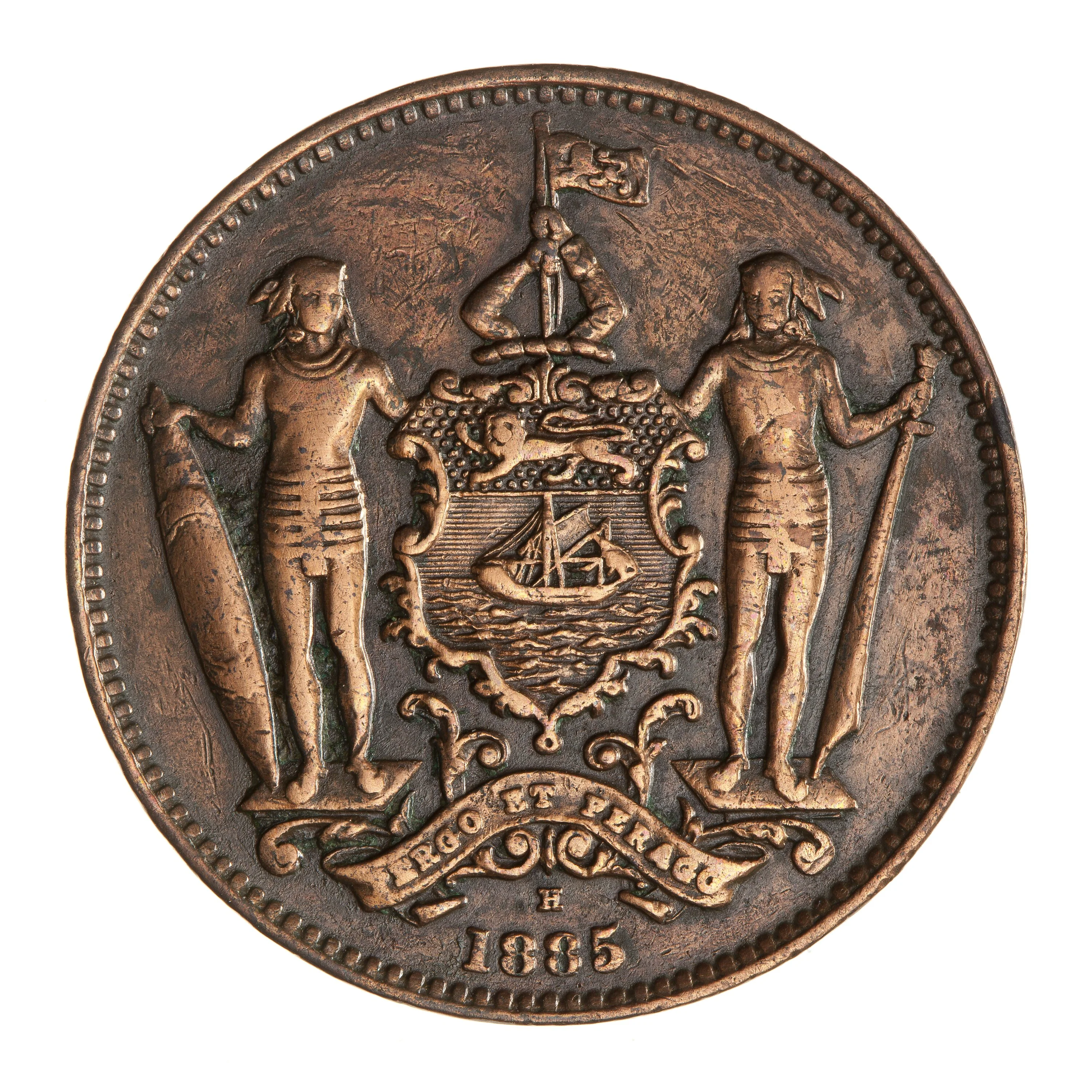
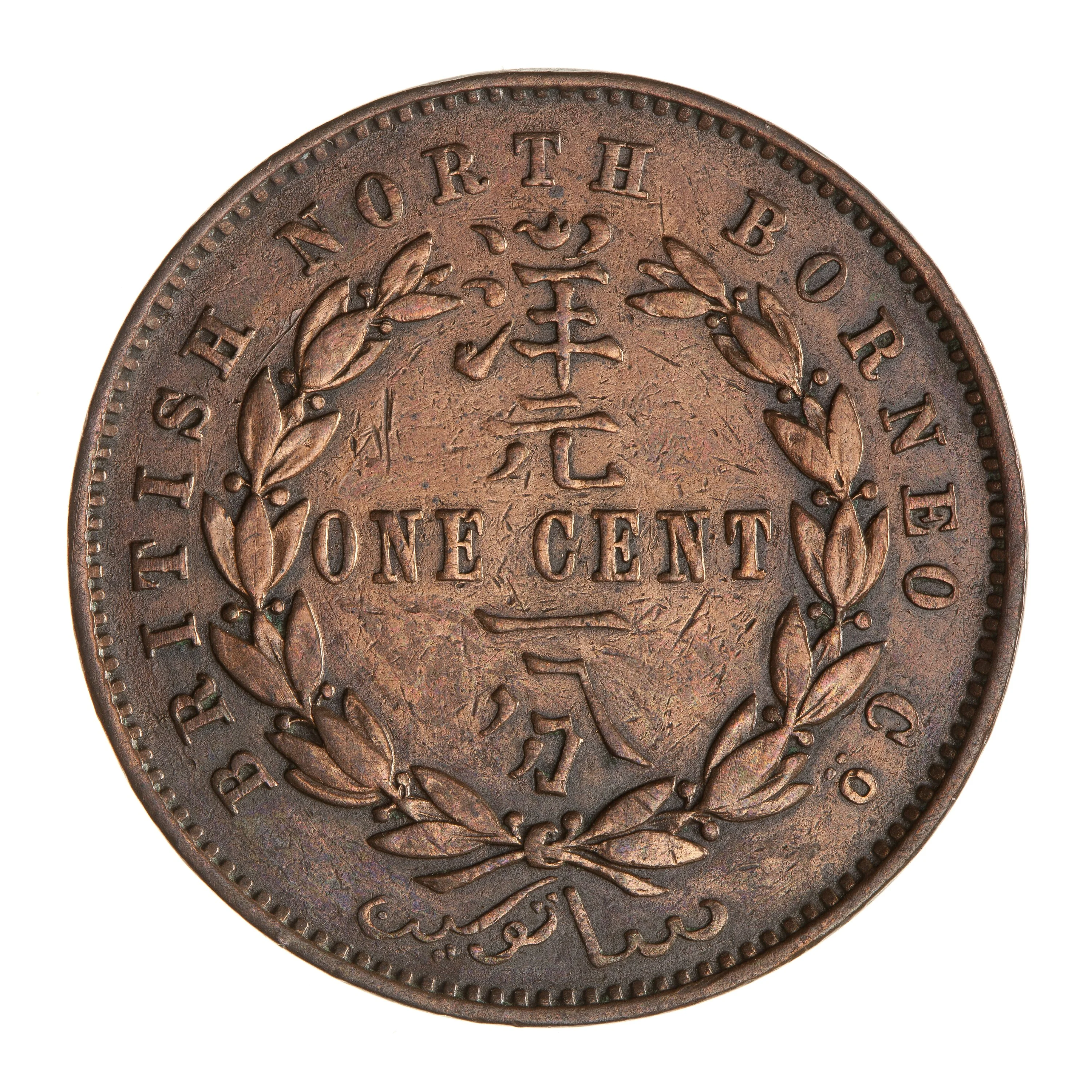
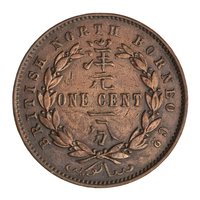
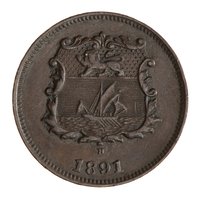
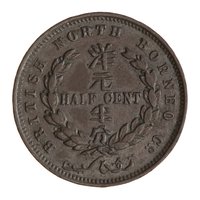
The lack of a standardized local currency posed practical challenges for the Company's administration and the growing trade in staples like tobacco, rattan, and timber. Transactions required constant assessment of the weight and purity of various silver coins, many of which were worn or cut. To address this, the Company took its first step toward monetary reform in 1882 by arranging for the minting of its own coinage. The first official coins—one cent and half cent pieces made of copper—were minted by Ralph Heaton & Sons (The Mint, Birmingham) and would arrive in the territory in 1883. These coins bore the Company's emblem (a lion) and were intended to facilitate small-scale transactions.
Thus, 1882 represents a pivotal year of transition, caught between the old, informal system and a new, imposed order. The Chartered Company was laying the groundwork for a formal economy, using currency as a tool to assert its authority and simplify commerce. While the everyday circulation in that year remained a disordered mix of foreign silver and barter, the decisions made and coins commissioned in 1882 set the stage for the North Borneo dollar to eventually become the standard, symbolizing the Company's ongoing project of colonial economic integration.
The lack of a standardized local currency posed practical challenges for the Company's administration and the growing trade in staples like tobacco, rattan, and timber. Transactions required constant assessment of the weight and purity of various silver coins, many of which were worn or cut. To address this, the Company took its first step toward monetary reform in 1882 by arranging for the minting of its own coinage. The first official coins—one cent and half cent pieces made of copper—were minted by Ralph Heaton & Sons (The Mint, Birmingham) and would arrive in the territory in 1883. These coins bore the Company's emblem (a lion) and were intended to facilitate small-scale transactions.
Thus, 1882 represents a pivotal year of transition, caught between the old, informal system and a new, imposed order. The Chartered Company was laying the groundwork for a formal economy, using currency as a tool to assert its authority and simplify commerce. While the everyday circulation in that year remained a disordered mix of foreign silver and barter, the decisions made and coins commissioned in 1882 set the stage for the North Borneo dollar to eventually become the standard, symbolizing the Company's ongoing project of colonial economic integration.
🌱 Very Common