

½ Cent – North Borneo
Malaysia
Context
Years: 1885–1907
Country: Malaysia 
Issuer: North Borneo
Period:
(1881—1941)
Currency:
(1882—1941)
Demonetized: Yes
Total mintage: 5,500,000
Material
References
KM: #Click to copy to clipboard1
Numista: #15245
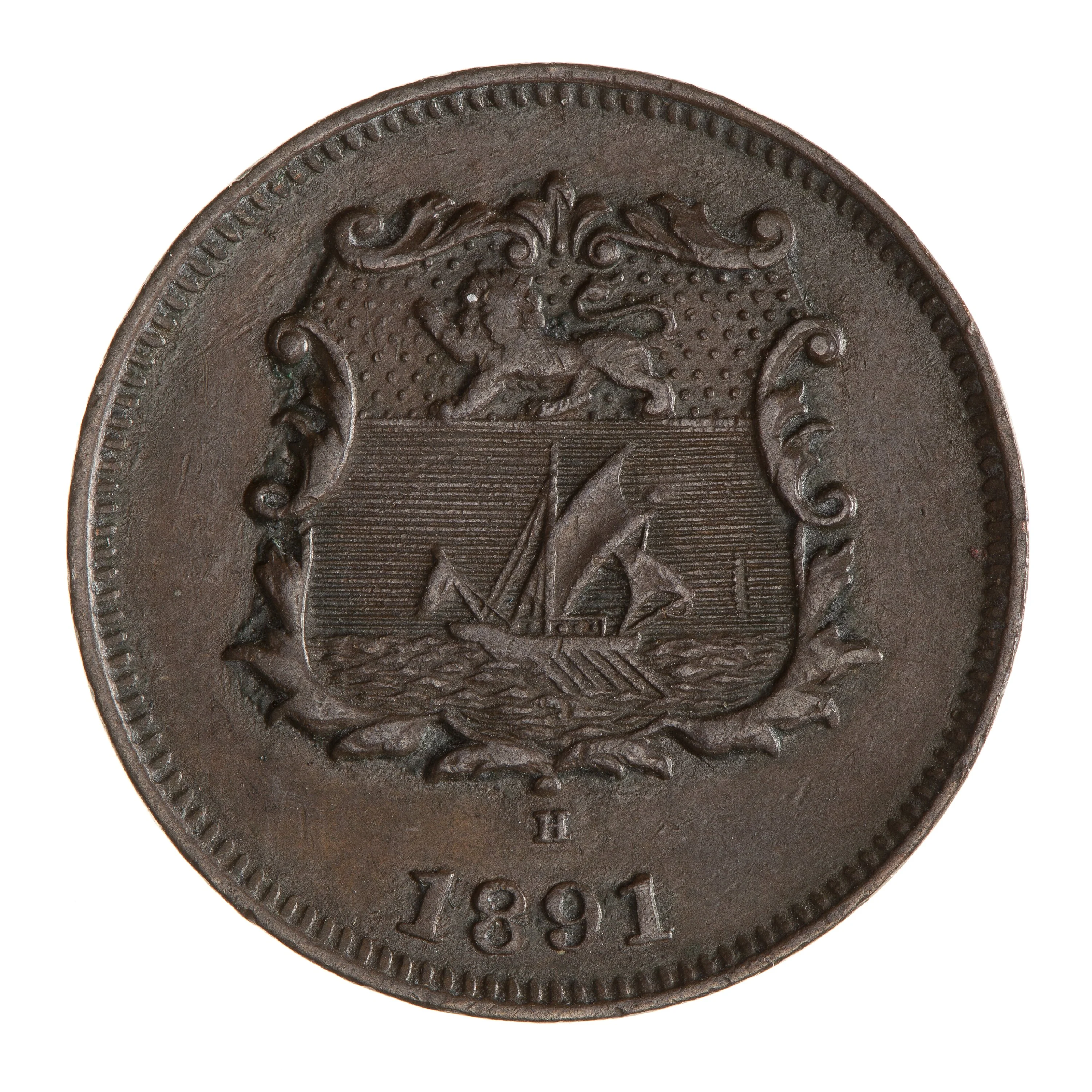
Obverse
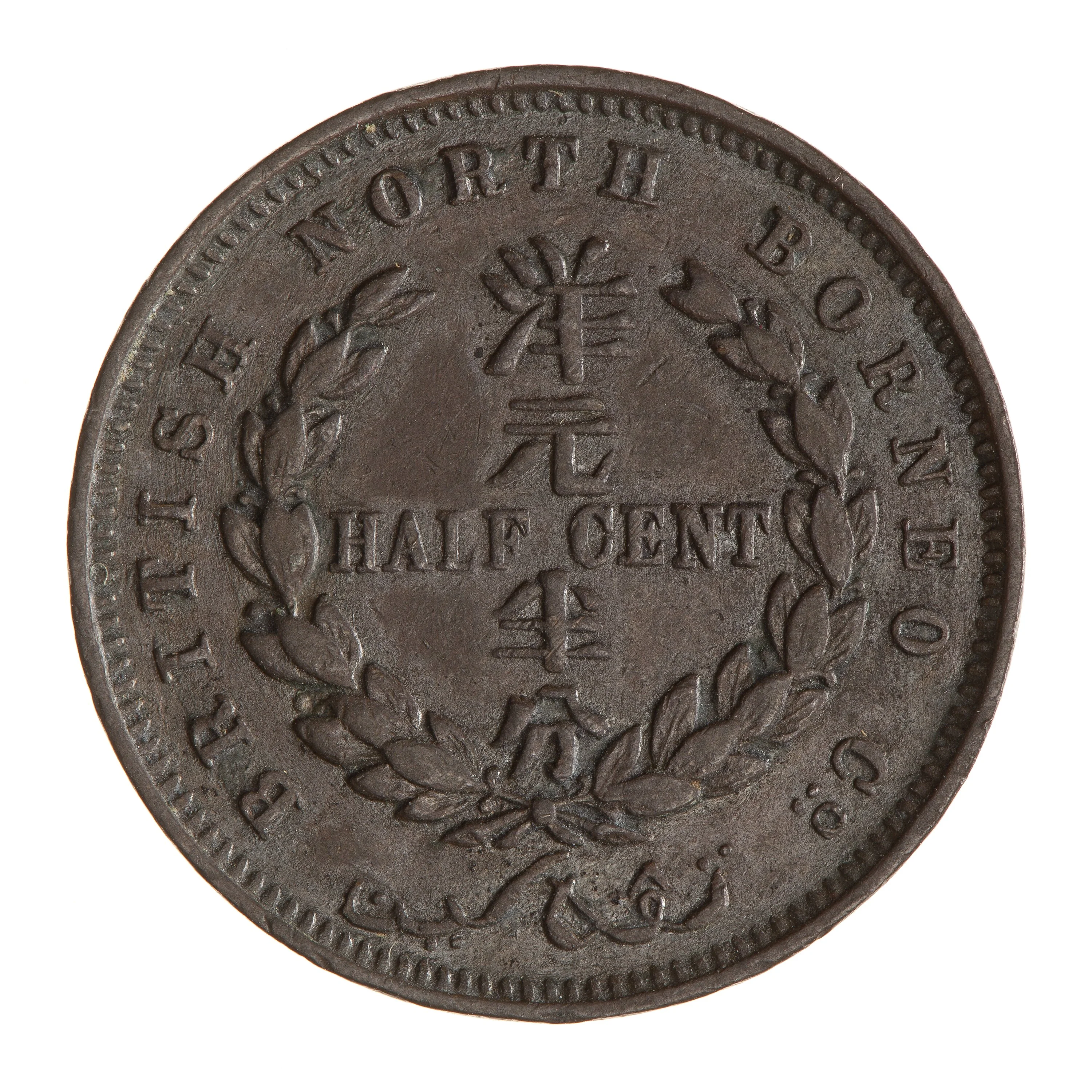
Reverse
Edge
Plain
Mints
| Name | Mark |
|---|---|
| Heaton and Sons / The Mint Birmingham | H |
Mintings
Historical background
In 1885, the currency situation in North Borneo was a complex and transitional one, reflecting the territory's recent establishment as a British protectorate under the administration of the British North Borneo Chartered Company. The Company, which had begun its rule in 1881, faced the practical challenge of imposing a unified monetary system across a region with diverse economic traditions. The local economies of indigenous communities still relied heavily on barter trade, while the coastal trading centres, influenced by centuries of regional commerce, saw the circulation of various foreign silver coins. The most prominent of these were the Mexican and Spanish "Carolus" silver dollars, alongside the British trade dollar and smaller fractional coins like the Straits Settlements' copper pitis. This created a fragmented monetary landscape without a single, authoritative standard.
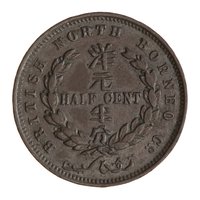
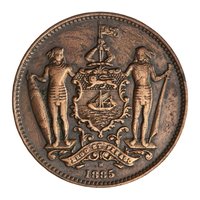
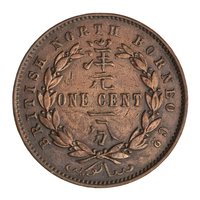
The Chartered Company recognized the need for a stable and distinctive currency to facilitate administration, trade, and tax collection, and to assert its sovereign authority. Consequently, 1885 was a pivotal year as it marked the first issuance of the Company's own coinage. Minted in denominations of 1 cent and ½ cent, these bronze coins featured the Company's emblem—a lion and a dhow—and were intended to decimalize the system, with 100 cents equalling one dollar. However, this new coinage did not immediately replace the existing silver dollars, which remained the primary medium for larger transactions. Thus, 1885 saw the beginning of a dual-currency system where small-denomination Company coinage circulated alongside established foreign silver.
Therefore, the background of North Borneo's currency in 1885 is one of early colonial monetization. The Chartered Company's introduction of its own subsidiary coinage was a foundational step toward financial integration and control, but it was merely a first layer added to a pre-existing monetary ecology. The situation was characterized by this coexistence: the new official coins facilitated everyday small change, while the more valuable and trusted silver trade dollars of foreign origin continued to anchor the broader trading economy, a duality that would persist for years to come.
The Chartered Company recognized the need for a stable and distinctive currency to facilitate administration, trade, and tax collection, and to assert its sovereign authority. Consequently, 1885 was a pivotal year as it marked the first issuance of the Company's own coinage. Minted in denominations of 1 cent and ½ cent, these bronze coins featured the Company's emblem—a lion and a dhow—and were intended to decimalize the system, with 100 cents equalling one dollar. However, this new coinage did not immediately replace the existing silver dollars, which remained the primary medium for larger transactions. Thus, 1885 saw the beginning of a dual-currency system where small-denomination Company coinage circulated alongside established foreign silver.
Therefore, the background of North Borneo's currency in 1885 is one of early colonial monetization. The Chartered Company's introduction of its own subsidiary coinage was a foundational step toward financial integration and control, but it was merely a first layer added to a pre-existing monetary ecology. The situation was characterized by this coexistence: the new official coins facilitated everyday small change, while the more valuable and trusted silver trade dollars of foreign origin continued to anchor the broader trading economy, a duality that would persist for years to come.
🌱 Fairly Common