

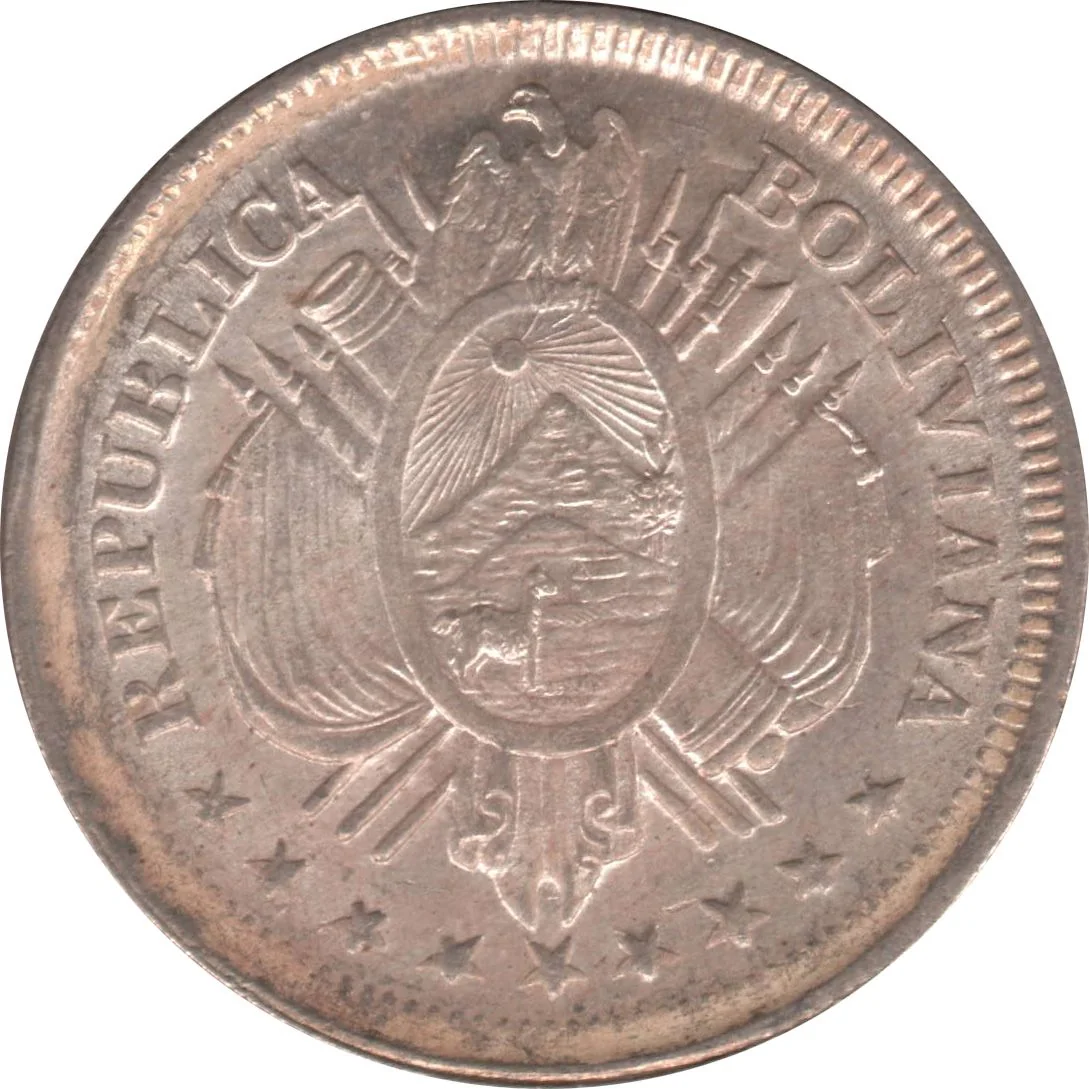
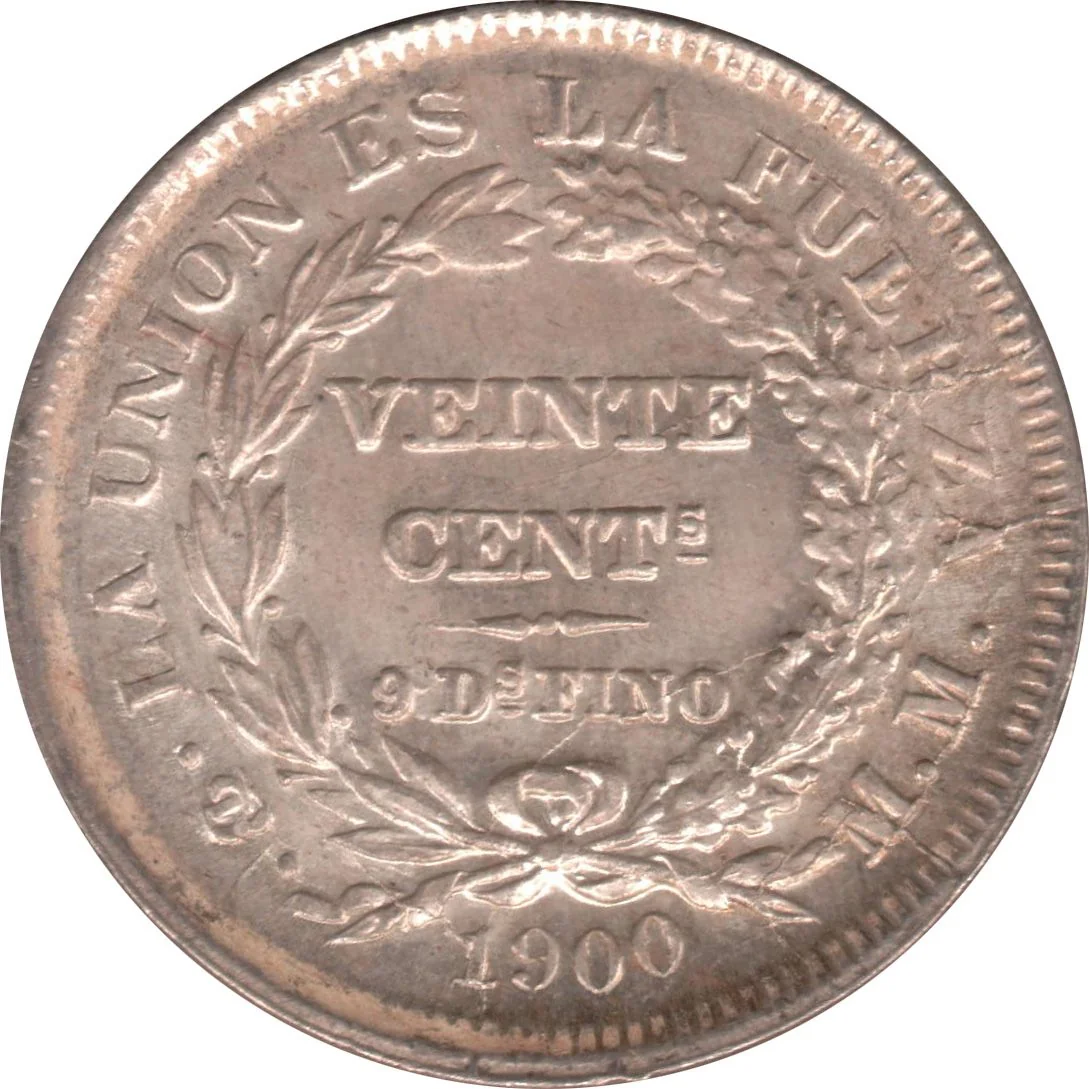
20 centavos – Bolivia
Add to wishlist
Bolivia
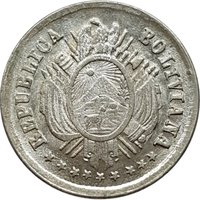
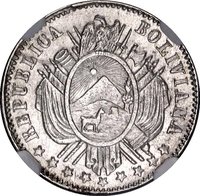
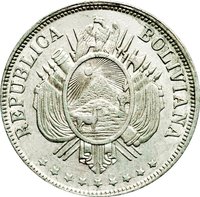
Obverse
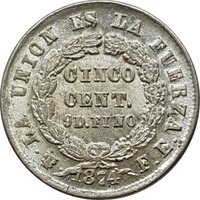
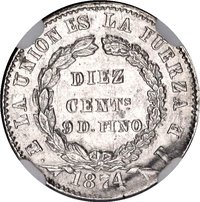
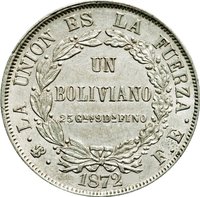
Reverse
Edge
Reeded
Mints
| Name | Mark |
|---|---|
| Potosi | PTS |
Mintings
| Year | Mint Mark | Mintage | Quality | Collection |
|---|---|---|---|---|
| 1872 | PTS | — | ||
| 1873 | PTS | — | ||
| 1874 | PTS | — | ||
| 1875 | PTS | — | ||
| 1876 | PTS | — | ||
| 1877 | PTS | — | ||
| 1878 | PTS | — | ||
| 1879 | PTS | — | ||
| 1880 | PTS | — | ||
| 1881 | PTS | — | ||
| 1882 | PTS | — | ||
| 1883 | PTS | — | ||
| 1884 | PTS | — | ||
| 1885 | PTS | — | ||
| 1886 | PTS | — | ||
| 1887 | PTS | — | ||
| 1888 | PTS | — | ||
| 1889 | PTS | — | ||
| 1890 | PTS | — | ||
| 1891 | PTS | — | ||
| 1892 | PTS | — | ||
| 1893 | PTS | 502,200 | ||
| 1894 | PTS | 491,400 | ||
| 1895 | PTS | — | ||
| 1896 | PTS | — | ||
| 1897 | PTS | 167,406 | ||
| 1898 | PTS | — | ||
| 1899 | PTS | — | ||
| 1900 | PTS | 167,400 | ||
| 1901 | PTS | 39,423 | ||
| 1902 | PTS | — | ||
| 1903 | PTS | 10,800 | ||
| 1904 | PTS | — | ||
| 1907 | PTS | — |
Historical background
In 1872, Bolivia's currency situation was characterized by profound instability and fragmentation, a direct legacy of the economic devastation wrought by the War of the Pacific (1879-1884) still looming in the future, but more immediately by decades of political turbulence and fiscal shortfalls. The national treasury was chronically empty, and the government, lacking a strong central bank, struggled to impose a uniform monetary system. Consequently, the economy operated on a confusing mix of metallic currencies, including Bolivian silver coins (bolivianos and soles), Peruvian soles, Chilean pesos, and even older Spanish colonial coinage, all circulating simultaneously at fluctuating values. This monetary anarchy severely hampered domestic commerce and complicated international trade.
The core of the problem lay in the severe depreciation of the primary silver boliviano. Years of excessive issuance of debased silver coinage to finance budget deficits had led to a collapse in public confidence. By 1872, the boliviano's value had fallen dramatically against stronger foreign hard currencies, particularly the British pound sterling and the French franc, which were preferred for major transactions. This devaluation fueled rampant inflation, eroding purchasing power and creating widespread economic uncertainty. The government's attempts to rectify the situation, including a brief and unsuccessful effort to introduce a gold standard in the late 1860s, had failed, leaving no clear path toward stabilization.
Thus, the monetary landscape of 1872 was one of crisis and transition. The state's inability to control its currency underscored its broader weakness and contributed to social discontent. This environment set the stage for the more drastic monetary reforms that would follow in the coming decades, particularly after the catastrophic losses of the War of the Pacific, which would force a complete restructuring of Bolivia's fiscal and monetary policies in a desperate bid for economic survival.
The core of the problem lay in the severe depreciation of the primary silver boliviano. Years of excessive issuance of debased silver coinage to finance budget deficits had led to a collapse in public confidence. By 1872, the boliviano's value had fallen dramatically against stronger foreign hard currencies, particularly the British pound sterling and the French franc, which were preferred for major transactions. This devaluation fueled rampant inflation, eroding purchasing power and creating widespread economic uncertainty. The government's attempts to rectify the situation, including a brief and unsuccessful effort to introduce a gold standard in the late 1860s, had failed, leaving no clear path toward stabilization.
Thus, the monetary landscape of 1872 was one of crisis and transition. The state's inability to control its currency underscored its broader weakness and contributed to social discontent. This environment set the stage for the more drastic monetary reforms that would follow in the coming decades, particularly after the catastrophic losses of the War of the Pacific, which would force a complete restructuring of Bolivia's fiscal and monetary policies in a desperate bid for economic survival.
Series: 1872 Bolivia circulation coins
🌱 Common