

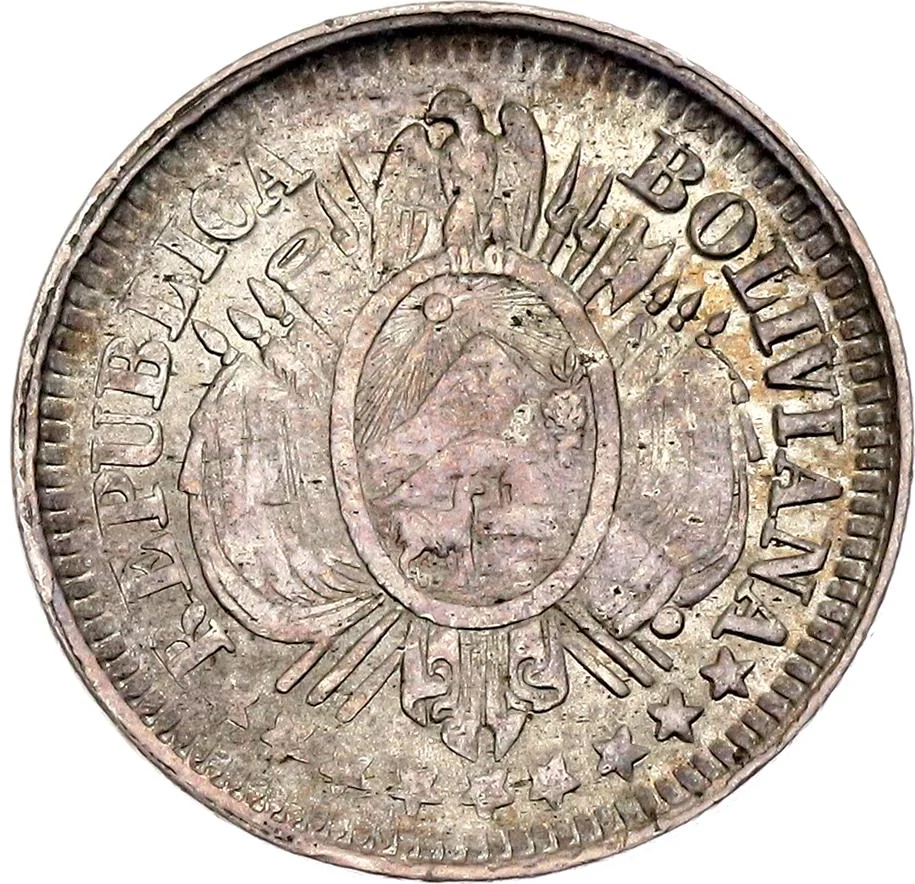
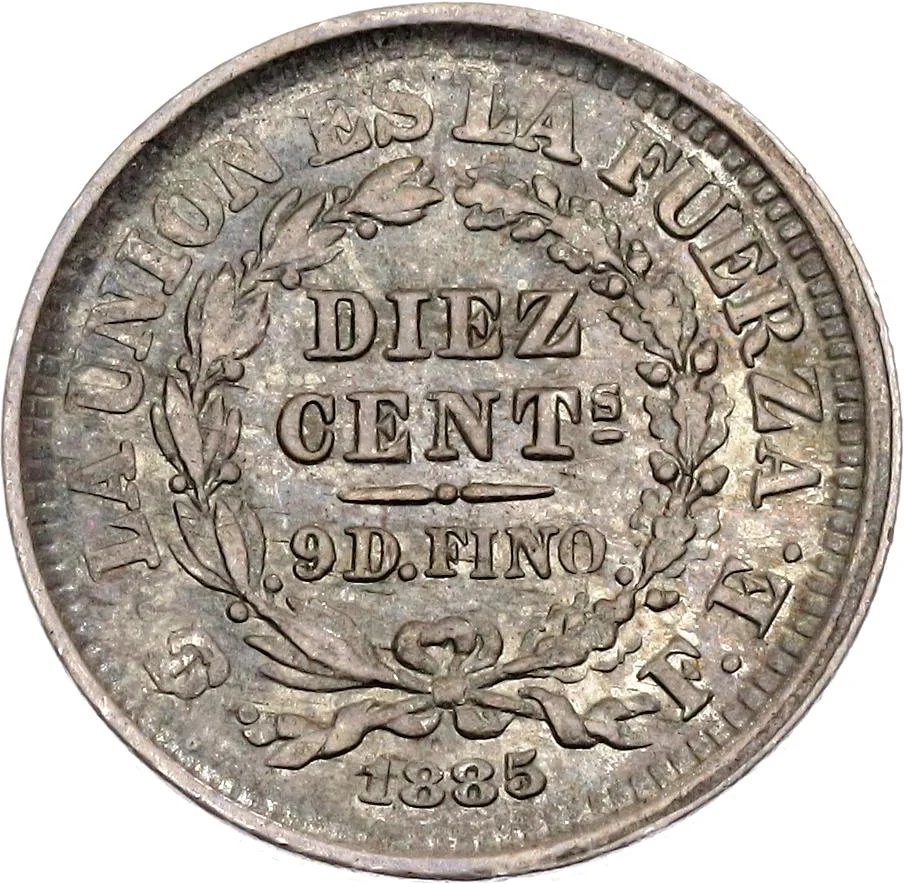
10 centavos – Bolivia
Add to wishlist
Bolivia
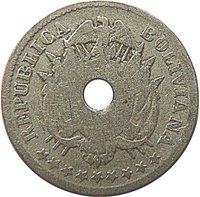
Obverse
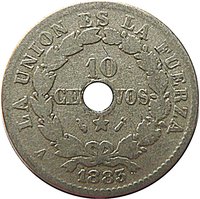
Reverse
Edge
Mints
| Name | Mark |
|---|---|
| Potosi | PTS |
Mintings
| Year | Mint Mark | Mintage | Quality | Collection |
|---|---|---|---|---|
| 1884 | FE | — | Proof | |
| 1884 | FE | — | ||
| 1885 | FE | — | ||
| 1886 | FE | — | ||
| 1887 | FE | — | ||
| 1888 | FE | — | ||
| 1889 | FE | — | ||
| 1890 | CB | — | ||
| 1890 | FE | — | ||
| 1891 | CB | — | ||
| 1893 | CB | 46,104 | ||
| 1895 | ES | — | ||
| 1899 | MM | — | ||
| 1900 | MM | 28,163 |
Historical background
Following the War of the Pacific (1879–1884), Bolivia faced a profound monetary and economic crisis. The loss of its coastal territory and the vital nitrate revenues crippled the national treasury, leaving the government in La Paz with severe debt and a shattered fiscal system. The pre-war currency landscape was chaotic, with Peruvian soles, Bolivian pesos, Chilean currency, and even old Spanish colonial coins circulating at fluctuating values, leading to widespread confusion and commercial paralysis.
In response, the government of President Gregorio Pacheco enacted the Monetary Law of 1884, which aimed to impose order by adopting a bimetallic standard. The law introduced the boliviano as the new national currency, divided into 100 centavos, and pegged it to the French franc at a rate of 1 boliviano = 5 francs, aligning Bolivia with the Latin Monetary Union. While the law mandated the minting of both silver and gold coins, in practice, only silver bolivianos were initially issued due to the government's lack of gold reserves.
This reform provided a necessary, if fragile, stabilization. The new boliviano replaced the old peso and began to unify the monetary system, fostering a slow recovery in domestic trade. However, the fundamental weakness remained: the currency's stability was not backed by robust productivity or fiscal discipline but by legislative fiat, leaving the economy vulnerable to future deficits and the volatile global price of silver, upon which it now depended.
In response, the government of President Gregorio Pacheco enacted the Monetary Law of 1884, which aimed to impose order by adopting a bimetallic standard. The law introduced the boliviano as the new national currency, divided into 100 centavos, and pegged it to the French franc at a rate of 1 boliviano = 5 francs, aligning Bolivia with the Latin Monetary Union. While the law mandated the minting of both silver and gold coins, in practice, only silver bolivianos were initially issued due to the government's lack of gold reserves.
This reform provided a necessary, if fragile, stabilization. The new boliviano replaced the old peso and began to unify the monetary system, fostering a slow recovery in domestic trade. However, the fundamental weakness remained: the currency's stability was not backed by robust productivity or fiscal discipline but by legislative fiat, leaving the economy vulnerable to future deficits and the volatile global price of silver, upon which it now depended.
⭐ Somewhat Rare