

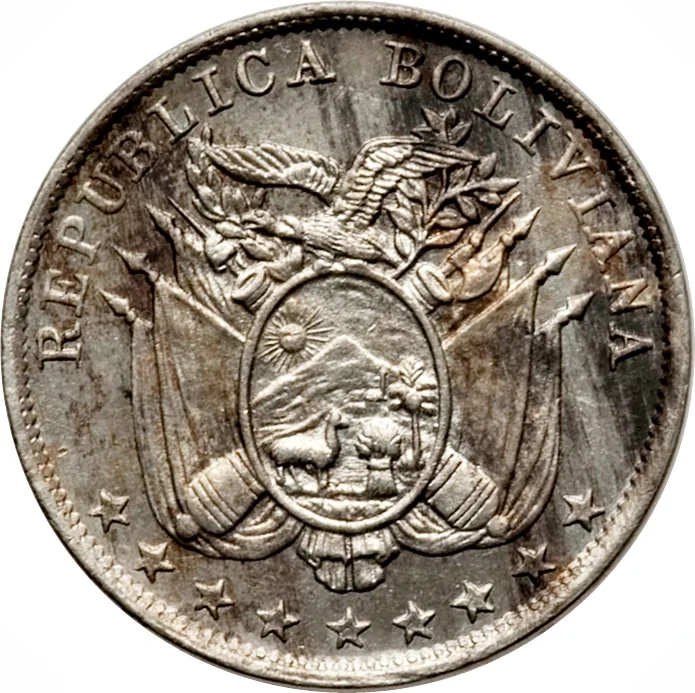
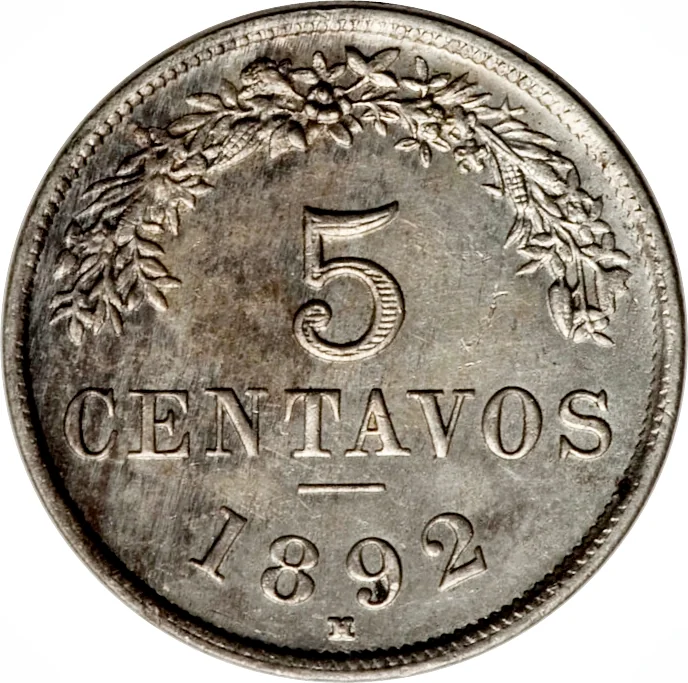
5 centavos – Bolivia
Add to wishlist
Bolivia
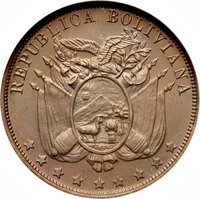
Obverse
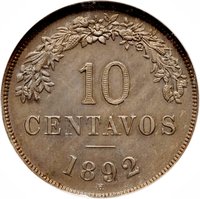
Reverse
Edge
Plain
Mints
| Name | Mark |
|---|---|
| Heaton and Sons / The Mint Birmingham | H |
Historical background
In 1892, Bolivia was grappling with a profound and chaotic monetary crisis, a legacy of the dramatic fall in global silver prices that began in the 1870s. The nation's currency, the boliviano, was a silver standard coin, and the collapse of silver's value caused severe economic dislocation. This devaluation led to rampant inflation, a loss of international purchasing power, and widespread confusion as the intrinsic metal value of coins often fell below their face value. The situation was exacerbated by the circulation of a vast quantity of debased and counterfeit coins, alongside those from the previous currency unit (the scudo), creating a complex and unreliable multi-currency system that hampered commerce and state finances.
The crisis was deeply intertwined with Bolivia's political instability and economic fragility following the War of the Pacific (1879-1884), in which the country lost its coastal territory and vital nitrate revenues. The government, led by President Mariano Baptista, faced immense pressure to stabilize the economy. The primary solution pursued was a shift from the silver standard to a gold standard, a move seen as modern and necessary for international trade and monetary stability. This transition, however, was fraught with difficulty due to a severe lack of gold reserves and the technical challenges of establishing a new mint and currency system in a financially exhausted state.
Consequently, 1892 represents a pivotal year of legislative action and unresolved tension. The government passed monetary laws aimed at establishing a gold-backed boliviano and creating a national bank (the Banco de la Nación Boliviana, founded in 1891) to manage the transition. However, these were largely aspirational; the practical implementation lagged far behind. The year ended with the old, chaotic silver-based system still dominant in daily life, while the framework for a gold standard was laid on paper, setting the stage for the difficult and protracted reform that would continue through the 1890s and early 1900s.
The crisis was deeply intertwined with Bolivia's political instability and economic fragility following the War of the Pacific (1879-1884), in which the country lost its coastal territory and vital nitrate revenues. The government, led by President Mariano Baptista, faced immense pressure to stabilize the economy. The primary solution pursued was a shift from the silver standard to a gold standard, a move seen as modern and necessary for international trade and monetary stability. This transition, however, was fraught with difficulty due to a severe lack of gold reserves and the technical challenges of establishing a new mint and currency system in a financially exhausted state.
Consequently, 1892 represents a pivotal year of legislative action and unresolved tension. The government passed monetary laws aimed at establishing a gold-backed boliviano and creating a national bank (the Banco de la Nación Boliviana, founded in 1891) to manage the transition. However, these were largely aspirational; the practical implementation lagged far behind. The year ended with the old, chaotic silver-based system still dominant in daily life, while the framework for a gold standard was laid on paper, setting the stage for the difficult and protracted reform that would continue through the 1890s and early 1900s.
🌱 Fairly Common