

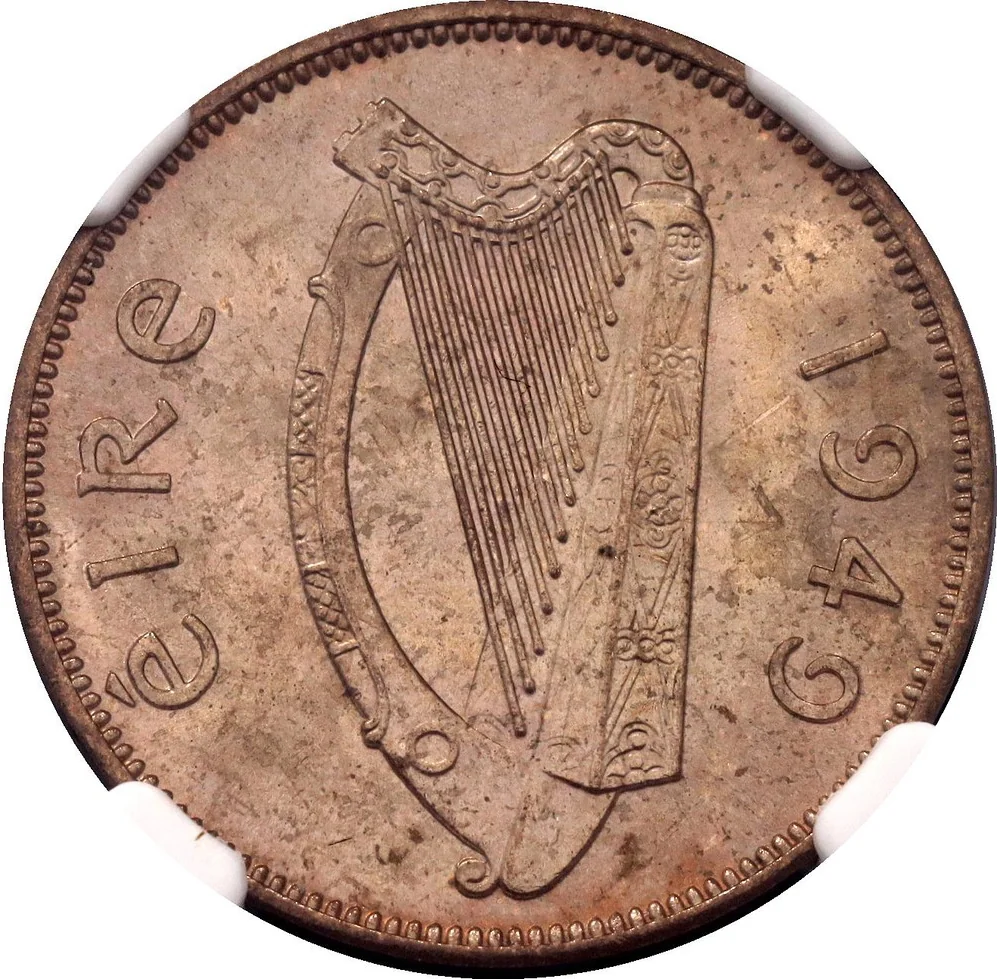
Obverse
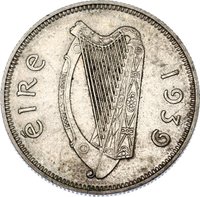
Description:
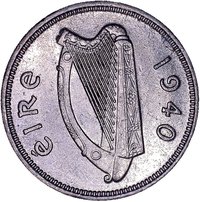
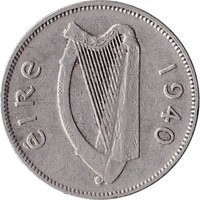
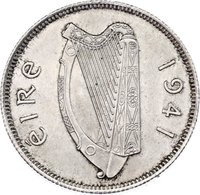
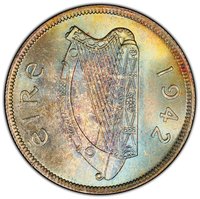
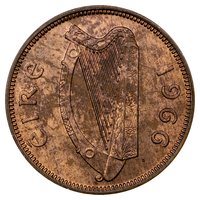
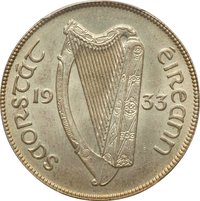
Harp flanked by legends.
Inscription:
éIRe 1967
Translation:
Ireland 1967
Script: Latin (Gaelic)
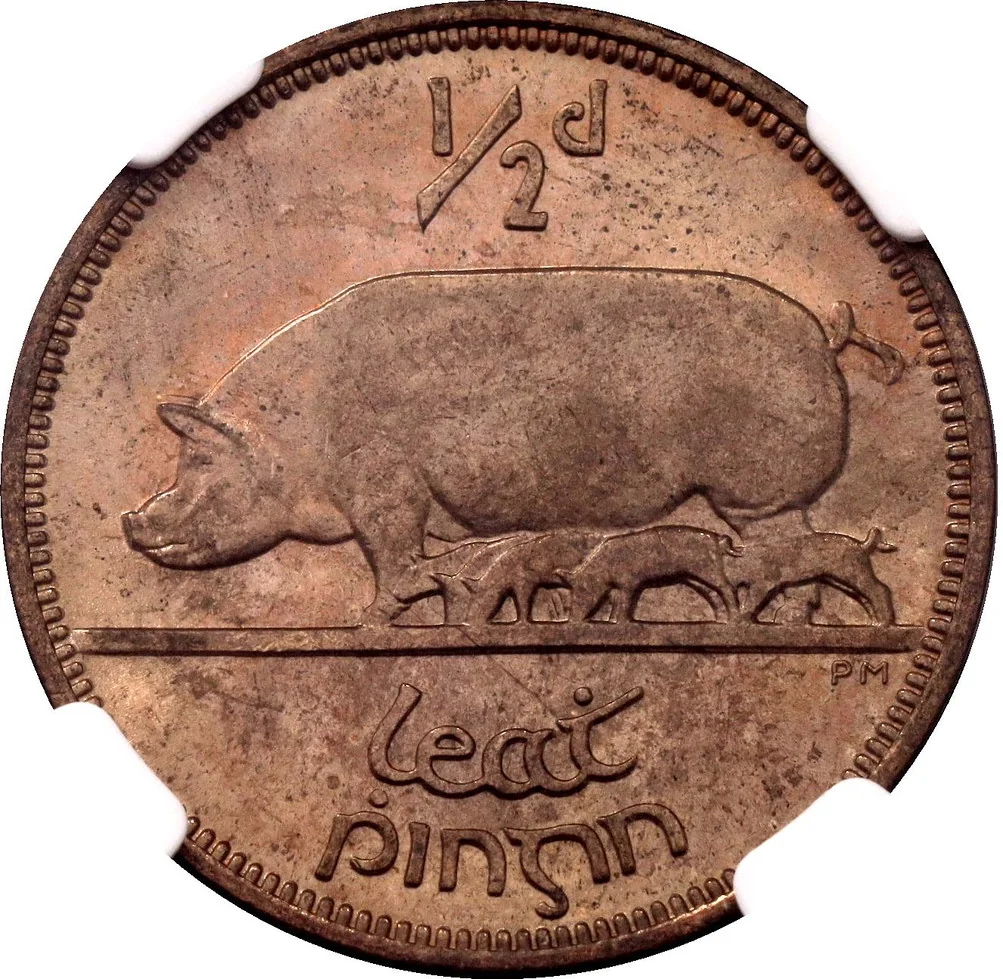
Reverse
Description:
Sow and five piglets standing left.
Inscription:
1/2d
PM
leat
pingin
PM
leat
pingin
Translation:
Halfpenny
Dublin Mint
Halfpenny
Dublin Mint
Halfpenny
Script: Latin (Gaelic)
Engraver: Percy Metcalfe
Edge
Plain
Mints
| Name | Mark |
|---|---|
| Royal Mint (Tower Hill) | — |
Mintings
| Year | Mint Mark | Mintage | Quality | Collection |
|---|---|---|---|---|
| 1939 | — | 240,000 | ||
| 1939 | — | — | Proof | |
| 1940 | — | 1,680,000 | ||
| 1940 | — | — | Proof | |
| 1941 | — | 2,400,000 | ||
| 1941 | — | — | Proof | |
| 1942 | — | 6,931,000 | ||
| 1943 | — | 2,669,000 | ||
| 1946 | — | 720,000 | ||
| 1946 | — | — | Proof | |
| 1949 | — | 1,344,000 | ||
| 1949 | — | — | Proof | |
| 1953 | — | 2,400,000 | ||
| 1953 | — | — | Proof | |
| 1964 | — | — | Proof | |
| 1964 | — | 2,160,000 | ||
| 1965 | — | 1,440,000 | ||
| 1966 | — | 1,680,000 | ||
| 1967 | — | 1,200,000 |
Historical background
In 1939, Ireland's currency situation was defined by its recent and complex separation from the British monetary system. Following the establishment of the Irish Free State in 1922, the new state continued to use British sterling notes and coins, with the legal foundation being the Currency Act of 1927. This act created the Irish Pound (or Punt), which was pegged at par with sterling and fully backed by sterling assets held in a Currency Commission. While distinct Irish notes were issued by Irish commercial banks, British coins remained in circulation, and the two currencies were completely interchangeable, effectively making Ireland part of the sterling area.
This arrangement reflected a pragmatic economic dependency. Ireland's trade was overwhelmingly conducted with the United Kingdom, and the peg provided crucial stability, minimising exchange risk for exporters and importers. However, it also meant that Ireland's monetary policy was essentially determined by the Bank of England in London, limiting the Irish government's independent control over its own money supply and interest rates, especially during economic fluctuations.
The outbreak of the Second World War in September 1939 immediately tested this system. While the parity with sterling was maintained, the war introduced exchange controls and created new pressures. Ireland's official neutrality, while maintaining the sterling link, placed it in a unique and sometimes strained position within the British wartime economic bloc. The period would soon lead to a significant shift, culminating in the Central Bank Act of 1942, which replaced the Currency Commission with a Central Bank, laying the groundwork for a more independent monetary policy in the subsequent decades.
This arrangement reflected a pragmatic economic dependency. Ireland's trade was overwhelmingly conducted with the United Kingdom, and the peg provided crucial stability, minimising exchange risk for exporters and importers. However, it also meant that Ireland's monetary policy was essentially determined by the Bank of England in London, limiting the Irish government's independent control over its own money supply and interest rates, especially during economic fluctuations.
The outbreak of the Second World War in September 1939 immediately tested this system. While the parity with sterling was maintained, the war introduced exchange controls and created new pressures. Ireland's official neutrality, while maintaining the sterling link, placed it in a unique and sometimes strained position within the British wartime economic bloc. The period would soon lead to a significant shift, culminating in the Central Bank Act of 1942, which replaced the Currency Commission with a Central Bank, laying the groundwork for a more independent monetary policy in the subsequent decades.
Series: 1939 Ireland circulation coins
🌱 Very Common