Logo Title
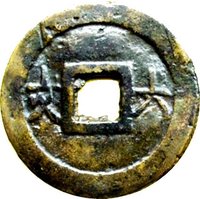
obverse
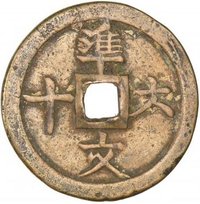
reverse
Obverse SD

6 Văn – Empire of Vietnam

Vietnam
Context
Years: 1868–1883
Country: Vietnam Country flag
Currency:
(1868—1945)
Demonetized: Yes
Material
Diameter: 24 mm
Weight: 2.36 g
Thickness: 1.1 mm
Composition: Brass
Magnetic: No
Technique: Cast
Alignment: Medal alignment
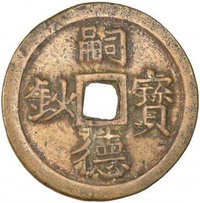
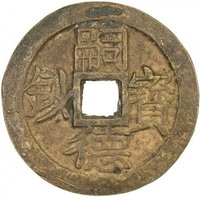
Obverse
OBVERSE ↑
flip
Reverse
REVERSE ↑
References
KM: #Click to copy to clipboard380
Numista: #43086

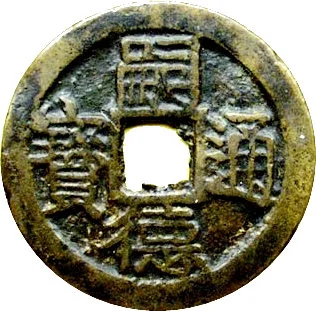
Obverse

Description:
Four Chinese characters read vertically, right to left.
Inscription:


寶 通

 德
Translation:
Virtue Inherited

Treasure Circulated

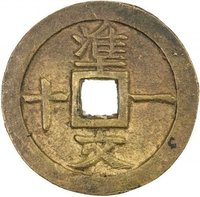
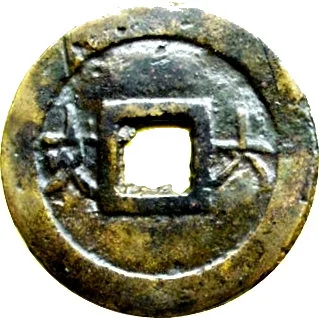
Reverse

Description:
Left and right Chinese ideograms.
Inscription:
文六
Translation:
The sixth year of the [Kaigen] era.

Edge

Plain

Mintings

YearMint MarkMintageQualityCollection

Historical background

In 1868, the currency situation in the Empire of Vietnam, under the reign of Emperor Tự Đức, was complex and transitional, reflecting both internal economic pressures and growing foreign influence. The primary circulating currency was the traditional zinc văn (or sapeque) cash coin, cast in imperial mints. However, the system was plagued by chronic debasement, counterfeiting, and regional inconsistencies, leading to a severe loss of public confidence and frequent market instability. Concurrently, silver in bar and ingot forms (known as nén or tael) served as the standard for high-value transactions and state treasury operations, creating a cumbersome bimetallic system.

This period saw the increasing intrusion of foreign silver coins, most notably the Mexican silver dollar (also known as the Spanish piastre or đồng bạc), which flowed into the country through burgeoning international trade, especially in the recently French-occupied Cochinchina. These foreign coins, prized for their consistent silver content and weight, began to circulate widely in port cities and the south, undermining the official imperial currency. The imperial court in Huế, while recognizing the problems, was largely reactive and struggled to reform the archaic minting system or establish a unified, trusted national currency.

Consequently, by 1868, Vietnam operated with a fragmented monetary landscape. The official zinc cash coins were depreciating, while unofficial but highly trusted foreign silver coins gained dominance in commerce. This situation weakened the economic authority of the Huế court, exacerbated fiscal difficulties, and highlighted the empire's broader challenges in adapting to the pressures of modernization and colonial encroachment, which would culminate in the formal establishment of French Indochina and its unified currency system in the following decades.
🌟 Limited