

10 kroner – Denmark
Add to wishlist
Denmark
Context
Years: 2001–2002
Issuer: Denmark
Ruler: Margrethe II
Currency:
(since 1873)
Total mintage: 12,099,900
Material
Diameter: 23.35 mm
Weight: 7 g
Thickness: 2.3 mm
Shape: Round
Composition: Aluminium bronze
Magnetic: No
Technique: Milled
Alignment: Medal alignment
flip
References
KM: #
Numista: #1461
Value
Exchange value: 10 DKK
Inflation-adjusted value: 15.62 DKK
Obverse
Description:
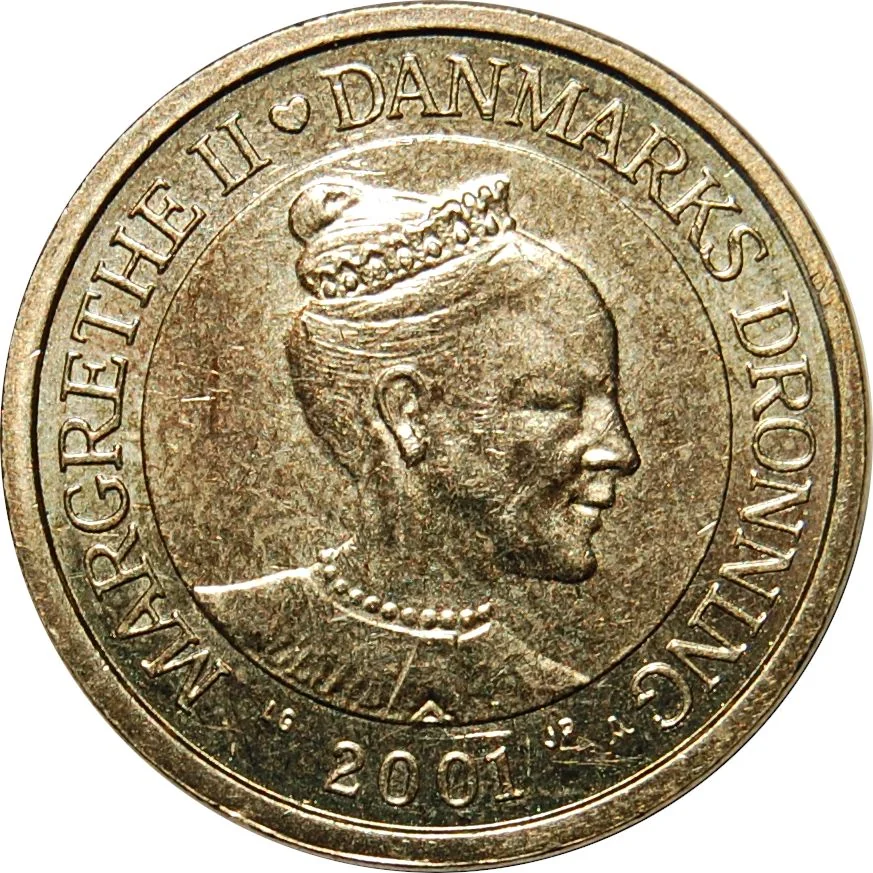
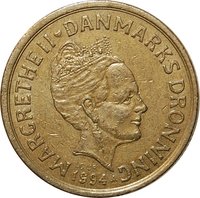
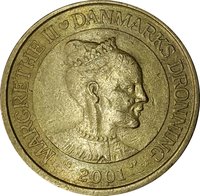
Portrait of Queen Margrethe II in profile.
Inscription:
MARGRETHE II ♥ DANMARKS DRONNING
LG 2001 JP A
LG 2001 JP A
Translation:
MARGRETHE II ♥ QUEEN OF DENMARK
LG 2001 JP A
LG 2001 JP A
Script: Latin
Engraver: Mogens Møller
Reverse
Description:
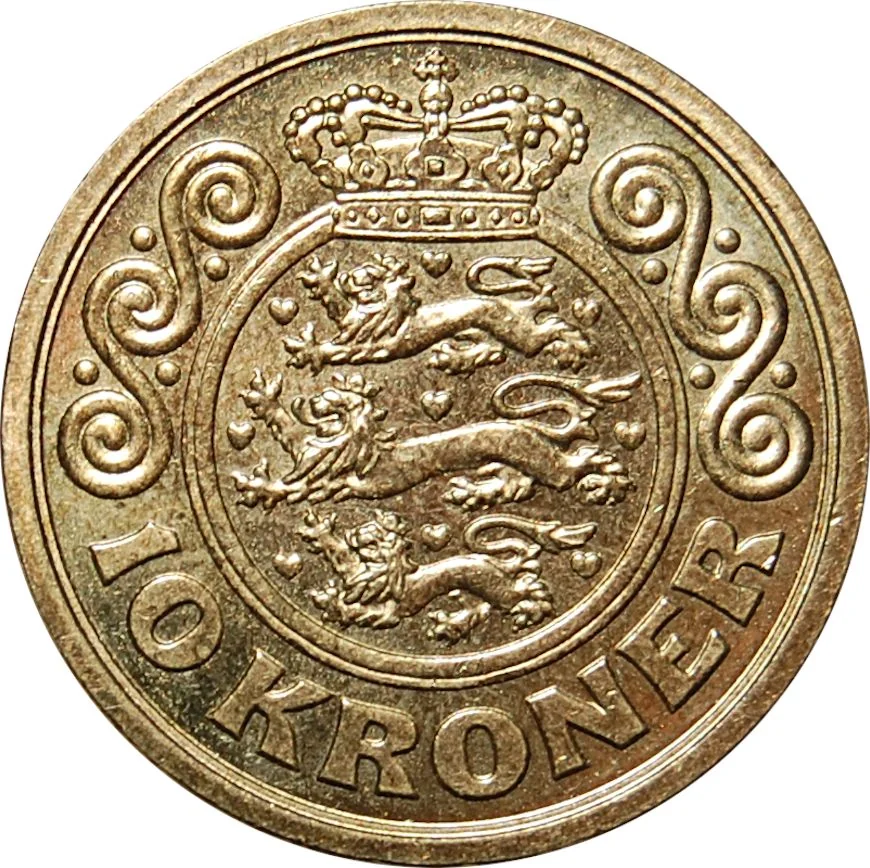
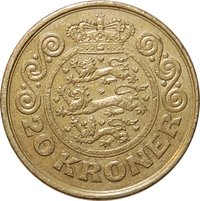
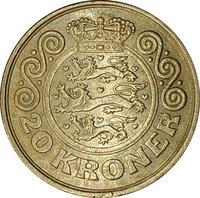
Crowned Danish coat of arms in circle, ornamental border.
Inscription:
10 KRONER
Script: Latin
Engraver: Johan Alkjaer
Edge
Plain
Mints
| Name | Mark |
|---|---|
| Royal Danish Mint | — |
Mintings
| Year | Mint Mark | Mintage | Quality | Collection |
|---|---|---|---|---|
| 2001 | LG;JP;A | 4,800,000 | ||
| 2002 | — | 7,299,900 |
Historical background
In 2001, Denmark's currency situation was defined by its long-standing and politically deliberate participation in the European Exchange Rate Mechanism II (ERM II). Following the rejection of the Maastricht Treaty in a 1992 referendum, Denmark had secured an opt-out from adopting the euro. However, to maintain monetary stability and close alignment with the Eurozone, the Danish krone (DKK) was pegged to the euro within a very narrow band of ±2.25% under ERM II. This fixed exchange rate policy was managed by the independent Danish central bank, Danmarks Nationalbank, which prioritized currency stability above other monetary goals, effectively shadowing the interest rate decisions of the European Central Bank.
The system faced a significant test in the year 2000 during the launch of the euro, when speculative pressures briefly challenged the peg, requiring decisive intervention. By 2001, the mechanism had re-stabilized, but it continued to shape Denmark's economic policy. The fixed krone provided predictability for the small, open, and trade-dependent economy, ensuring low exchange rate risk with its largest trading partner, the Eurozone. This stability, however, came at the cost of forfeiting an independent monetary policy; Danmarks Nationalbank was compelled to adjust its interest rates primarily to defend the peg, even if domestic economic conditions might have suggested a different course.
The currency arrangement remained a settled and uncontroversial technocratic issue throughout 2001, in stark contrast to the political debate surrounding the euro itself. That September, a second referendum on adopting the single currency was held, resulting in another rejection by the Danish electorate (53.2% against). Consequently, the status quo of the fixed exchange rate peg was reaffirmed as Denmark's permanent model—a hybrid solution allowing for economic integration without full political integration into the Eurozone. This outcome cemented the krone's managed stability for the foreseeable future.
The system faced a significant test in the year 2000 during the launch of the euro, when speculative pressures briefly challenged the peg, requiring decisive intervention. By 2001, the mechanism had re-stabilized, but it continued to shape Denmark's economic policy. The fixed krone provided predictability for the small, open, and trade-dependent economy, ensuring low exchange rate risk with its largest trading partner, the Eurozone. This stability, however, came at the cost of forfeiting an independent monetary policy; Danmarks Nationalbank was compelled to adjust its interest rates primarily to defend the peg, even if domestic economic conditions might have suggested a different course.
The currency arrangement remained a settled and uncontroversial technocratic issue throughout 2001, in stark contrast to the political debate surrounding the euro itself. That September, a second referendum on adopting the single currency was held, resulting in another rejection by the Danish electorate (53.2% against). Consequently, the status quo of the fixed exchange rate peg was reaffirmed as Denmark's permanent model—a hybrid solution allowing for economic integration without full political integration into the Eurozone. This outcome cemented the krone's managed stability for the foreseeable future.
🌱 Very Common