

1 cent – Malta
Add to wishlist
Malta
Context
Years: 1972–1982
Issuer: Malta
Period:
(since 1974)
Ruler: Elizabeth II
Currency:
(1972—2007)
Demonetization: 1986
Total mintage: 12,018,484
Material
References
KM: #
Numista: #4299
Value
Exchange value: 0.01 MTL
Obverse
Description:
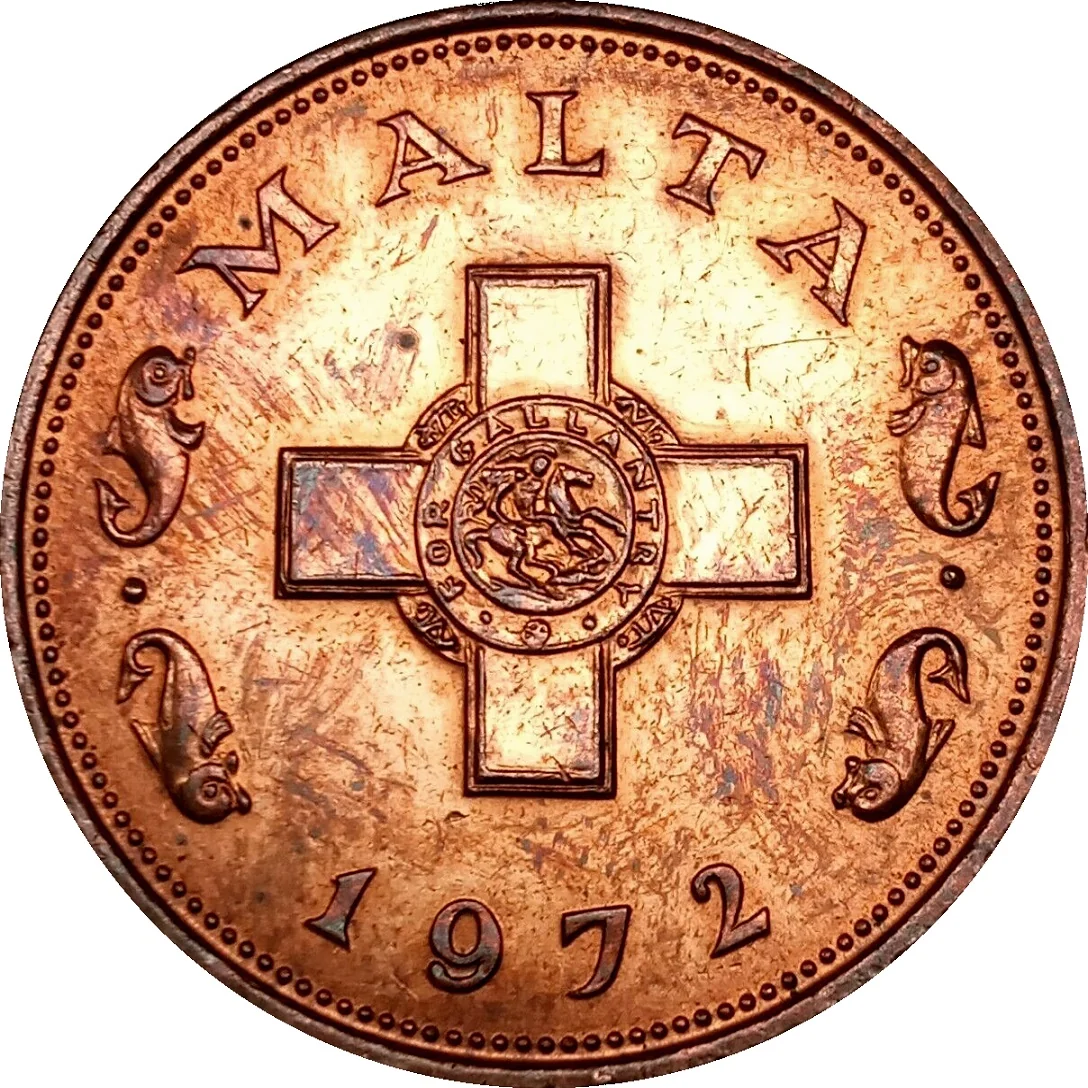
The George Cross, encircled by a wreath, bears the inscription 'FOR GALLANTRY' with a GVI monagram in each corner.
Inscription:
MALTA
GVI GVI
FOR GALLANTRY
GVI GVI
1972
GVI GVI
FOR GALLANTRY
GVI GVI
1972
Translation:
MALTA
GVI GVI
FOR GALLANTRY
GVI GVI
1972
GVI GVI
FOR GALLANTRY
GVI GVI
1972
Script: Latin
Language: English
Engraver: Christopher Ironside
Reverse
Description:
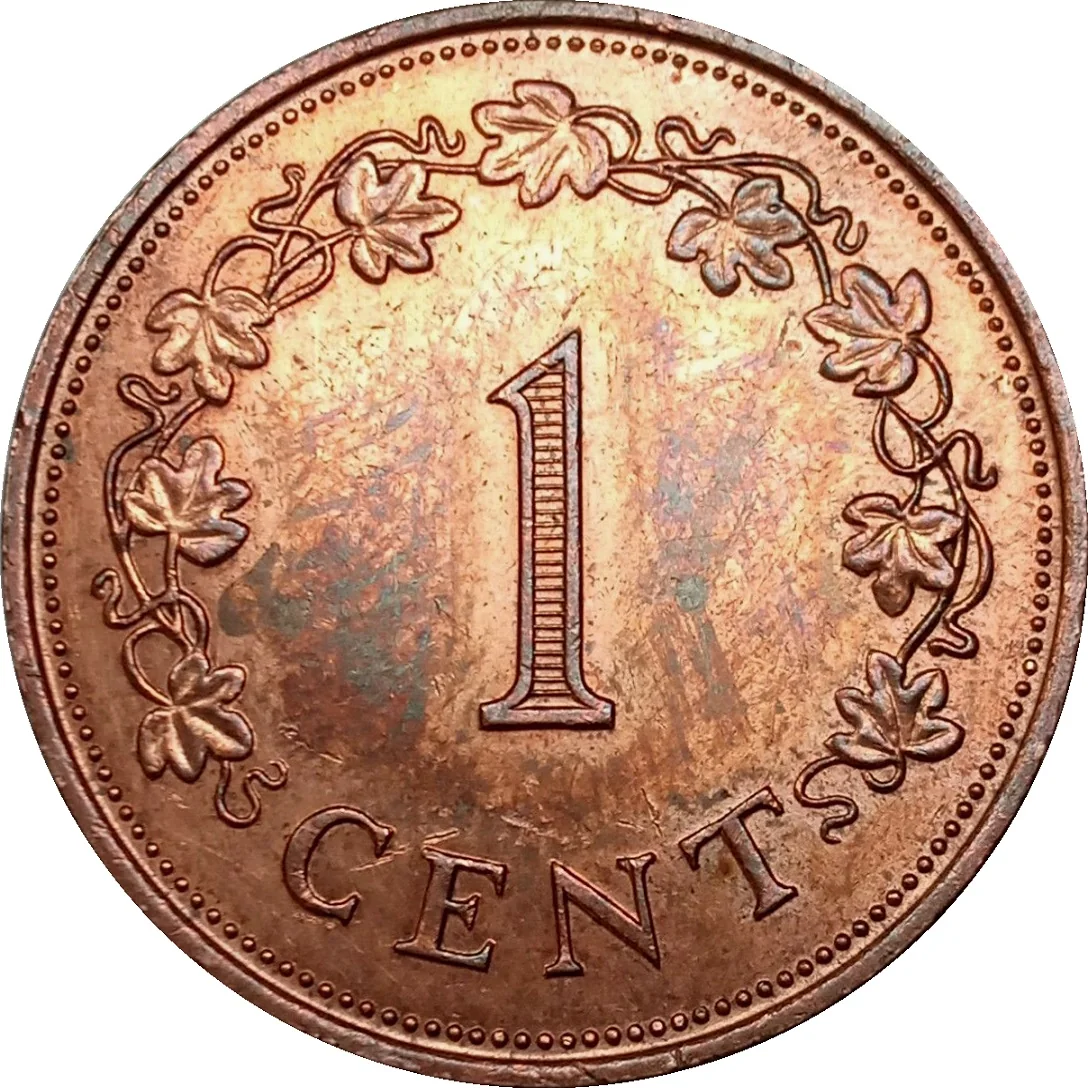
Vine-wreathed denomination.
Inscription:
1
CENT
CENT
Script: Latin
Engraver: Christopher Ironside
Edge
Plain
Mints
| Name | Mark |
|---|---|
| Royal Mint | — |
| Franklin Mint | FM |
Mintings
| Year | Mint Mark | Mintage | Quality | Collection |
|---|---|---|---|---|
| 1972 | — | 7,653,000 | ||
| 1972 | — | 8,000 | Proof | |
| 1975 | — | 1,500,000 | ||
| 1976 | FM | 5,000 | Matte | |
| 1976 | FM | 26,000 | Proof | |
| 1977 | — | 2,793,000 | ||
| 1977 | FM | 6,884 | Proof | |
| 1977 | FM | 5,252 | Special Uncirculated | |
| 1978 | FM | 3,244 | Proof | |
| 1978 | FM | 5,252 | Special Uncirculated | |
| 1979 | FM | 6,577 | Proof | |
| 1979 | FM | 537 | Special Uncirculated | |
| 1980 | FM | 3,451 | Proof | |
| 1980 | FM | 385 | Special Uncirculated | |
| 1981 | FM | 1,453 | Proof | |
| 1981 | FM | 449 | Special Uncirculated | |
| 1982 | — | — |
Historical background
In 1972, Malta's currency situation was defined by its recent independence from Britain and the ongoing process of establishing full monetary sovereignty. The Maltese pound (₤M) remained pegged at par to the British pound sterling (GBP), a legacy of colonial rule, and continued to be part of the Sterling Area. This arrangement provided stability and facilitated trade with the UK, which was still Malta's dominant economic partner. However, it also meant that Malta's monetary policy was largely influenced by the economic conditions and decisions made in London, limiting the young nation's independent economic levers.
The global context of 1972 was particularly turbulent, marked by the collapse of the Bretton Woods system and significant volatility in international currency markets. The British pound itself was under pressure, leading to its eventual floating in June 1972. This event directly triggered a key change for Malta: the Maltese pound officially broke its exclusive link with sterling and was instead pegged to a basket of currencies. This basket was weighted to reflect Malta's major trading partners, thereby reducing dependence on the UK's economic fortunes and spreading exchange rate risk.
These technical shifts were part of a broader national project under Prime Minister Dom Mintoff's Labour government, which pursued a assertive policy of non-alignment and economic restructuring. The currency moves of 1972 were preparatory steps toward the more definitive changes that would follow, including the establishment of the Central Bank of Malta later that same year and the eventual redenomination to the Maltese lira in 1973. Thus, 1972 was a transitional year where Malta began to cautiously navigate its own monetary path while managing the practical necessities of international trade and finance.
The global context of 1972 was particularly turbulent, marked by the collapse of the Bretton Woods system and significant volatility in international currency markets. The British pound itself was under pressure, leading to its eventual floating in June 1972. This event directly triggered a key change for Malta: the Maltese pound officially broke its exclusive link with sterling and was instead pegged to a basket of currencies. This basket was weighted to reflect Malta's major trading partners, thereby reducing dependence on the UK's economic fortunes and spreading exchange rate risk.
These technical shifts were part of a broader national project under Prime Minister Dom Mintoff's Labour government, which pursued a assertive policy of non-alignment and economic restructuring. The currency moves of 1972 were preparatory steps toward the more definitive changes that would follow, including the establishment of the Central Bank of Malta later that same year and the eventual redenomination to the Maltese lira in 1973. Thus, 1972 was a transitional year where Malta began to cautiously navigate its own monetary path while managing the practical necessities of international trade and finance.
Series: 1972 Malta circulation coins
🌱 Very Common