


10 yuan – People's Republic of China
Add to wishlist
Non-circulating coins
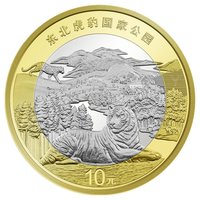
Commemoration: Northeast China Tiger and Leopard National Park
Series: China National Park
China
Context
Year: 2024
Country: China
Issuer: People's Republic of China
Issuing organization: People's Bank of China
Period:
(since 1949)
Currency:
(since 1955)
Total mintage: 60,000
Material

References
KM: #
Numista: #429316
Value
Exchange value: 10 CNY
Bullion value: $75.98
Inflation-adjusted value: 9.96 CNY
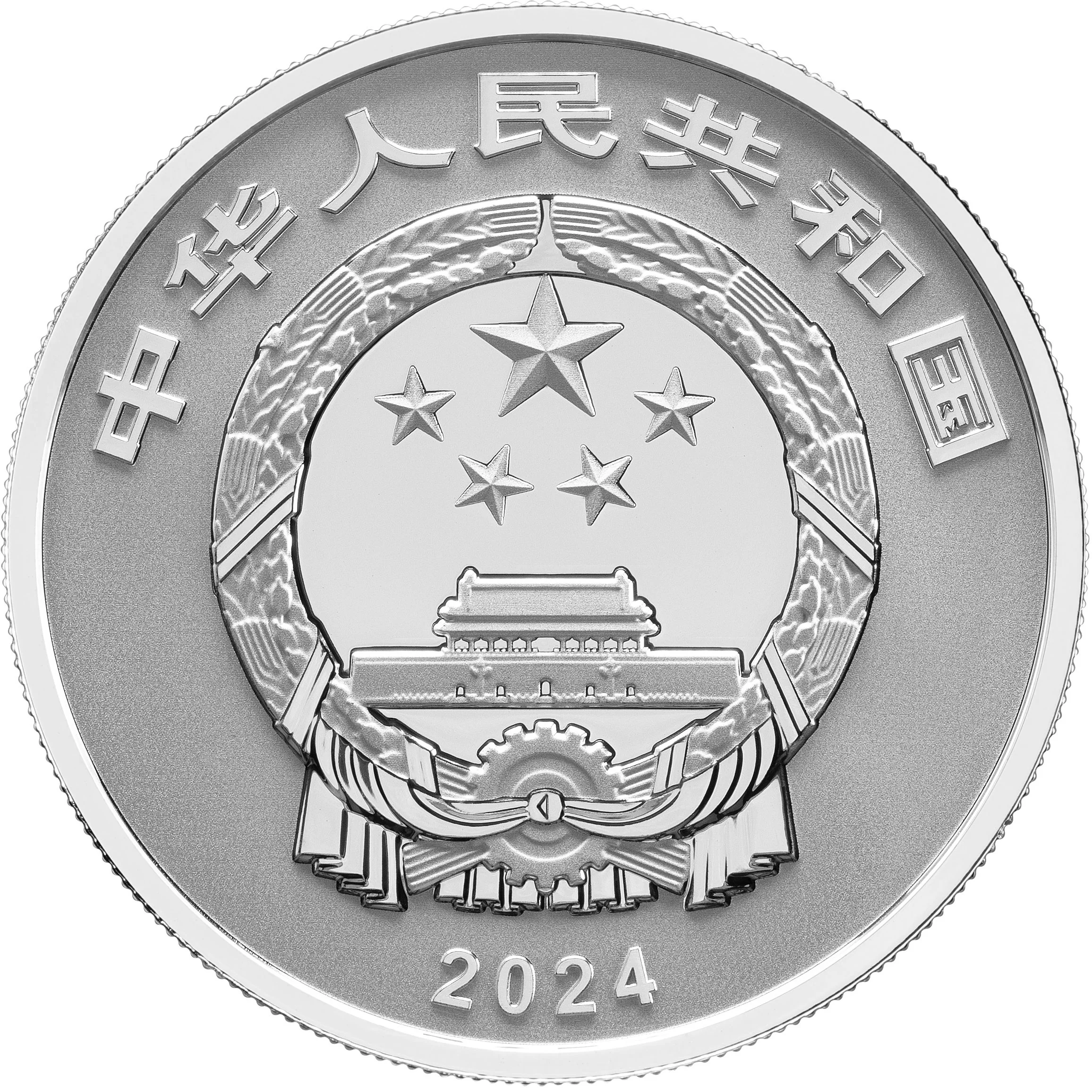
Obverse
Description:
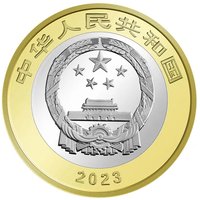
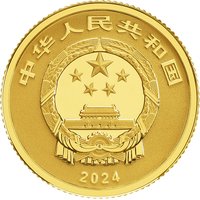
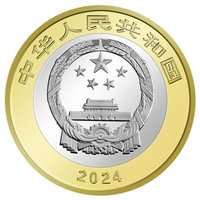
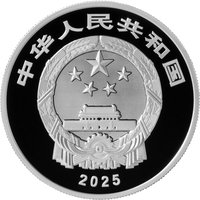
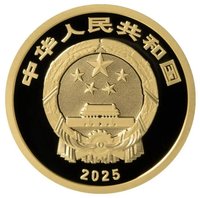
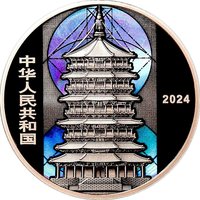
National emblem, "People's Republic of China," and year.
Inscription:
中 华 人 民 共 和 国
Translation:
The People's Republic of China
Language: Chinese
Reverse
Description:
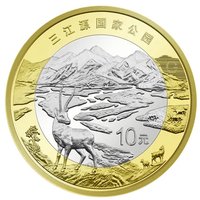
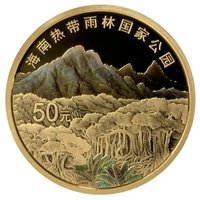
Featuring Siberian tigers, an Amur leopard, and Northeast China red pines and birches against the park's landscape, with the park's name and face value.
Script: Chinese
Edge
Reeded
Mints
| Name | Mark |
|---|---|
| Shenzhen Mint | — |
Mintings
| Year | Mint Mark | Mintage | Quality | Collection |
|---|---|---|---|---|
| 2024 | — | 60,000 | Proof |
Historical background
In 2024, the People's Republic of China's currency, the renminbi (RMB), operates within a managed floating exchange rate system, with its value primarily referenced against a basket of currencies rather than the US dollar alone. The People's Bank of China (PBOC) sets a daily central parity rate, allowing the onshore RMB (CNY) to trade within a narrow band of 2% above or below this midpoint. This mechanism provides the state with significant control to mitigate excessive volatility and guide the currency's direction in line with broader economic objectives, such as promoting international trade and financial stability. The offshore RMB (CNH), traded in markets like Hong Kong, experiences greater market-driven fluctuations but remains heavily influenced by mainland policy signals and liquidity conditions.
The currency faces a complex set of pressures in 2024. Domestically, efforts to stimulate a sluggish post-pandemic recovery, including monetary easing, have created downward pressure on the RMB. This contrasts with a period of high-interest rates in major economies like the United States, which traditionally attracts capital flows out of China and weakens the currency. Consequently, the PBOC has employed a toolkit of measures, including stronger-than-expected daily fixings, state bank interventions in the FX market, and administrative guidance, to prevent rapid and disorderly depreciation. The overarching goal is to balance the need for a competitive export rate with the risks of capital flight and imported inflation.
Looking forward, the internationalization of the RMB remains a strategic priority, with increased use in commodity settlements and bilateral trade agreements, yet it progresses incrementally. The currency's share of global payments and reserves remains modest compared to the US dollar and euro. For 2024, the key watchpoints are the divergence between Chinese and US monetary policy, the success of domestic economic stimulus, and geopolitical factors. The authorities are expected to maintain a "managed" stance, tolerating gradual depreciation within bounds but acting decisively to curb one-way speculative bets, ensuring currency stability as a foundation for broader financial and social stability.
The currency faces a complex set of pressures in 2024. Domestically, efforts to stimulate a sluggish post-pandemic recovery, including monetary easing, have created downward pressure on the RMB. This contrasts with a period of high-interest rates in major economies like the United States, which traditionally attracts capital flows out of China and weakens the currency. Consequently, the PBOC has employed a toolkit of measures, including stronger-than-expected daily fixings, state bank interventions in the FX market, and administrative guidance, to prevent rapid and disorderly depreciation. The overarching goal is to balance the need for a competitive export rate with the risks of capital flight and imported inflation.
Looking forward, the internationalization of the RMB remains a strategic priority, with increased use in commodity settlements and bilateral trade agreements, yet it progresses incrementally. The currency's share of global payments and reserves remains modest compared to the US dollar and euro. For 2024, the key watchpoints are the divergence between Chinese and US monetary policy, the success of domestic economic stimulus, and geopolitical factors. The authorities are expected to maintain a "managed" stance, tolerating gradual depreciation within bounds but acting decisively to curb one-way speculative bets, ensuring currency stability as a foundation for broader financial and social stability.
Series: China National Park


✨ Legendary