

25 Dollars – Australia
Australia
Context

Material
References
KM: #Click to copy to clipboard1508
Numista: #145644
Value
Exchange value: 25 AUD = $17.80
Bullion value: $1039.54
Inflation-adjusted value: 37.23 AUD
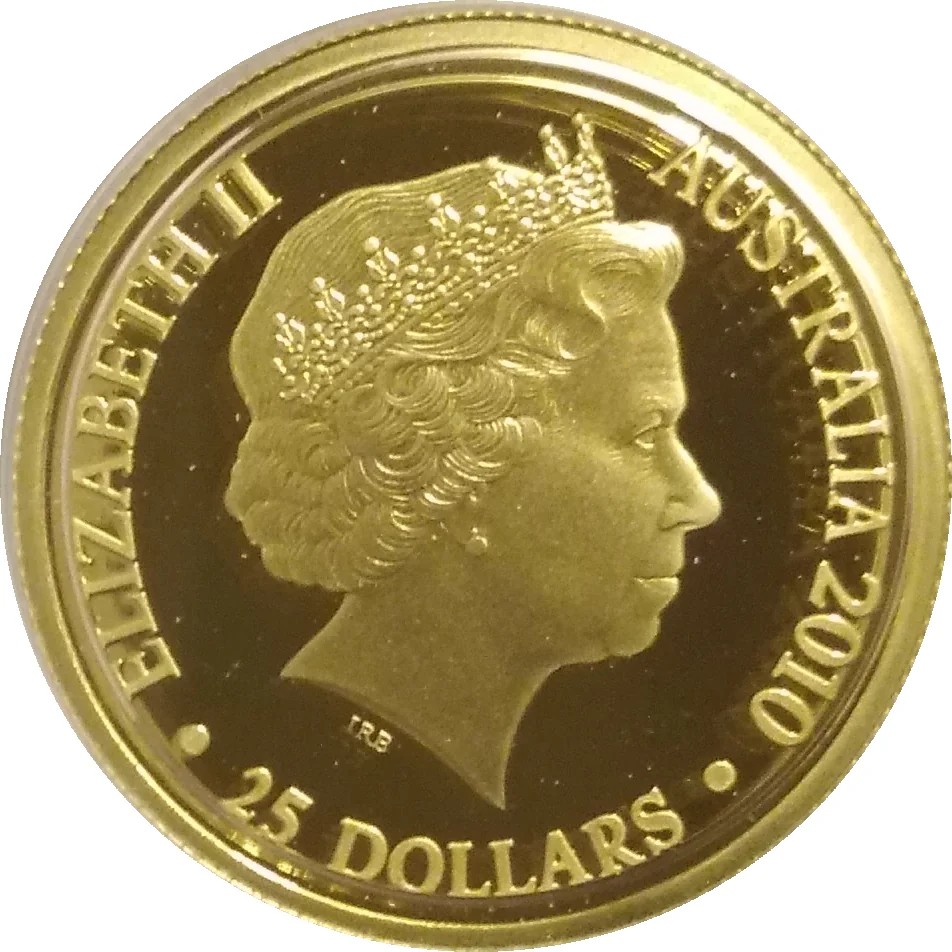
Obverse
Description:
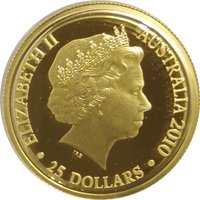
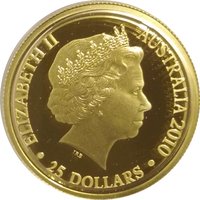
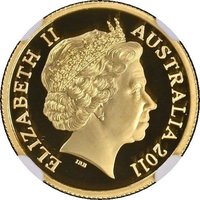
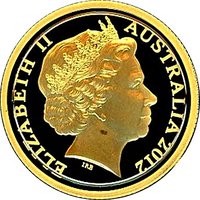
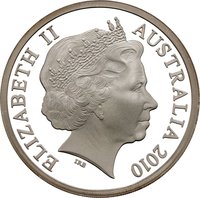
Queen Elizabeth IV, facing right, wearing the Girls of Great Britain and Ireland Tiara.
Inscription:
ELIZABETH II
AUSTRALIA 2010
25 DOLLARS
IRB
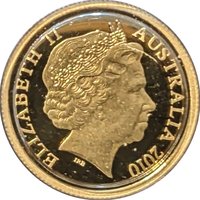
AUSTRALIA 2010
25 DOLLARS
IRB
Script: Latin
Designer: Ian Rank-Broadley
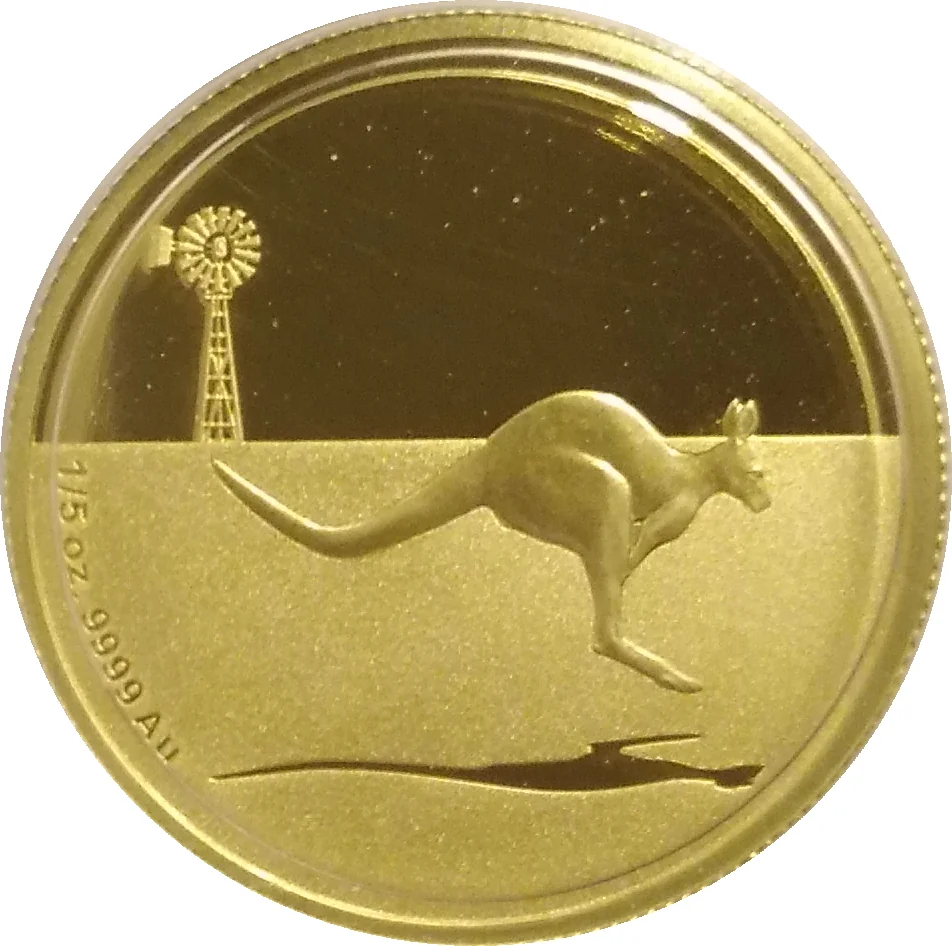
Reverse
Description:
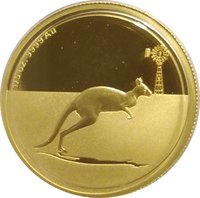
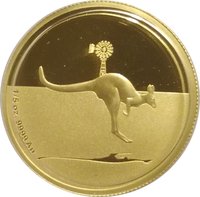
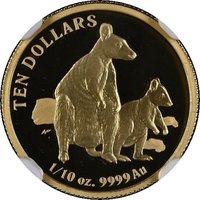
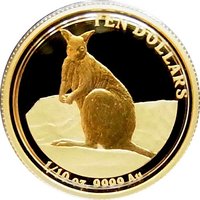
Kangaroo and windmill at dusk.
Inscription:
1/5oz .9999 Au
Script: Latin
Designer: Wojciech Pietranik
Edge
Milled
Mints
| Name | Mark |
|---|---|
| Royal Australian Mint | — |
Mintings
| Year | Mint Mark | Mintage | Quality | Collection |
|---|---|---|---|---|
| 2010 | — | 1,000 | Proof |
Historical background
In 2010, Australia's currency situation was defined by the remarkable strength of the Australian dollar (AUD), which was trading near parity with the US dollar for the first time since the early 1980s. This surge was driven by a powerful combination of factors: Australia's resilient, resource-rich economy had weathered the Global Financial Crisis better than most advanced nations, leading to higher interest rates that attracted foreign capital. Crucially, soaring demand from China for Australian iron ore and coal, fueled by its massive post-crisis stimulus, created a historic terms of trade boom. This positioned the AUD as a commodity-linked currency and a proxy for global growth and Asian demand.
The high dollar created a stark "two-speed economy." The mining and resource sectors, along with related industries, thrived with high export incomes and significant investment. However, the strong AUD placed severe pressure on other trade-exposed sectors like manufacturing, tourism, and education. These industries faced intense international competition as their exports became more expensive and imports cheaper, leading to job losses and calls for government assistance. The Reserve Bank of Australia (RBA) faced a complex policy challenge, having to balance inflationary pressures from the booming mining sector against the deflationary impact of the high currency on other parts of the economy.
By the end of 2010, the AUD broke through parity with the USD, a psychologically significant milestone. This reflected not only Australia's strong fundamentals but also global currency dynamics, including quantitative easing in the United States which weakened the greenback. The high currency acted as a natural economic stabiliser, helping to contain inflation and giving the RBA flexibility to pause its rate-hiking cycle. However, it cemented a structural shift in the economy, accelerating the decline of traditional manufacturing and highlighting the nation's deepening economic ties with Asia, setting the stage for the mining investment boom of the following years.
The high dollar created a stark "two-speed economy." The mining and resource sectors, along with related industries, thrived with high export incomes and significant investment. However, the strong AUD placed severe pressure on other trade-exposed sectors like manufacturing, tourism, and education. These industries faced intense international competition as their exports became more expensive and imports cheaper, leading to job losses and calls for government assistance. The Reserve Bank of Australia (RBA) faced a complex policy challenge, having to balance inflationary pressures from the booming mining sector against the deflationary impact of the high currency on other parts of the economy.
By the end of 2010, the AUD broke through parity with the USD, a psychologically significant milestone. This reflected not only Australia's strong fundamentals but also global currency dynamics, including quantitative easing in the United States which weakened the greenback. The high currency acted as a natural economic stabiliser, helping to contain inflation and giving the RBA flexibility to pause its rate-hiking cycle. However, it cemented a structural shift in the economy, accelerating the decline of traditional manufacturing and highlighting the nation's deepening economic ties with Asia, setting the stage for the mining investment boom of the following years.
Series: Gold Kangaroo
✨ Legendary