

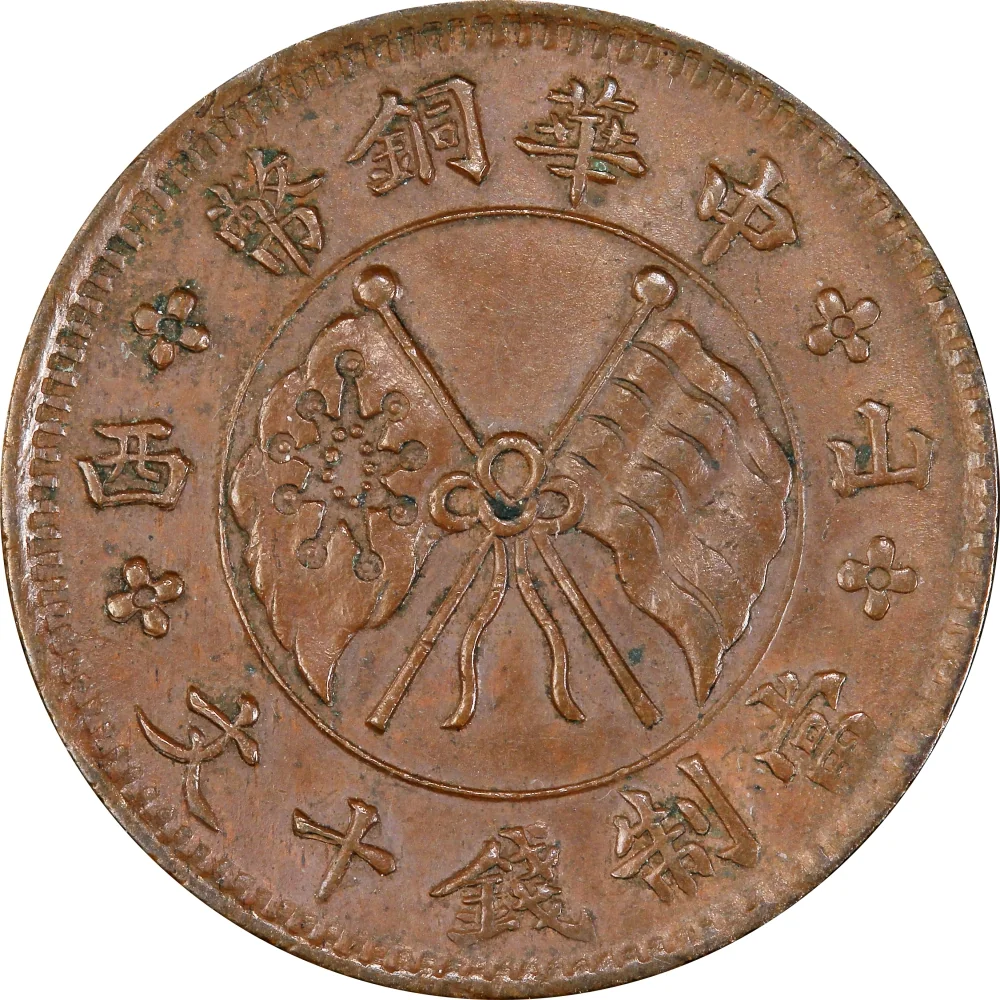
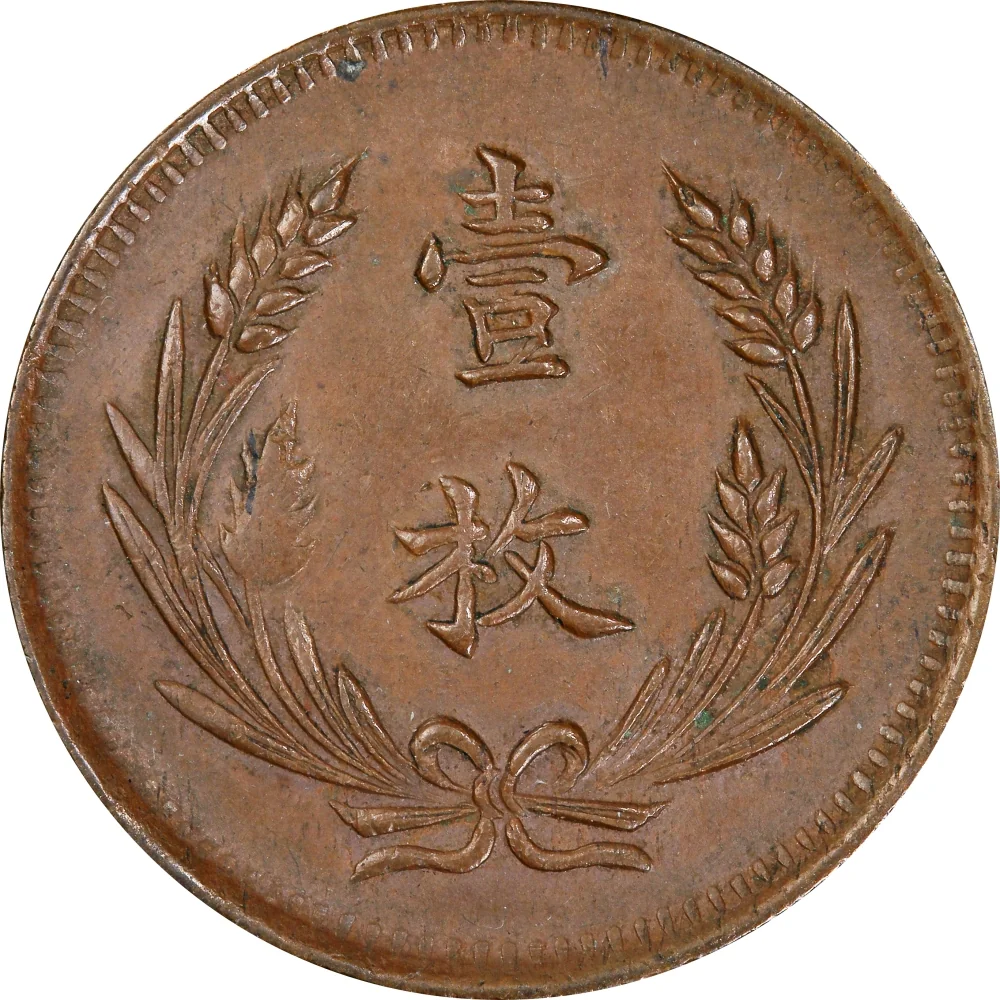
10 Cash – Shansi Province
China
Context
Year: 1919
Country: China 
Issuer: Shansi Province
Period:
(1912—1949)
Currency:
(1919—1937)
Subdivision: 10 Cash = 1 Fen
Demonetized: Yes
Material
References
Y: #Click to copy to clipboardA435
Numista: #42494
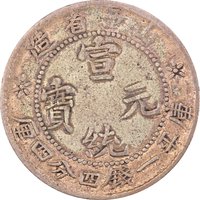
Obverse
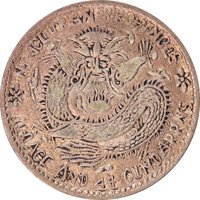
Reverse
Edge
Plain
Mintings
| Year | Mint Mark | Mintage | Quality | Collection |
|---|---|---|---|---|
| 1919 | — | — |
Historical background
In 1919, the currency situation in Shanxi Province was characterized by extreme fragmentation and instability, a direct legacy of the late Qing dynasty's collapse and the ensuing warlord era. The province was under the firm control of the "Model Governor," Yan Xishan, who had ruled since 1911. While he brought a degree of political stability, the monetary system was a chaotic mix of old imperial copper cash, silver sycee (measured in taels), and a proliferation of banknotes issued by various entities. These included notes from the semi-official Bank of Communications, but more dominantly, from Yan Xishan's own financial vehicles like the Shanxi Provincial Bank and numerous private qianzhuang (native banks). The lack of a unified standard led to varying exchange rates between coins, silver, and paper, causing significant confusion and risk in everyday commerce.
The core of the instability lay in the over-issuance of unbacked paper currency. To finance his military and industrial ambitions within his autonomous domain, Yan Xishan's banks regularly printed notes beyond their silver reserves. This practice led to widespread discounting, where Shanxi banknotes traded at a steep loss against more reliable silver dollars or notes from foreign banks in treaty ports like Tianjin. The value of paper money could fluctuate wildly between cities and even markets, eroding public trust. For the peasant majority, transactions in copper cash remained common, but the link between copper and silver was also volatile, further complicating tax payments and trade.
This monetary chaos was a microcosm of China's broader financial disintegration, but with a distinct provincial stamp. Yan Xishan tolerated the system as it provided him with a crucial tool for seigniorage—effectively taxing the population through inflation—to fund his state-building projects without immediate political cost. However, it placed a heavy burden on Shanxi's economy, discouraging external investment and creating an undercurrent of popular resentment. The situation in 1919 thus set the stage for Yan's later, more concerted efforts in the 1920s to centralize and reform Shanxi's currency, attempting to replace the chaotic mix with a unified provincial dollar, though with only partial and temporary success.
The core of the instability lay in the over-issuance of unbacked paper currency. To finance his military and industrial ambitions within his autonomous domain, Yan Xishan's banks regularly printed notes beyond their silver reserves. This practice led to widespread discounting, where Shanxi banknotes traded at a steep loss against more reliable silver dollars or notes from foreign banks in treaty ports like Tianjin. The value of paper money could fluctuate wildly between cities and even markets, eroding public trust. For the peasant majority, transactions in copper cash remained common, but the link between copper and silver was also volatile, further complicating tax payments and trade.
This monetary chaos was a microcosm of China's broader financial disintegration, but with a distinct provincial stamp. Yan Xishan tolerated the system as it provided him with a crucial tool for seigniorage—effectively taxing the population through inflation—to fund his state-building projects without immediate political cost. However, it placed a heavy burden on Shanxi's economy, discouraging external investment and creating an undercurrent of popular resentment. The situation in 1919 thus set the stage for Yan's later, more concerted efforts in the 1920s to centralize and reform Shanxi's currency, attempting to replace the chaotic mix with a unified provincial dollar, though with only partial and temporary success.
💎 Very Rare