

20 Fen – Shansi Province
China
Context
Years: 1911–1913
Country: China 
Issuer: Shansi Province
Ruler: Xuantong
Currency:
(1890—1919)
Demonetized: Yes
Material
References
Y: #Click to copy to clipboard217
Numista: #287930
Obverse
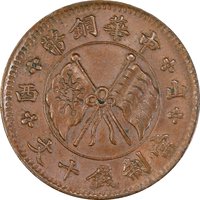
Description:
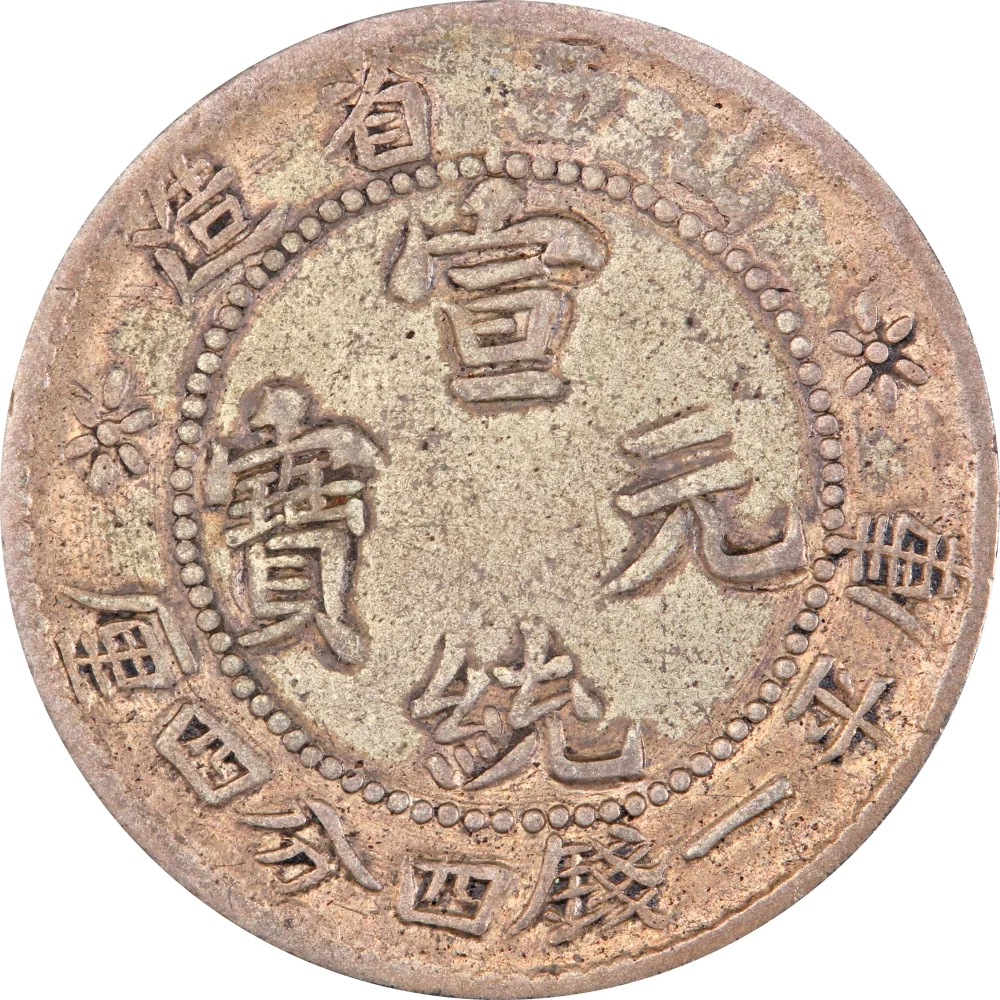
Four Chinese ideograms, read top to bottom and right to left, surrounded by more ideograms.
Inscription:
造省西山
宣
寶元
統
釐四分四錢一平庫
宣
寶元
統
釐四分四錢一平庫
Translation:
Manufactured by the Western Provinces Mint;
Xuan;
Baoyuan;
Tong;
Li; Four Fen, Four Qian; One Ping, Treasury Standard.
Xuan;
Baoyuan;
Tong;
Li; Four Fen, Four Qian; One Ping, Treasury Standard.
Language: Classical Chinese
Reverse
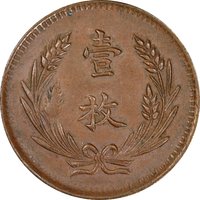
Description:
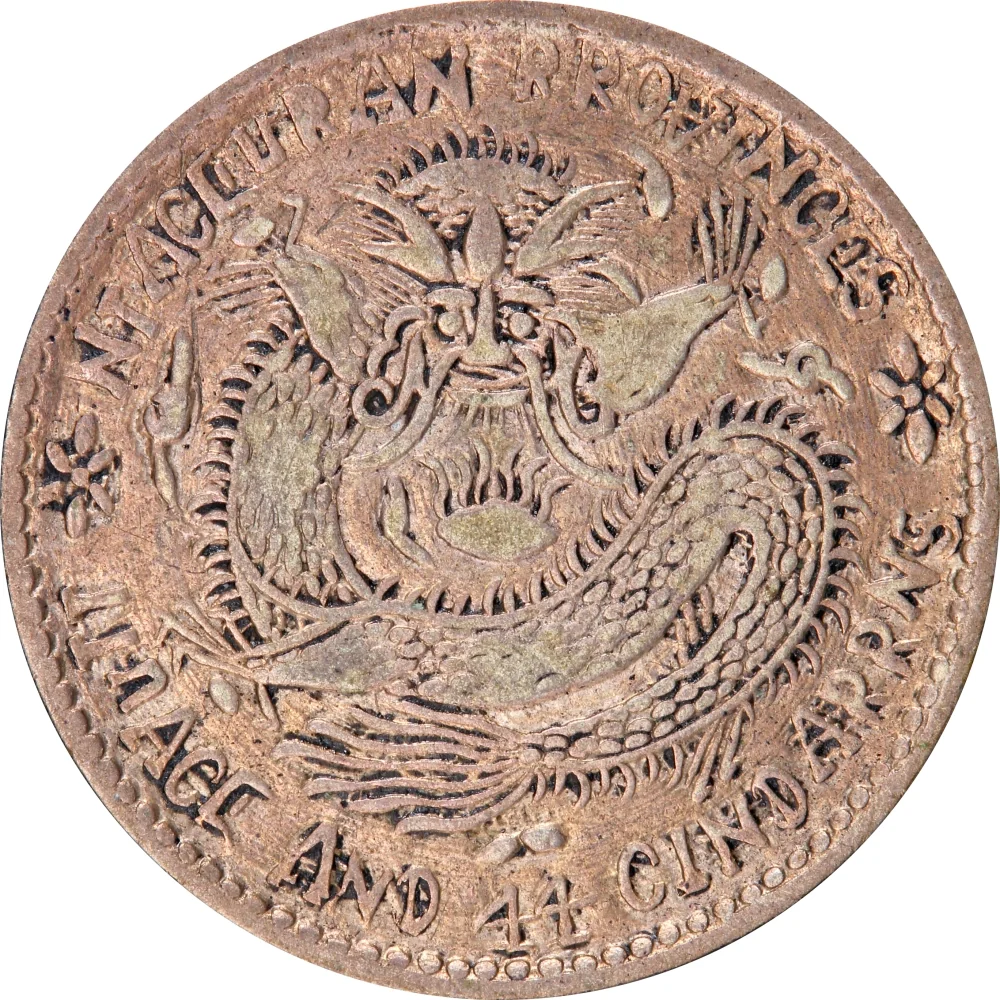
Dragon encircling a pearl, surrounded by English text.
Inscription:
MANCHURIAN PROVIENCES
1 MACE AND 4.4 CANDAREENS
1 MACE AND 4.4 CANDAREENS
Edge
Reeded.
Categories
| Mythology> Fantastic animal |
Mintings
| Year | Mint Mark | Mintage | Quality | Collection |
|---|---|---|---|---|
| — | — | — |
Historical background
In 1911, Shansi Province (modern Shanxi) operated within a deeply fractured monetary system, a microcosm of the late Qing Dynasty's financial decay. The province was dominated by privately issued tiao-p'iao (transfer slips) from local "cash shops" (qianpu), which circulated more readily than official coinage. Alongside these, a chaotic mix of imperial copper cash, silver sycee by weight, and a limited number of Dragon Dollars created a complex and localized economy. This system was highly vulnerable, as the value and acceptance of tiao-p'iao depended entirely on the reputation of the issuing merchant house, leading to frequent insolvencies and note repudiations that disrupted commerce.
The outbreak of the Xinhai Revolution in October 1911 intensified this instability. As revolutionary forces took Taiyuan, the provincial capital, the collapsing Qing authority severed connections with central financial institutions. The new military government, facing immediate fiscal crisis, resorted to issuing its own paper notes to fund operations, adding another competing currency to the already crowded field. Crucially, this period saw the abrupt decline of the renowned Shanxi piaohao (draft banks), which had once been national financial giants. Their networks shattered by the revolution, their retrenchment removed a key source of credit and inter-regional settlement, further isolating Shansi's economy.
Consequently, by the end of 1911, Shansi was left in a state of monetary chaos. Multiple unbacked paper issues—from the defunct Qing administration, the new revolutionary government, and struggling private shops—vied for legitimacy amidst a severe shortage of reliable hard currency. This hyper-localized and insecure financial environment paved the way for the warlord era, as whoever controlled the province would need to impose a new monetary order, a task later undertaken by the provincial ruler Yan Xishan through his own provincial bank and currency reforms in the following decades.
The outbreak of the Xinhai Revolution in October 1911 intensified this instability. As revolutionary forces took Taiyuan, the provincial capital, the collapsing Qing authority severed connections with central financial institutions. The new military government, facing immediate fiscal crisis, resorted to issuing its own paper notes to fund operations, adding another competing currency to the already crowded field. Crucially, this period saw the abrupt decline of the renowned Shanxi piaohao (draft banks), which had once been national financial giants. Their networks shattered by the revolution, their retrenchment removed a key source of credit and inter-regional settlement, further isolating Shansi's economy.
Consequently, by the end of 1911, Shansi was left in a state of monetary chaos. Multiple unbacked paper issues—from the defunct Qing administration, the new revolutionary government, and struggling private shops—vied for legitimacy amidst a severe shortage of reliable hard currency. This hyper-localized and insecure financial environment paved the way for the warlord era, as whoever controlled the province would need to impose a new monetary order, a task later undertaken by the provincial ruler Yan Xishan through his own provincial bank and currency reforms in the following decades.
✨ Legendary