

5 centesimi – San Marino
Add to wishlist
San Marino
Context
Years: 1864–1894
Issuer: San Marino
Period:
(since 301)
Currency:
(1864—2001)
Demonetized: Yes
Total mintage: 1,540,000
Material
References
KM: #
Numista: #4248
Value
Exchange value: 0.05 SML
Obverse
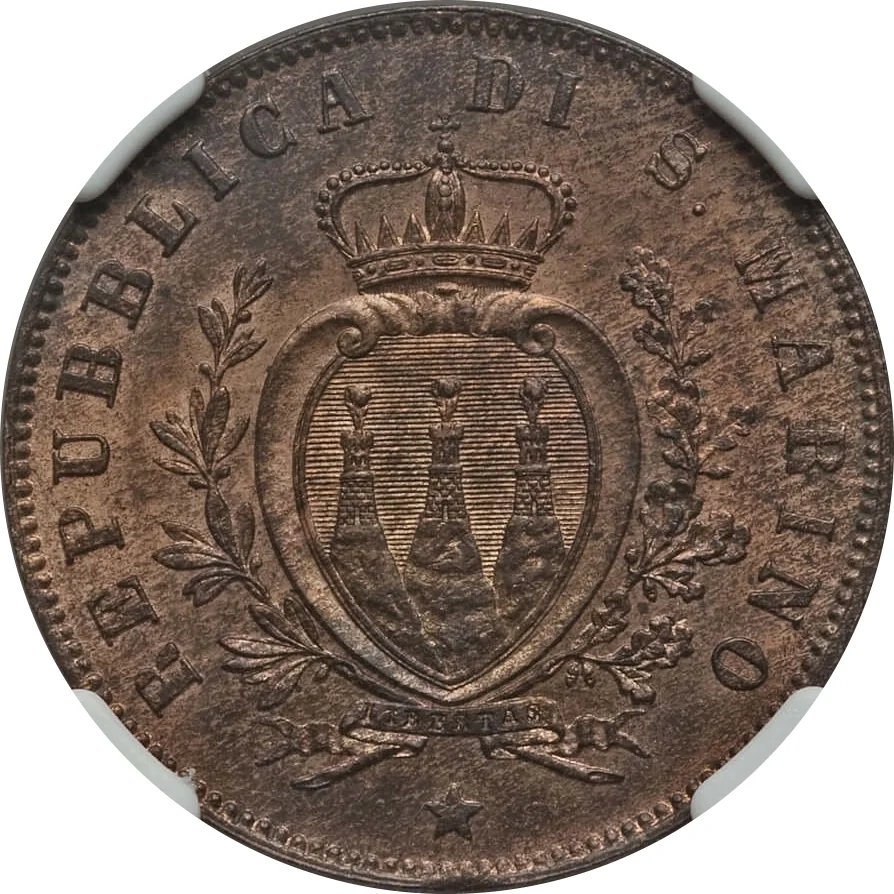
Description:
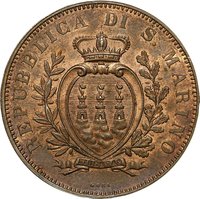
Shield with heart crest, encircled by leaves.
Inscription:
REPUBBLICA DI S. MARINO
LIBERTAS
LIBERTAS
Script: Latin
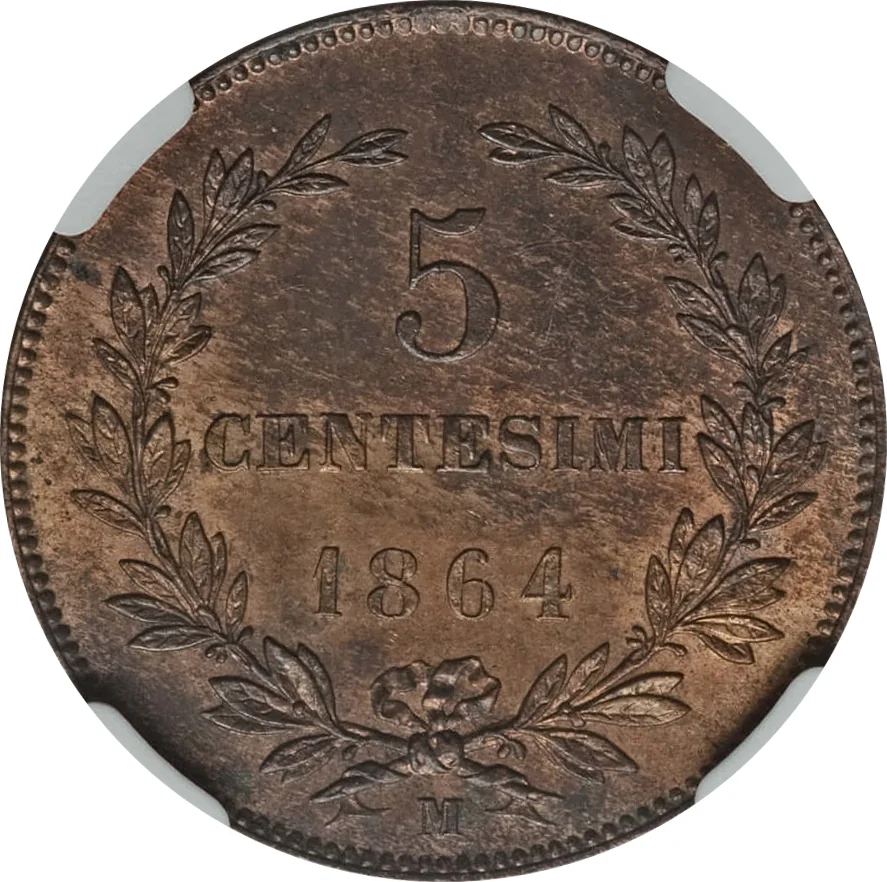
Reverse
Edge
Plain
Categories
| Symbols> Coat of Arms |
Historical background
In 1864, San Marino’s currency situation was intrinsically tied to its political relationship with the surrounding Italian states, particularly the newly proclaimed Kingdom of Italy. The Sammarinese economy was small, agrarian, and lacked its own minting capability. Consequently, the republic operated within a complex monetary system dominated by foreign coinage, primarily the lira of the neighbouring Papal States and the various pre-unification Italian currencies that were still in circulation. This reliance created practical challenges for commerce and state finance, as the value and acceptance of these multiple currencies could be inconsistent.
The year 1864 fell within a critical period of monetary transition for the Italian Peninsula. Just three years prior, the Kingdom of Italy had introduced a unified national currency, the Italian lira, based on the bimetallic standard of the Latin Monetary Union. While this new lira began to circulate, San Marino, despite its formal sovereignty, found its monetary autonomy severely constrained. It had no capacity to issue its own legal tender and was effectively drawn into the Italian lira zone by economic necessity and geographic enclavement. Informal agreements and daily use saw the Italian lira becoming the de facto standard.
Therefore, the background of 1864 is one of passive integration. San Marino’s government recognized the practical imperative to align its monetary system with Italy's to ensure economic stability and facilitate trade. This situation set the stage for the formal treaties that would follow, most notably the 1862 customs union (extended in 1872) and later monetary conventions, which officially adopted the Italian lira as San Marino's currency while granting the republic limited rights to issue its own commemorative coinage. Thus, 1864 represents a point of dependency but also the beginning of a negotiated, special monetary relationship with Italy that would define the republic's financial system for over a century.
The year 1864 fell within a critical period of monetary transition for the Italian Peninsula. Just three years prior, the Kingdom of Italy had introduced a unified national currency, the Italian lira, based on the bimetallic standard of the Latin Monetary Union. While this new lira began to circulate, San Marino, despite its formal sovereignty, found its monetary autonomy severely constrained. It had no capacity to issue its own legal tender and was effectively drawn into the Italian lira zone by economic necessity and geographic enclavement. Informal agreements and daily use saw the Italian lira becoming the de facto standard.
Therefore, the background of 1864 is one of passive integration. San Marino’s government recognized the practical imperative to align its monetary system with Italy's to ensure economic stability and facilitate trade. This situation set the stage for the formal treaties that would follow, most notably the 1862 customs union (extended in 1872) and later monetary conventions, which officially adopted the Italian lira as San Marino's currency while granting the republic limited rights to issue its own commemorative coinage. Thus, 1864 represents a point of dependency but also the beginning of a negotiated, special monetary relationship with Italy that would define the republic's financial system for over a century.
🌱 Common