

1 Krone – Denmark
Denmark
Context
Material
References
KM: #Click to copy to clipboard819
Numista: #14539
Value
Exchange value: 1 DKK = $0.16
Bullion value: $16.97
Obverse
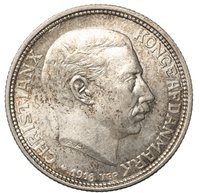
Description:
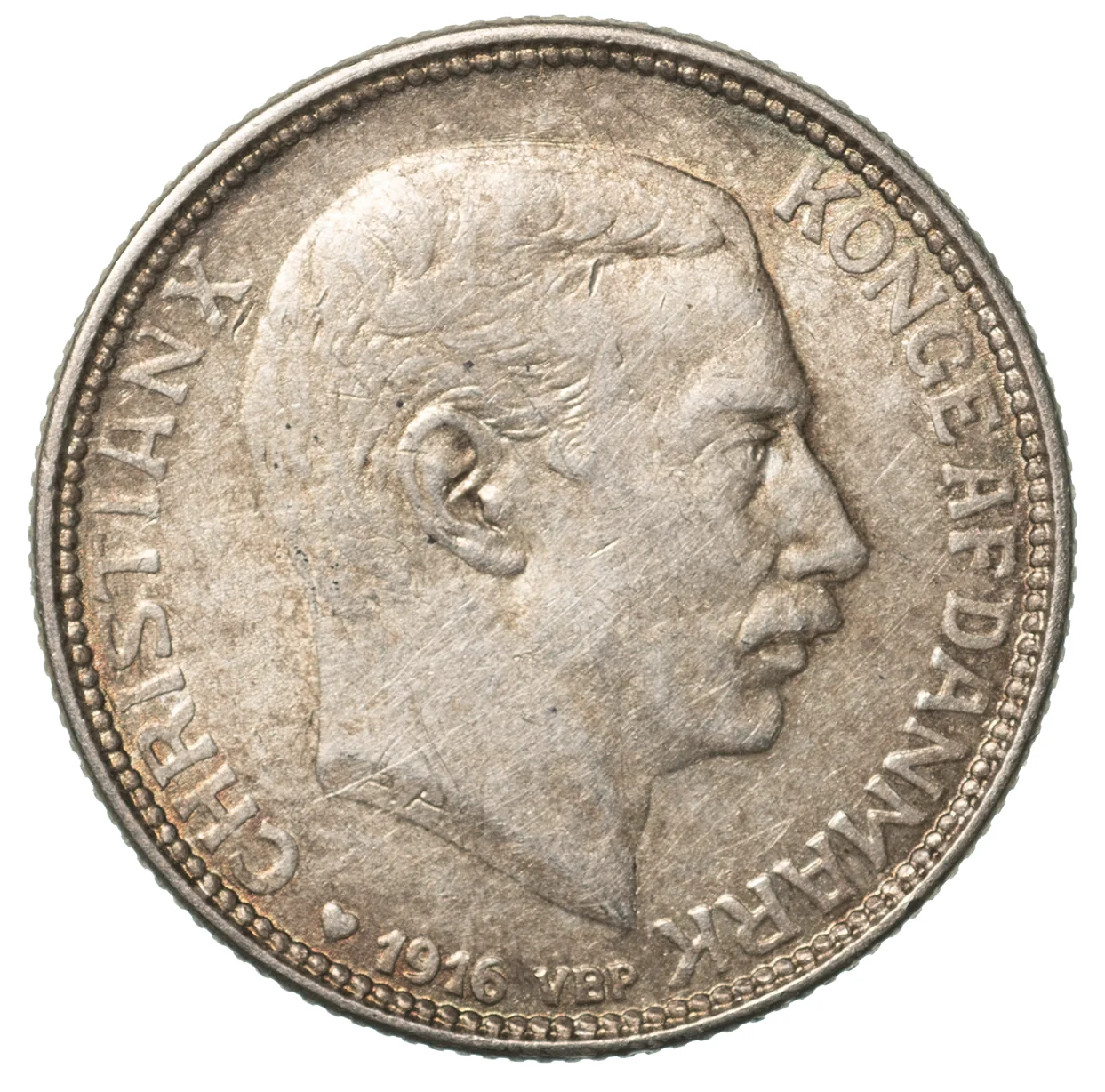
Portrait of Christian X in profile.
Inscription:
CHRISTIAN X
KONGE AF DANMARK
AH
1915 VBP
KONGE AF DANMARK
AH
1915 VBP
Translation:
Christian X
King of Denmark
AH
1915 VBP
King of Denmark
AH
1915 VBP
Script: Latin
Language: Danish
Engraver: Anders Hansen
Reverse
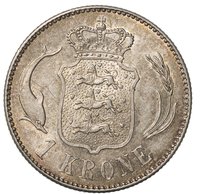
Description:
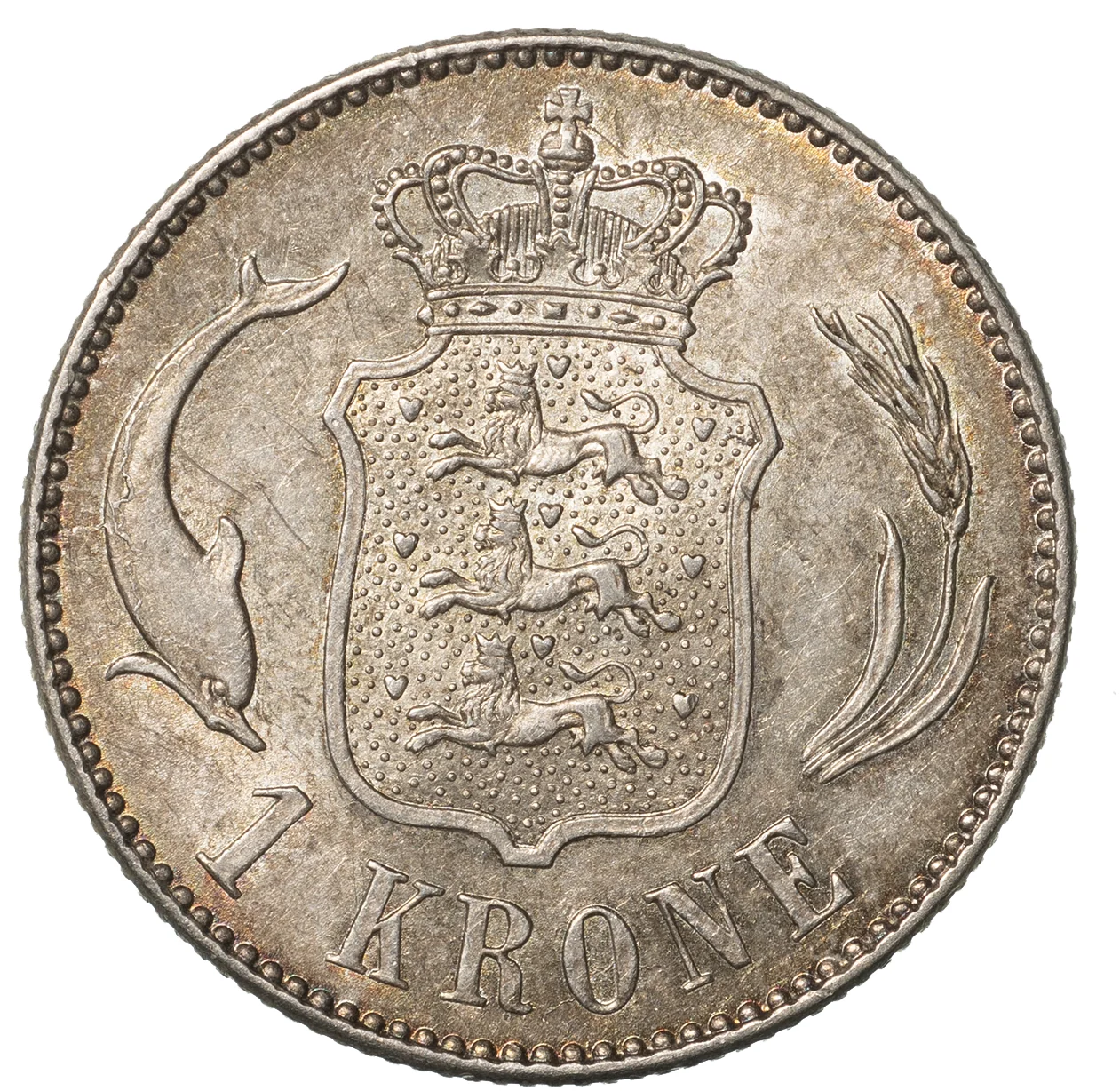
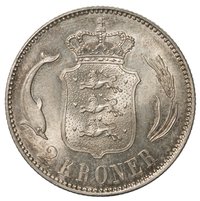
Center coat of arms, flanked by a porpoise and barley ear, with denomination below.
Inscription:
1 KRONE
Script: Latin
Edge
Reeded
Mints
| Name | Mark |
|---|---|
| Royal Danish Mint | — |
Mintings
| Year | Mint Mark | Mintage | Quality | Collection |
|---|---|---|---|---|
| 1915 | VBP;AH | 1,410,000 | ||
| 1916 | VBP;AH | 992,000 |
Historical background
In 1915, Denmark’s currency situation was defined by its adherence to the classical gold standard, a system it had maintained since the 1870s. The Danish krone was legally convertible into gold at a fixed rate, ensuring monetary stability and facilitating international trade. This system was managed by the independent central bank, Danmarks Nationalbank, which held substantial gold reserves to back the currency. However, the outbreak of World War I in 1914 placed this system under immense strain, as the conflict disrupted global financial networks and trade flows upon which Denmark's small, open economy heavily depended.
Despite its official neutrality, Denmark faced significant economic pressures from the war. To prevent a damaging outflow of gold reserves and to maintain financial stability, the Danish government suspended the gold standard on August 2, 1914, just days after the war began. This emergency measure made the krone an inconvertible paper currency, allowing the Nationalbank greater flexibility to manage the money supply and protect its gold stock. The immediate goal was to ensure liquidity for banks and businesses and to shield the economy from the external shocks of the war, including naval blockades and volatile capital movements.
Consequently, by 1915, Denmark was operating under a suspended gold standard with exchange controls. The krone's value was no longer directly tied to gold but was instead influenced by government and central bank policy, trade balances, and market sentiment. Inflationary pressures began to emerge due to increased government spending, supply shortages, and a growing money supply. Thus, the currency situation in 1915 was one of managed stability in a precarious wartime environment, marking a decisive break from the pre-war era of automatic gold-convertibility and setting the stage for the monetary challenges of the subsequent wartime and interwar years.
Despite its official neutrality, Denmark faced significant economic pressures from the war. To prevent a damaging outflow of gold reserves and to maintain financial stability, the Danish government suspended the gold standard on August 2, 1914, just days after the war began. This emergency measure made the krone an inconvertible paper currency, allowing the Nationalbank greater flexibility to manage the money supply and protect its gold stock. The immediate goal was to ensure liquidity for banks and businesses and to shield the economy from the external shocks of the war, including naval blockades and volatile capital movements.
Consequently, by 1915, Denmark was operating under a suspended gold standard with exchange controls. The krone's value was no longer directly tied to gold but was instead influenced by government and central bank policy, trade balances, and market sentiment. Inflationary pressures began to emerge due to increased government spending, supply shortages, and a growing money supply. Thus, the currency situation in 1915 was one of managed stability in a precarious wartime environment, marking a decisive break from the pre-war era of automatic gold-convertibility and setting the stage for the monetary challenges of the subsequent wartime and interwar years.
🌱 Common