

1 Pitis – Sultanate of Patani
Malaysia
Context
Year: 1880
Islamic (Hijri) Year: 1297
Country: Malaysia 
Issuer: Sultanate of Patani
Demonetized: Yes
Material
References
Numista: #422718
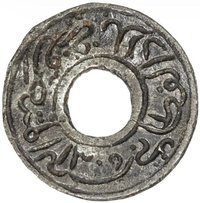
Obverse
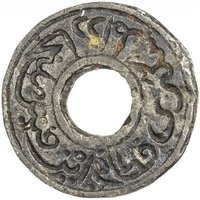
Reverse
Edge
Plain
Mintings
| Year | Mint Mark | Mintage | Quality | Collection |
|---|---|---|---|---|
| 1880 | — | — |
Historical background
In the 1880s, the Sultanate of Patani, a historically independent Malay kingdom on the Malay Peninsula, found its monetary system in a state of transition and external pressure. While nominally under Siamese (Thai) suzerainty following the 1786 annexation, Patani retained significant local autonomy and economic traditions. The primary currency in daily use remained the Spanish Silver Dollar (or Mexican Peso) and its fractional parts, a legacy of centuries of regional trade. These silver coins, along with smaller quantities of Dutch guilders and British Straits Dollars, facilitated commerce with European traders, Chinese merchants, and other Malay states, reflecting Patani’s integration into wider Southeast Asian maritime networks.
However, this diverse circulation existed alongside an increasing push for monetary integration from Bangkok. The Siamese government, under King Chulalongkorn (Rama V), was actively centralizing administration and standardizing the kingdom's currency to strengthen control. In Patani, this meant the gradual introduction of Siamese flat coinage, including the baht (tical), salung, and fuang. These coins, minted in Bangkok, were symbols of Siamese sovereignty and were used for official transactions and tax payments. Consequently, a dual-currency environment emerged where traditional silver dollars coexisted, often uneasily, with the newer Siamese coins, with exchange rates fluctuating based on silver content and local trust.
The currency situation thus mirrored Patani’s broader political dilemma: caught between its autonomous past and an encroaching future. Local traders and villagers often preferred the familiar, internationally recognized silver dollars, while the Siamese provincial authorities (krommakan) insisted on their own coinage for administrative purposes. This period laid the groundwork for the full monetary absorption that would follow Patani's formal incorporation into the Siamese administrative system, the Thesaphiban, in the early 20th century, ultimately replacing its diverse currency heritage with a unified national system.
However, this diverse circulation existed alongside an increasing push for monetary integration from Bangkok. The Siamese government, under King Chulalongkorn (Rama V), was actively centralizing administration and standardizing the kingdom's currency to strengthen control. In Patani, this meant the gradual introduction of Siamese flat coinage, including the baht (tical), salung, and fuang. These coins, minted in Bangkok, were symbols of Siamese sovereignty and were used for official transactions and tax payments. Consequently, a dual-currency environment emerged where traditional silver dollars coexisted, often uneasily, with the newer Siamese coins, with exchange rates fluctuating based on silver content and local trust.
The currency situation thus mirrored Patani’s broader political dilemma: caught between its autonomous past and an encroaching future. Local traders and villagers often preferred the familiar, internationally recognized silver dollars, while the Siamese provincial authorities (krommakan) insisted on their own coinage for administrative purposes. This period laid the groundwork for the full monetary absorption that would follow Patani's formal incorporation into the Siamese administrative system, the Thesaphiban, in the early 20th century, ultimately replacing its diverse currency heritage with a unified national system.
✨ Legendary