
Logo Title
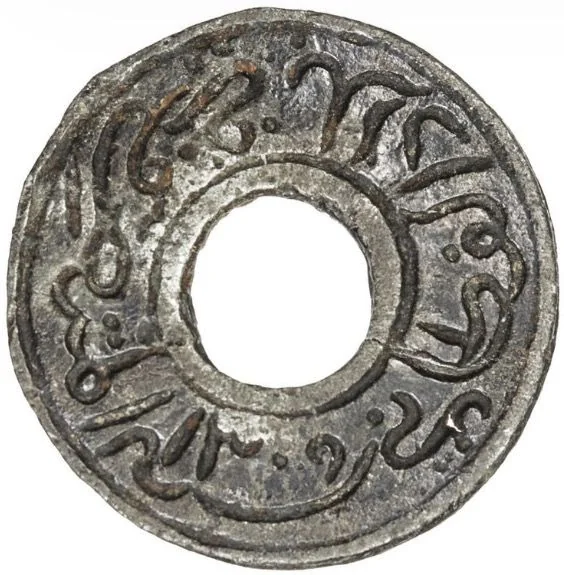
obverse
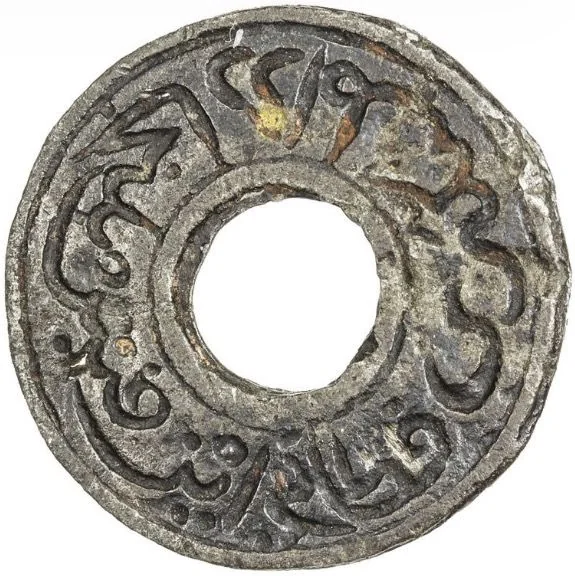
reverse
Stephen Album Rare Coins

1 Pitis – Sultanate of Patani

Malaysia
Context
Year: 1892
Islamic (Hijri) Year: 1309
Country: Malaysia Country flag
Demonetized: Yes
Material
Diameter: 25 mm
Weight: 5.05 g
Composition: Tin
Magnetic: No
Techniques: Cast, Incuse
References
Numista: #555070

Obverse

Description:
Incuse Jawi inscription around central hole.
Inscription:
المتصرفي بلاد الفطاني ؁١٣٠٩

Script: Arabic

Reverse

Description:
Incuse Jawi inscription around central hole.
Inscription:
اين فتس بلنجا د دالمنكر فطاني
Script: Arabic

Edge

Plain

Mintings

YearMint MarkMintageQualityCollection
1892

Historical background

In 1892, the currency situation in the Sultanate of Patani was one of transition and competing systems, reflecting its precarious political position. Formally part of the Siamese kingdom but retaining a degree of autonomy, Patani was caught between two monetary spheres. The official currency was the Siamese baht, a silver bullet coin known as the tical, which was mandated for use in government and tax payments to Bangkok. However, Siamese authority in the region was still being consolidated, and its monetary control was not absolute.

Alongside the baht, a variety of other currencies circulated widely, demonstrating Patani's enduring regional trade links. Straits Dollars from British Malaya were particularly prevalent due to Patani's extensive cross-border commerce with Penang and Singapore. Additionally, old Spanish and Mexican silver dollars, Chinese copper cash coins, and even gold tampang (a form of ingot currency) could be found in local markets. This multiplicity created a complex environment for trade, requiring constant familiarity with exchange rates and the weight and purity of various coins.

This fragmented monetary landscape underscored Patani's dual identity in 1892. While the increasing use of the Siamese baht signaled the gradual extension of Bangkok's administrative and economic integration following the Anglo-Siamese Treaty of 1909 (which would later formalize the border), the persistent circulation of foreign currencies highlighted the region's historical and economic orientation toward the Malay Peninsula. The currency situation was, therefore, a tangible reflection of a polity in flux, straddling two worlds.
Legendary