

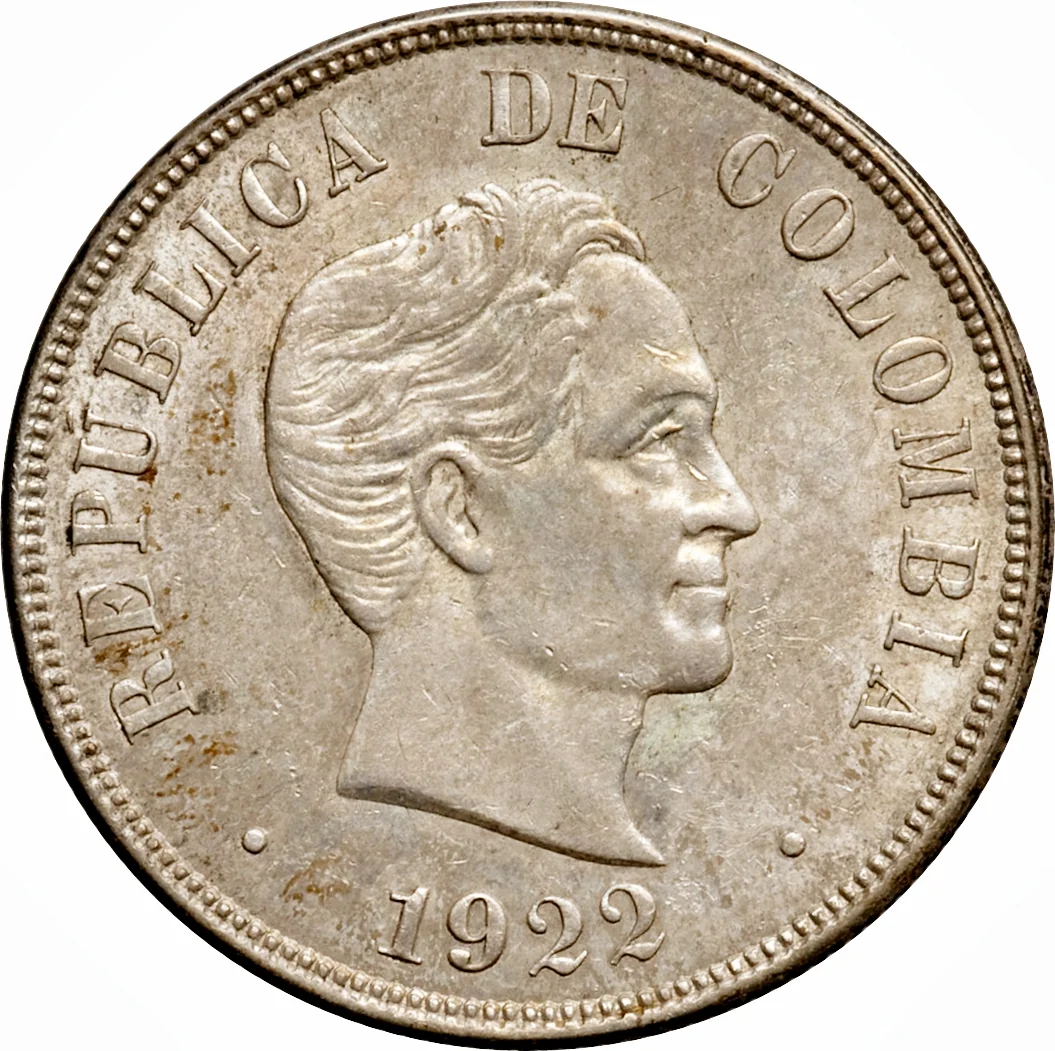
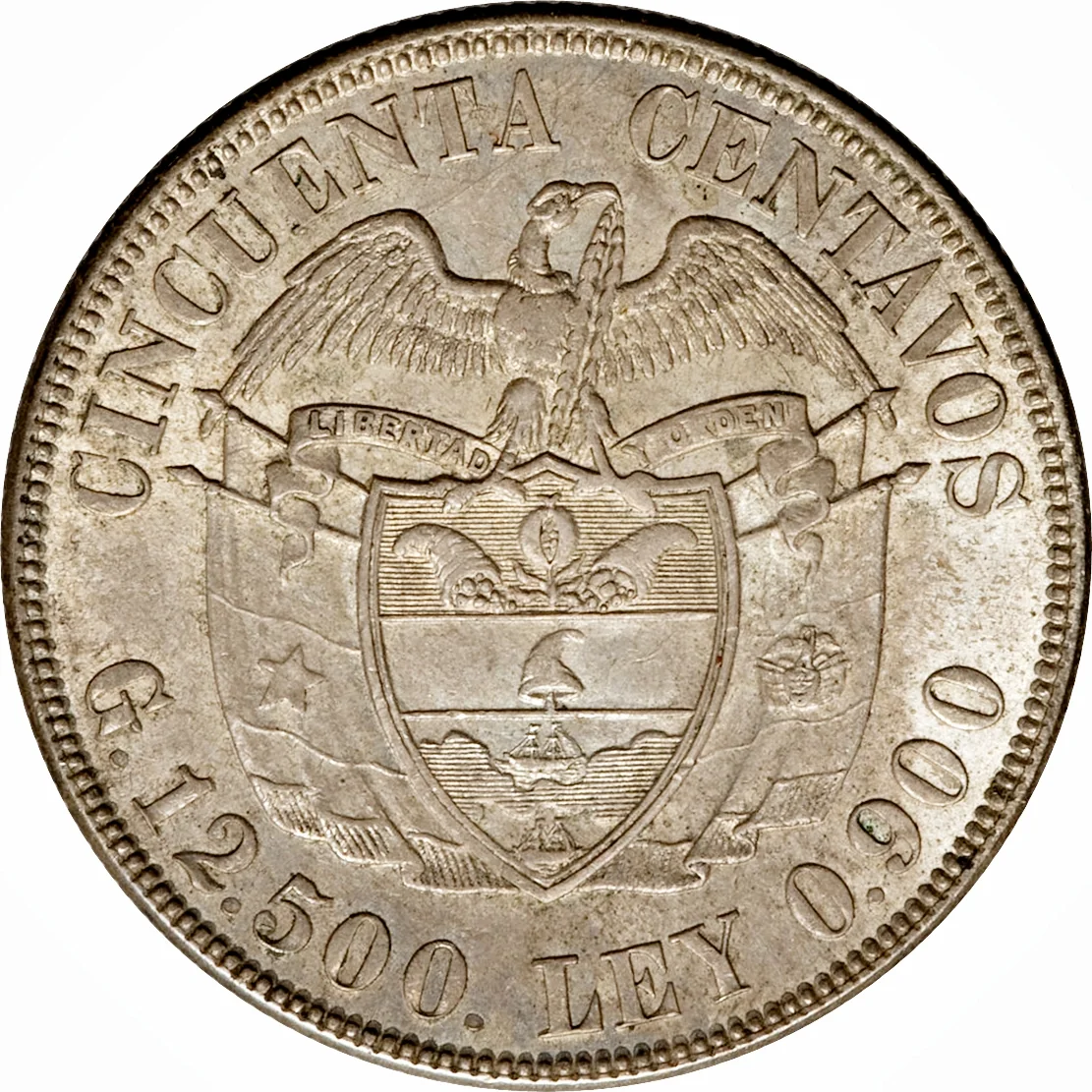
50 Centavos – Colombia
Colombia
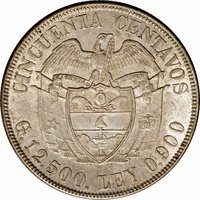
Obverse
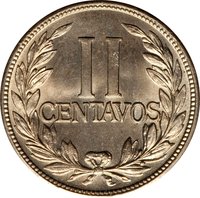
Reverse
Edge
Reeded
Categories
| Symbols> Coat of Arms |
| Person> Politician |
Mintings
| Year | Mint Mark | Mintage | Quality | Collection |
|---|---|---|---|---|
| 1916 | — | 1,300,000 | ||
| 1917 | — | 142,324 | ||
| 1921 | — | 1,000,000 | ||
| 1922 | — | 3,000,000 | ||
| 1934 | — | 10,000,000 |
Historical background
In 1916, Colombia's currency system was in a state of transition and consolidation following the profound economic and political disruption of the Thousand Days' War (1899–1902). The war had led to the excessive printing of paper money by both conservative and liberal factions, resulting in severe hyperinflation and a collapse of public trust in the paper peso. In the aftermath, the government sought to restore monetary stability, leading to the Monetary Reform Law of 1903. This law established the gold standard, pegging the Colombian peso to the British pound sterling and aiming to curb inflation and attract foreign investment, particularly for the burgeoning coffee export economy.
By 1916, the system was formally gold-based, but in practice, it operated as a "limping standard." While gold was the official benchmark, much of the currency in domestic circulation remained in the form of papel moneda (paper money), which was not freely convertible to gold for everyday transactions. The Banco de la República, the nation's central bank, would not be founded until 1923, so currency issuance was managed by several private banks under government charter. The primary currency was the peso oro (gold peso), a unit of account, but actual physical gold coins were scarce in daily use. The global context of World War I (1914-1918) also influenced Colombia, as international gold flows were disrupted, putting pressure on the gold peg and affecting the availability of imported goods.
Economically, 1916 fell within a period of recovery and growth known as the "Dance of the Millions," driven by soaring global coffee prices and, critically, the indemnity payments from the United States for the separation of Panama. These substantial dollar inflows, formalized by the Urrutia-Thomson Treaty of 1914, were strengthening the nation's gold reserves and fiscal position. Therefore, while the memory of paper money chaos was still recent, the currency situation in 1916 was one of relative stability and increasing confidence, underpinned by gold-backed policy and buoyant export revenues, setting the stage for the more robust financial institutionalization that would follow in the 1920s.
By 1916, the system was formally gold-based, but in practice, it operated as a "limping standard." While gold was the official benchmark, much of the currency in domestic circulation remained in the form of papel moneda (paper money), which was not freely convertible to gold for everyday transactions. The Banco de la República, the nation's central bank, would not be founded until 1923, so currency issuance was managed by several private banks under government charter. The primary currency was the peso oro (gold peso), a unit of account, but actual physical gold coins were scarce in daily use. The global context of World War I (1914-1918) also influenced Colombia, as international gold flows were disrupted, putting pressure on the gold peg and affecting the availability of imported goods.
Economically, 1916 fell within a period of recovery and growth known as the "Dance of the Millions," driven by soaring global coffee prices and, critically, the indemnity payments from the United States for the separation of Panama. These substantial dollar inflows, formalized by the Urrutia-Thomson Treaty of 1914, were strengthening the nation's gold reserves and fiscal position. Therefore, while the memory of paper money chaos was still recent, the currency situation in 1916 was one of relative stability and increasing confidence, underpinned by gold-backed policy and buoyant export revenues, setting the stage for the more robust financial institutionalization that would follow in the 1920s.
🌱 Common