

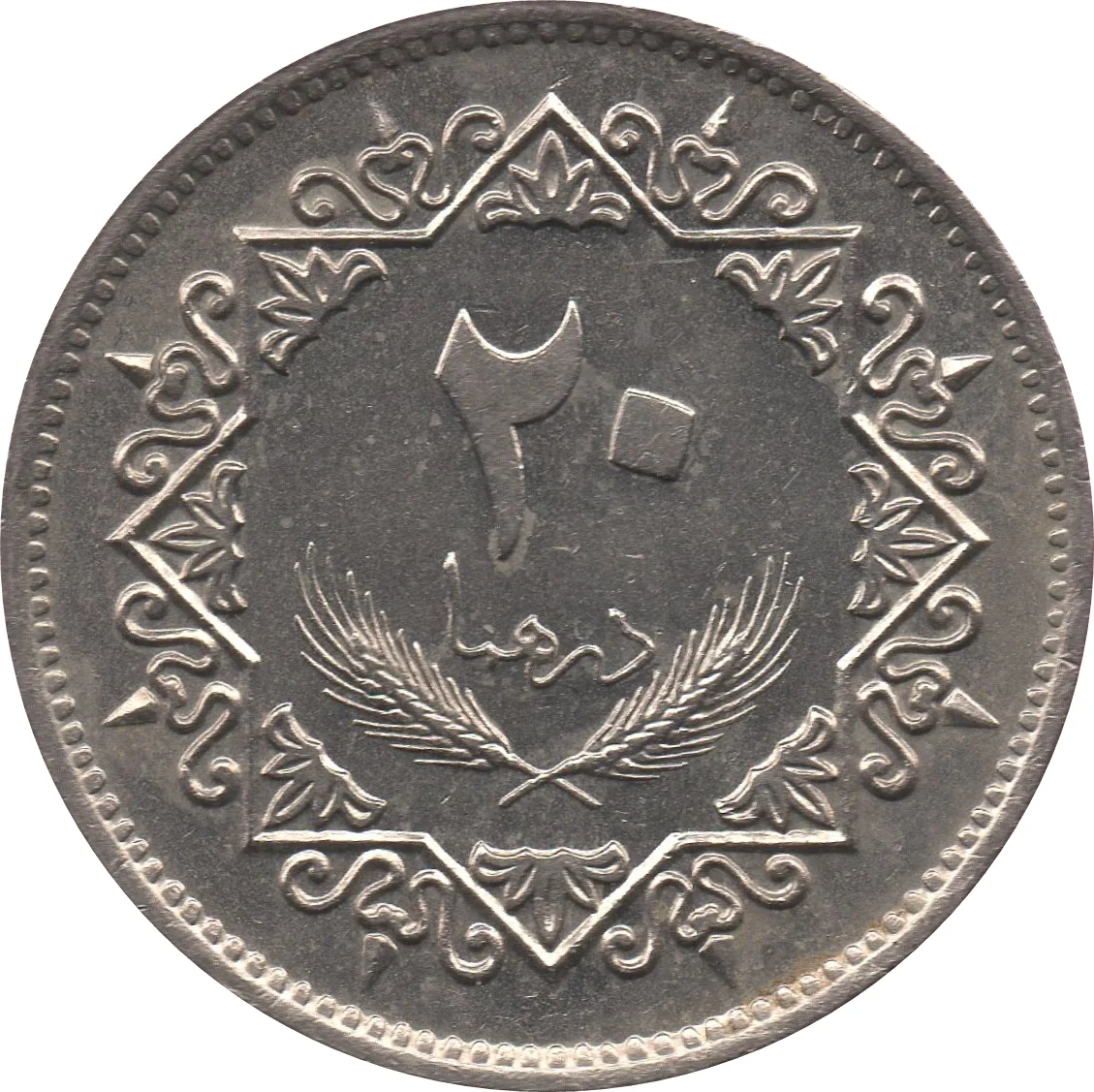
20 dirhams – Libya
Add to wishlist
Libya
Context
Year: 1975
Islamic (Hijri) Year:: 1395
Issuer: Libya
Period:
(1969—1977)
Currency:
(since 1971)
Demonetized: Yes
Material
References
KM: #
Numista: #4223
Value
Exchange value: 0.020 LYD
Obverse
Description:
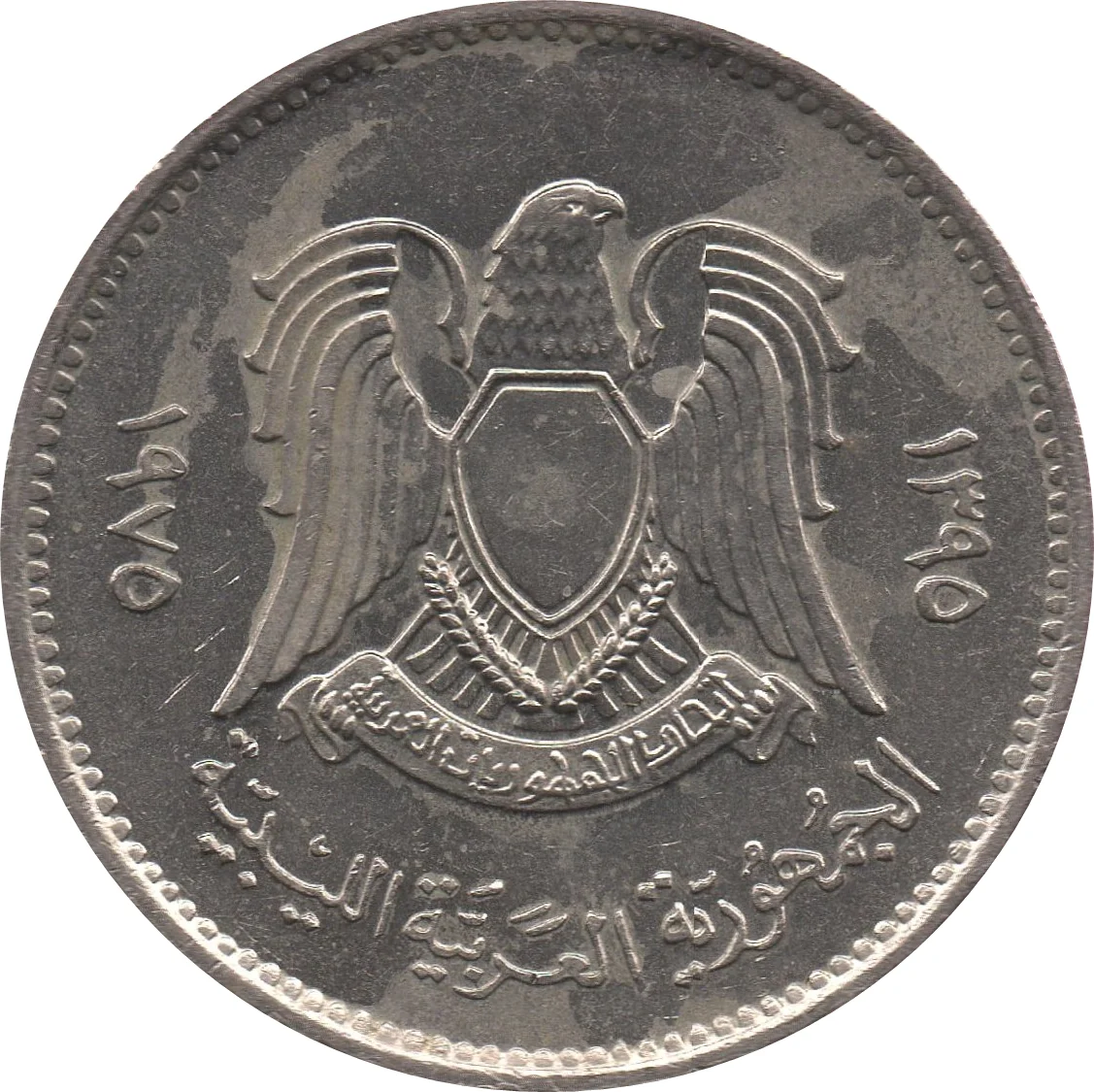
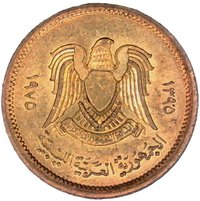
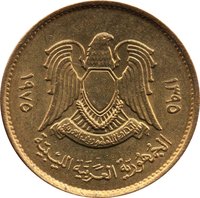
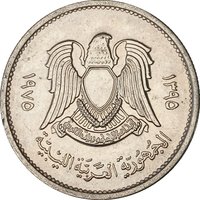
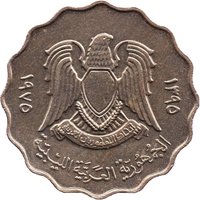
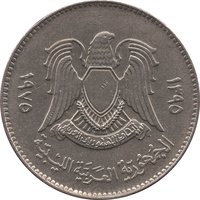
Hawk of Quraysh – Coat of arms of the Federation of Arab Republics. Arabic state name, with Gregorian and Hijri issue years in Arabic numerals.
Inscription:
إتحاد الجمهوريات العربية
١٣٩٥ ١٩٧٥
الجمهورية العربية الليبية
١٣٩٥ ١٩٧٥
الجمهورية العربية الليبية
Translation:
Union of Arab Republics
1395 1975
The Libyan Arab Republic
1395 1975
The Libyan Arab Republic
Script: Arabic
Language: Arabic
Reverse
Edge
Plain
Mints
| Name | Mark |
|---|---|
| Royal Mint | — |
Mintings
| Year | Mint Mark | Mintage | Quality | Collection |
|---|---|---|---|---|
| 1975 | — | — |
Historical background
In 1975, Libya's currency situation was fundamentally shaped by the revolutionary economic policies of Colonel Muammar Gaddafi, who had seized power in 1969. The Libyan dinar, introduced in 1971 to replace the Libyan pound, was a strong and stable currency, heavily backed by the nation's substantial oil revenues. As a major oil exporter, Libya enjoyed significant foreign exchange reserves, which insulated the dinar from the volatility affecting many global currencies during the 1970s oil crises. The Central Bank of Libya maintained strict control, with the currency's value effectively pegged to a basket of currencies, ensuring stability for both government finances and international trade.
However, this stability existed within a framework of increasing state control and ideological shifts. The Gaddafi regime was actively implementing its socialist "Third International Theory," outlined in the Green Book, which began to challenge traditional banking. While full-scale nationalization of banks would come later, 1975 was a period of transition where the state tightened its grip on the financial sector, directing credit according to political and social goals rather than pure market principles. This period saw the beginnings of policies that would later restrict private commercial banking and funnel financial activity through state-owned institutions.
Consequently, the primary economic concerns in 1975 were not currency instability or inflation, but rather the state's management of its petro-wealth and the ideological restructuring of the financial system. The dinar's external strength was undeniable, but the internal monetary environment was becoming increasingly directed by the state's revolutionary agenda, setting the stage for greater isolation from the international financial system in the following decades. The currency's robustness was thus a function of oil wealth, but its management reflected the regime's move toward a state-controlled, interest-free Islamic banking model.
However, this stability existed within a framework of increasing state control and ideological shifts. The Gaddafi regime was actively implementing its socialist "Third International Theory," outlined in the Green Book, which began to challenge traditional banking. While full-scale nationalization of banks would come later, 1975 was a period of transition where the state tightened its grip on the financial sector, directing credit according to political and social goals rather than pure market principles. This period saw the beginnings of policies that would later restrict private commercial banking and funnel financial activity through state-owned institutions.
Consequently, the primary economic concerns in 1975 were not currency instability or inflation, but rather the state's management of its petro-wealth and the ideological restructuring of the financial system. The dinar's external strength was undeniable, but the internal monetary environment was becoming increasingly directed by the state's revolutionary agenda, setting the stage for greater isolation from the international financial system in the following decades. The currency's robustness was thus a function of oil wealth, but its management reflected the regime's move toward a state-controlled, interest-free Islamic banking model.
Series: 1975 Libya circulation coins
🌱 Very Common