

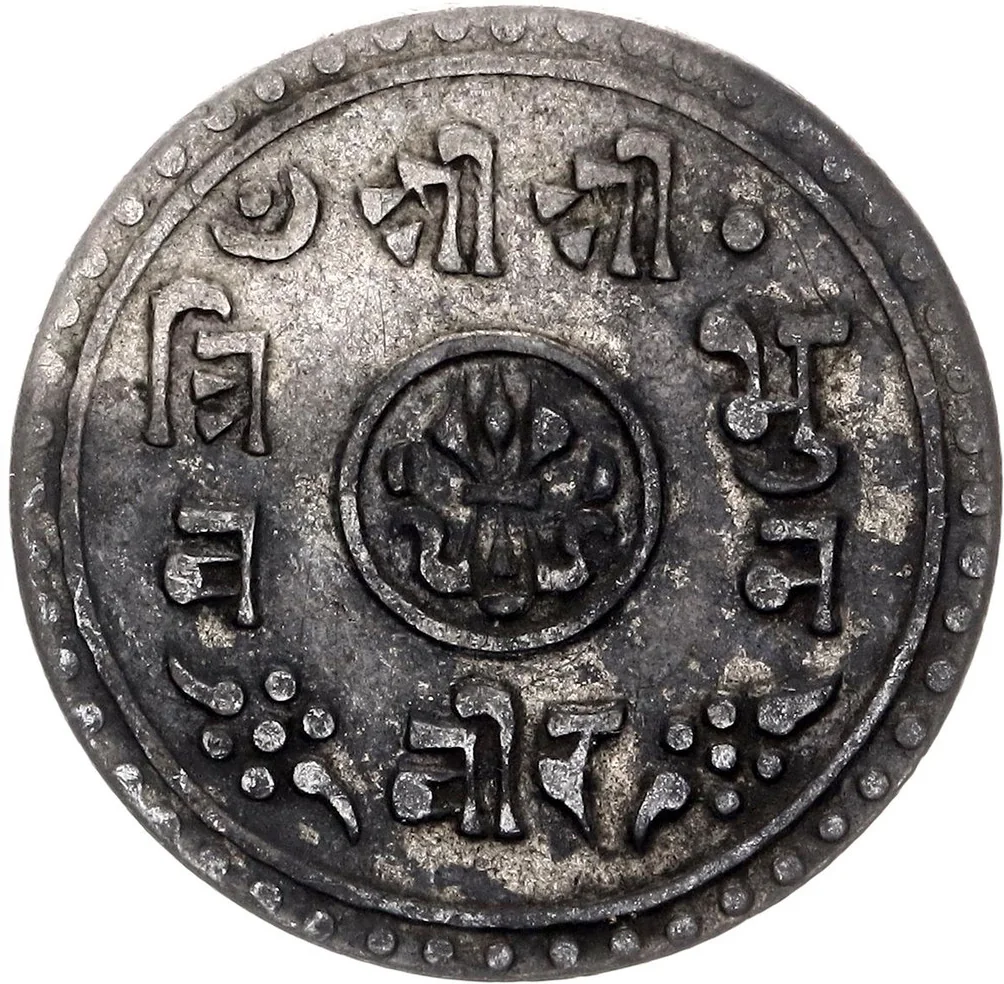
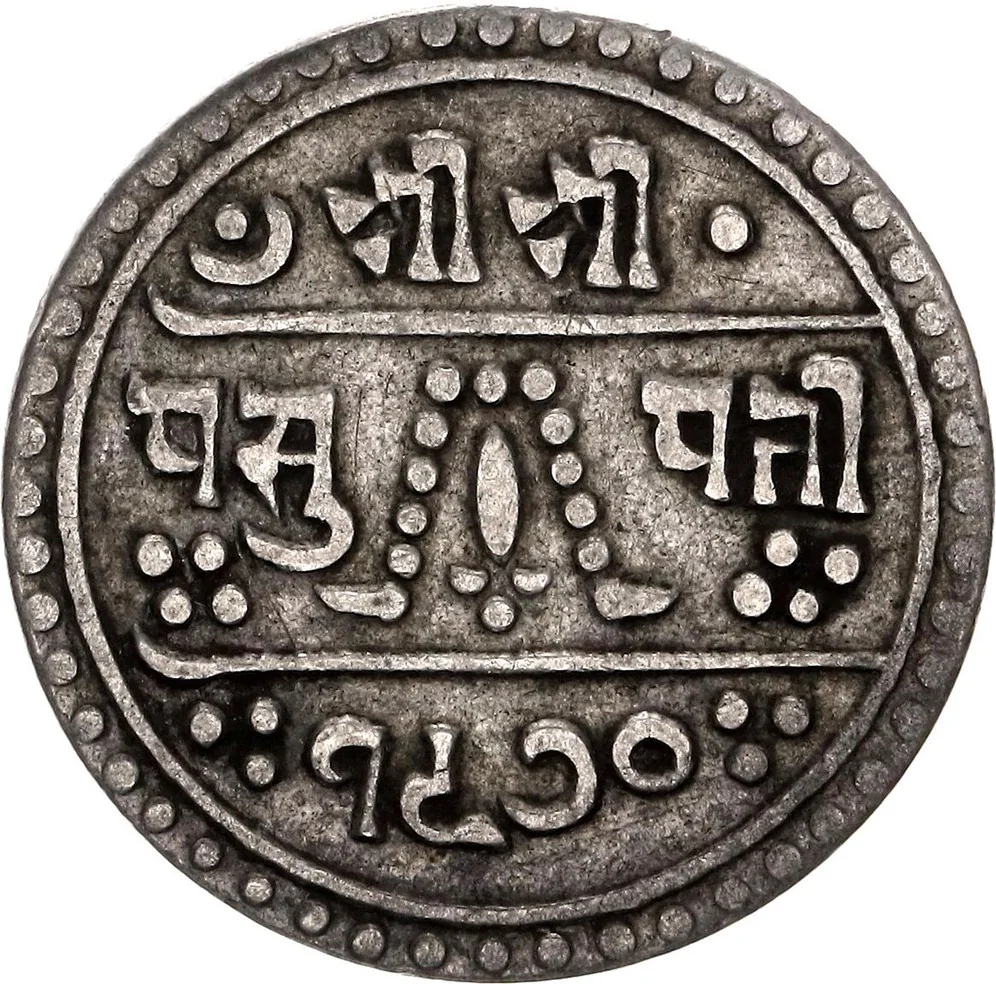
¼ Mohar – Nepal
Nepal
Context
Years: 1912–1913
Issuer: Nepal 
Ruler: Tribhuvan Bir Bikram Shah
Currency:
(1546—1932)
Demonetized: Yes
Material
References
KM: #Click to copy to clipboard692
Numista: #42222
Value
Bullion value: $3.98
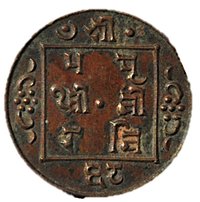
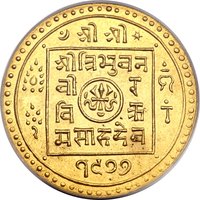
Obverse
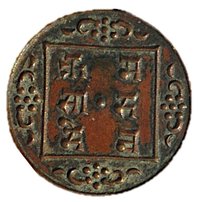
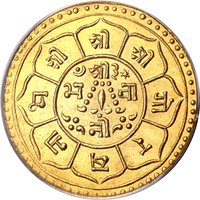
Reverse
Edge
Plain
Mintings
| Year | Mint Mark | Mintage | Quality | Collection |
|---|---|---|---|---|
| 1912 | — | — | ||
| 1913 | — | — |
Historical background
In 1912, Nepal's currency situation was characterized by a complex dual system, heavily influenced by its political and economic ties to British India. The official currency was the Nepali Mohar, a silver coin minted by the state. However, the economy was dominated by the Indian Rupee, which circulated widely, especially for larger transactions and external trade. This created a practical bimetallic system where both currencies were used, but their exchange rates fluctuated, causing occasional instability in local markets.
The Rana regime, which had ruled since 1846, maintained a closed and controlled economy. The minting of coins was a sovereign prerogative, and the designs often featured symbols of the ruling Rana Prime Ministers alongside Hindu iconography, reflecting their authority. However, Nepal's economy was inextricably linked to India's, as it was a landlocked nation dependent on Indian ports and markets. Consequently, the value of the Nepali Mohar was pegged to the Indian Rupee, though not at a fixed parity, leading to occasional arbitrage and confusion.
This period predated the establishment of a central bank by decades. Currency issuance was managed directly by the government's treasury, with limited modern banking infrastructure. The system was largely metallic, relying on physical silver coins, while paper currency was not yet introduced in Nepal. The situation in 1912 thus represented a traditional, pre-modern monetary system in transition, caught between asserting national sovereignty and the practical necessities of economic integration with the British Indian Empire.
The Rana regime, which had ruled since 1846, maintained a closed and controlled economy. The minting of coins was a sovereign prerogative, and the designs often featured symbols of the ruling Rana Prime Ministers alongside Hindu iconography, reflecting their authority. However, Nepal's economy was inextricably linked to India's, as it was a landlocked nation dependent on Indian ports and markets. Consequently, the value of the Nepali Mohar was pegged to the Indian Rupee, though not at a fixed parity, leading to occasional arbitrage and confusion.
This period predated the establishment of a central bank by decades. Currency issuance was managed directly by the government's treasury, with limited modern banking infrastructure. The system was largely metallic, relying on physical silver coins, while paper currency was not yet introduced in Nepal. The situation in 1912 thus represented a traditional, pre-modern monetary system in transition, caught between asserting national sovereignty and the practical necessities of economic integration with the British Indian Empire.
Series: 1912 Nepal circulation coins
⭐ Rare