

10 cash – Szechuan Province
Add to wishlist
China
Context
Years: 1903–1905
Country: China
Issuer: Szechuan Province
Ruler: Guangxu
Currency:
(1897—1949)
Demonetized: Yes
Material
References
Y: #
Numista: #42195
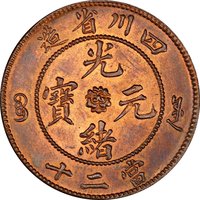
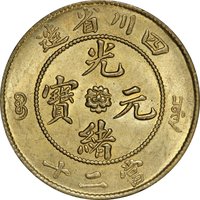
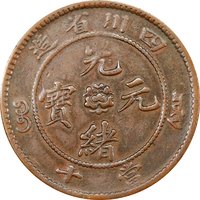
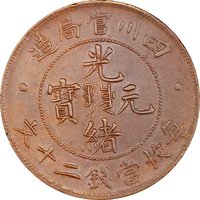
Obverse
Description:
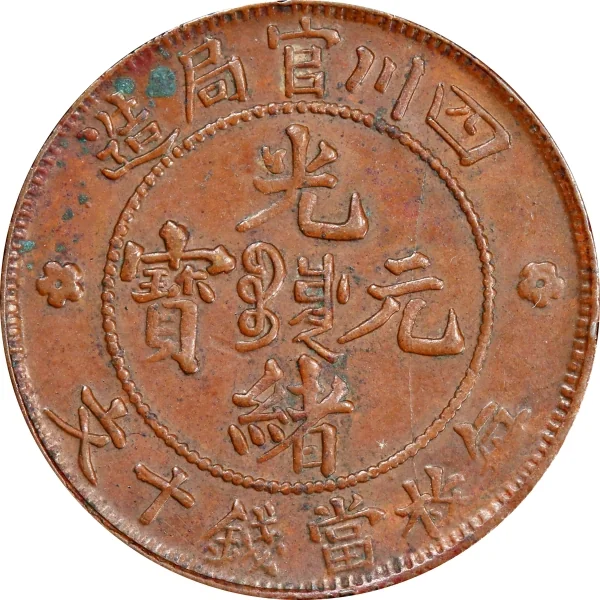
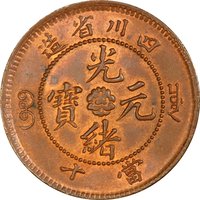
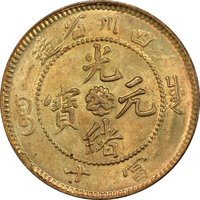
Chinese ideograms read vertically, right to left, with Manchu text in the center, all encircled by more Chinese characters.
Inscription:
造局官川四
光
寶 ᠶᡠᠸᠠᠨ ᠪᠣᠣ 元
緒
文十錢當枚每
光
寶 ᠶᡠᠸᠠᠨ ᠪᠣᠣ 元
緒
文十錢當枚每
Translation:
Official Mint of Sichuan
Guangxu
Yuan Bao
Ten Cash Coin, Each Piece
Guangxu
Yuan Bao
Ten Cash Coin, Each Piece
Scripts: Chinese, Mongolian / Manchu
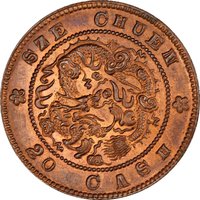
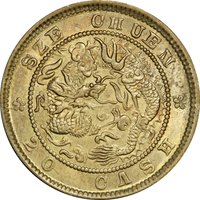
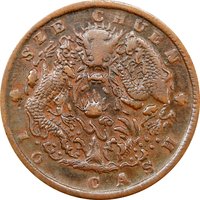
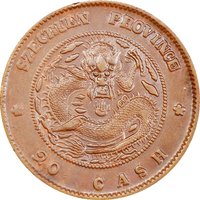
Reverse
Description:
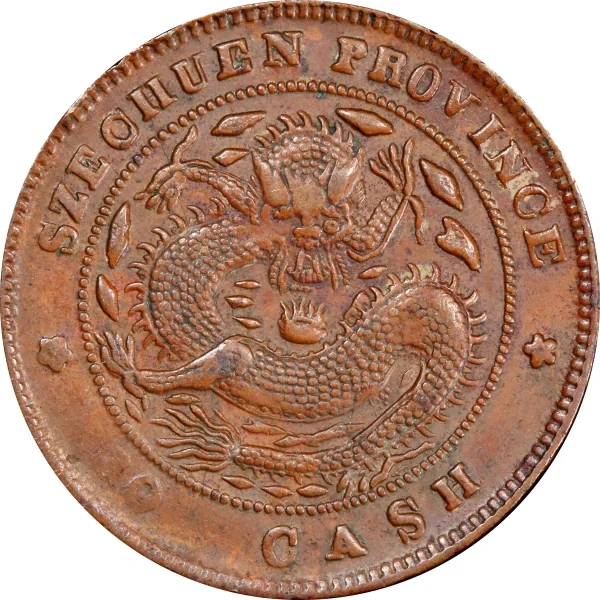
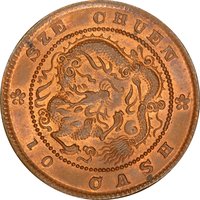
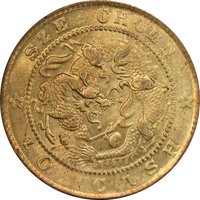
Dragon encircling a pearl, surrounded by English text.
Inscription:
SZECHUAN PROVINCE
5 CASH
5 CASH
Script: Latin
Edge
Plain
Categories
| Mythology> Fantastic animal |
Mintings
| Year | Mint Mark | Mintage | Quality | Collection |
|---|---|---|---|---|
| — | — | — |
Historical background
In 1903, the currency situation in Sichuan Province was one of extreme complexity and fragmentation, characteristic of China's late Qing dynasty. The province operated without a unified monetary system, resulting in a chaotic mix of concurrently circulating mediums. The primary forms included silver sycee (measured in taels), copper cash coins (strung in diao), and a growing volume of foreign and domestic trade dollars (notably the Mexican Silver Dollar). Crucially, the exchange rates between silver and copper were not fixed and fluctuated wildly based on local market conditions, grain harvests, and silver availability, creating significant uncertainty for daily transactions and tax payments.
This disarray was exacerbated by the widespread circulation of privately minted "Sichuan copper coins" and low-quality "big cash" from local mints, as well as a flood of debased coins from neighboring provinces. Furthermore, the province saw the increasing use of credit instruments and native bank notes (zhuangpiao) issued by local banks and merchant houses. These notes provided necessary credit for trade but were only as stable as the issuing institution, leading to frequent failures and losses for holders. This unstable environment hampered large-scale commerce and facilitated exploitation by money changers.
The underlying tension was part of a broader imperial monetary crisis, where the central government's authority had eroded. The provincial mint in Chengdu attempted to standardize coinage, but its output could not keep pace with demand or counteract the influx of inferior coins. This monetary fragmentation reflected Sichuan's relative isolation and robust internal economy, but it also created severe hardships for the peasantry, who sold crops for copper and paid taxes in silver, often at ruinous rates. This discontent over currency, combined with other grievances, contributed to the simmering unrest that would later erupt in the lead-up to the 1911 Revolution.
This disarray was exacerbated by the widespread circulation of privately minted "Sichuan copper coins" and low-quality "big cash" from local mints, as well as a flood of debased coins from neighboring provinces. Furthermore, the province saw the increasing use of credit instruments and native bank notes (zhuangpiao) issued by local banks and merchant houses. These notes provided necessary credit for trade but were only as stable as the issuing institution, leading to frequent failures and losses for holders. This unstable environment hampered large-scale commerce and facilitated exploitation by money changers.
The underlying tension was part of a broader imperial monetary crisis, where the central government's authority had eroded. The provincial mint in Chengdu attempted to standardize coinage, but its output could not keep pace with demand or counteract the influx of inferior coins. This monetary fragmentation reflected Sichuan's relative isolation and robust internal economy, but it also created severe hardships for the peasantry, who sold crops for copper and paid taxes in silver, often at ruinous rates. This discontent over currency, combined with other grievances, contributed to the simmering unrest that would later erupt in the lead-up to the 1911 Revolution.

✨ Legendary