

5 dollars – Hong Kong
Add to wishlist
China
Context
Years: 1980–1984
Country: China
Issuer: Hong Kong
Ruler: Elizabeth II
Currency:
(since 1863)
Total mintage: 78,500,000
Material
Diameter: 27 mm
Weight: 13.4 g
Thickness: 3.26 mm
Shape: Round
Composition: Copper-nickel
Technique: Milled
Alignment: Medal alignment
flip
References
KM: #
Numista: #4218
Value
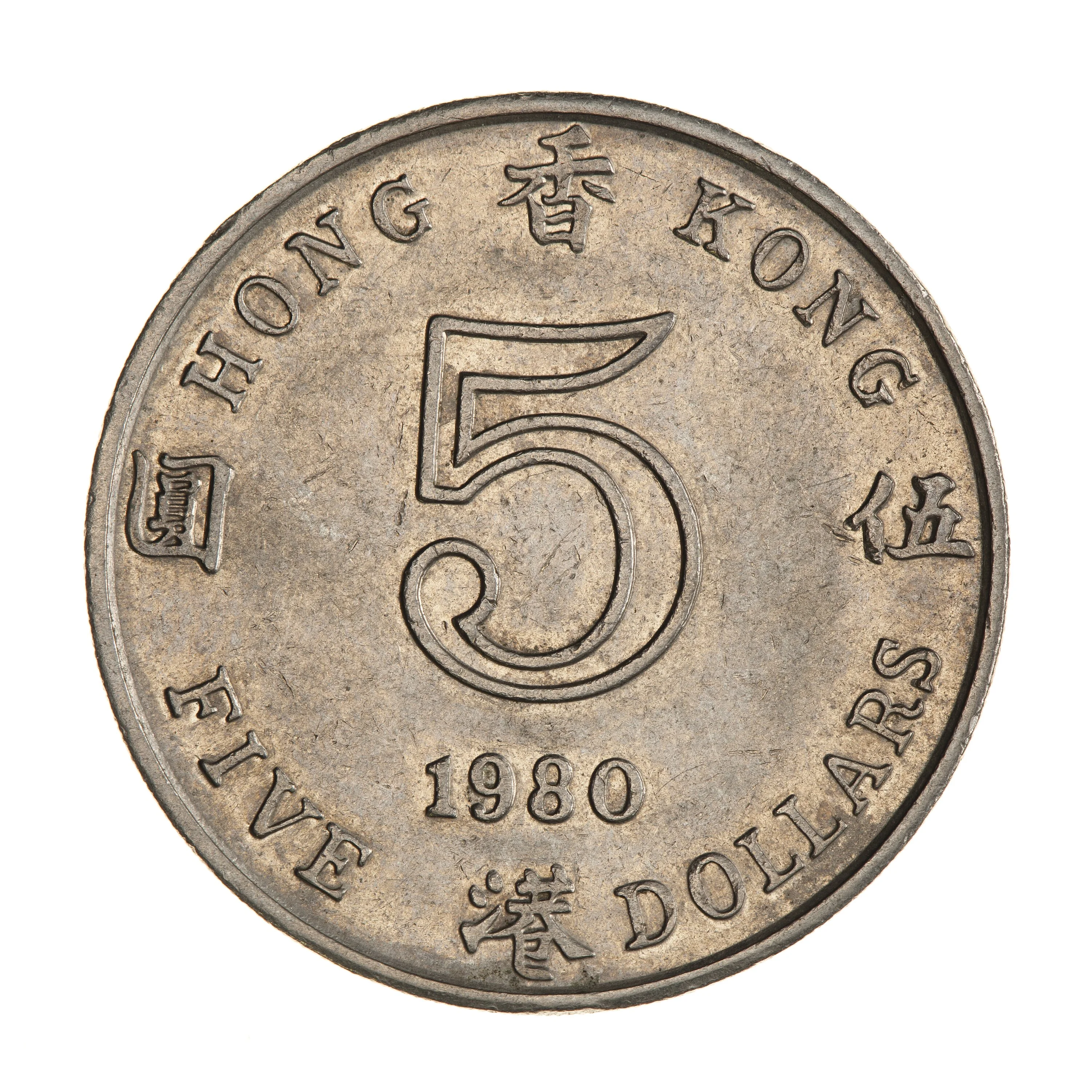
Exchange value: 5 HKD
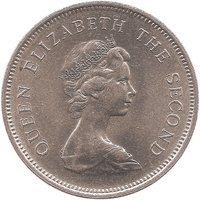
Obverse
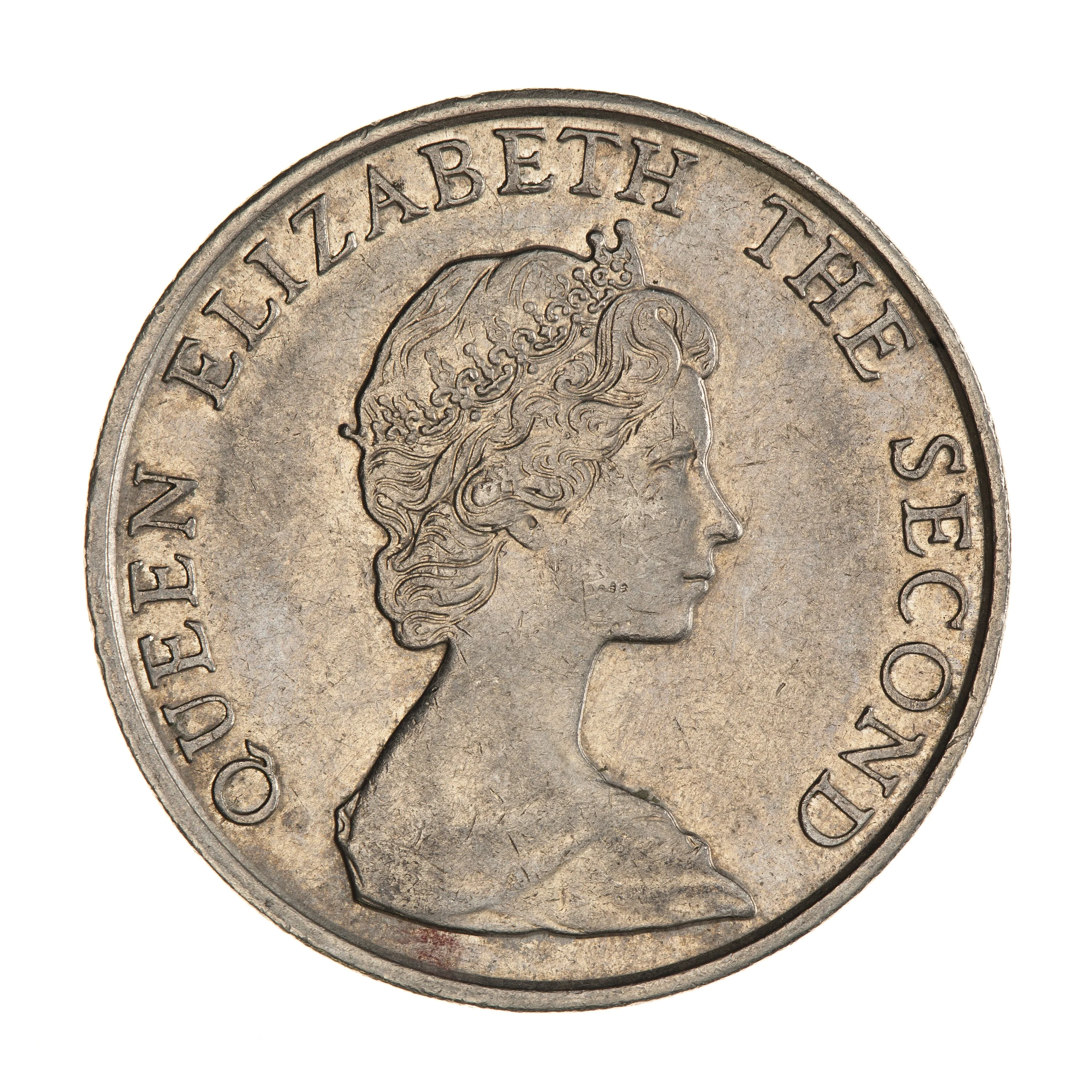
Description:
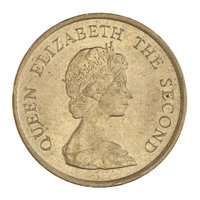
Right-facing crowned bust.
Inscription:
QUEEN ELIZABETH THE SECOND
Script: Latin
Engraver: Arnold Machin
Reverse
Mints
| Name | Mark |
|---|---|
| Royal Mint | — |
Mintings
| Year | Mint Mark | Mintage | Quality | Collection |
|---|---|---|---|---|
| 1980 | — | 40,000,000 | ||
| 1981 | — | 20,000,000 | ||
| 1982 | — | 10,000,000 | ||
| 1983 | — | 4,000,000 | ||
| 1984 | — | 4,500,000 |
Historical background
In 1980, Hong Kong operated under a unique and highly successful currency board system, pegging its currency to the British Pound Sterling. This system, established in 1935, had provided stability but faced significant strain in the early 1970s with the collapse of the Bretton Woods system and the Pound's own volatility. Consequently, in 1972, the Hong Kong dollar was briefly pegged to the US dollar before being allowed to float freely in 1974. By the late 1970s, this free float period was characterized by substantial volatility, driven by political uncertainty surrounding the impending 1997 handover to China, speculative capital flows, and high inflation that eroded public confidence in the local currency's value.
The situation reached a crisis point in 1983, just a few years after the 1980 baseline, triggered by intensified Sino-British negotiations over Hong Kong's future. A severe loss of confidence led to a dramatic depreciation of the Hong Kong dollar, which plummeted to a historic low of HK$9.55 against the US dollar. This currency crisis was accompanied by panic buying of staples and a rush to convert savings into US dollars, threatening the territory's financial stability. The background of 1980, therefore, represents the final years of an increasingly unstable free-floating regime that would soon prove untenable.
In direct response to the 1983 crisis, the government implemented the linked exchange rate system in October 1983, a robust currency board mechanism that permanently pegged the Hong Kong dollar to the US dollar at a rate of HK$7.80. This decisive move, born from the vulnerabilities exposed in the preceding years, successfully restored monetary stability and public confidence. The system established then has remained the cornerstone of Hong Kong's financial architecture ever since, surviving multiple regional and global crises, including the Asian Financial Crisis of 1997 and the 2008 global financial meltdown.
The situation reached a crisis point in 1983, just a few years after the 1980 baseline, triggered by intensified Sino-British negotiations over Hong Kong's future. A severe loss of confidence led to a dramatic depreciation of the Hong Kong dollar, which plummeted to a historic low of HK$9.55 against the US dollar. This currency crisis was accompanied by panic buying of staples and a rush to convert savings into US dollars, threatening the territory's financial stability. The background of 1980, therefore, represents the final years of an increasingly unstable free-floating regime that would soon prove untenable.
In direct response to the 1983 crisis, the government implemented the linked exchange rate system in October 1983, a robust currency board mechanism that permanently pegged the Hong Kong dollar to the US dollar at a rate of HK$7.80. This decisive move, born from the vulnerabilities exposed in the preceding years, successfully restored monetary stability and public confidence. The system established then has remained the cornerstone of Hong Kong's financial architecture ever since, surviving multiple regional and global crises, including the Asian Financial Crisis of 1997 and the 2008 global financial meltdown.
🌱 Very Common