

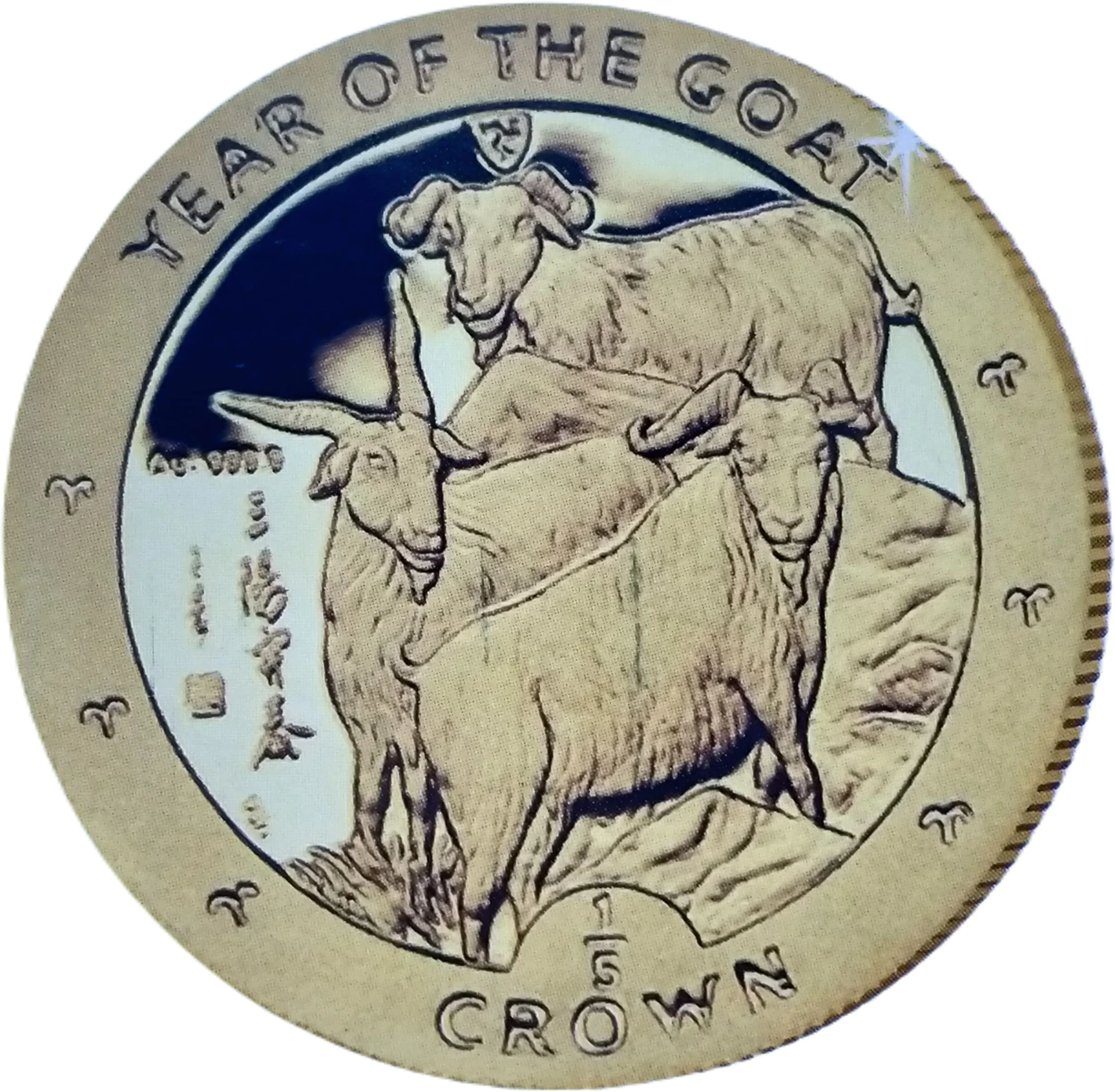
⅕ Crown – Isle of Man
Context
Year: 2003
Country: British Crown dependencies
Issuer: Isle of Man 
Ruler: Elizabeth II
Currency:
(since 1970)
Material
References
KM: #Click to copy to clipboard1169
Numista: #421289
Value
Bullion value: $1039.06
Obverse
Description:
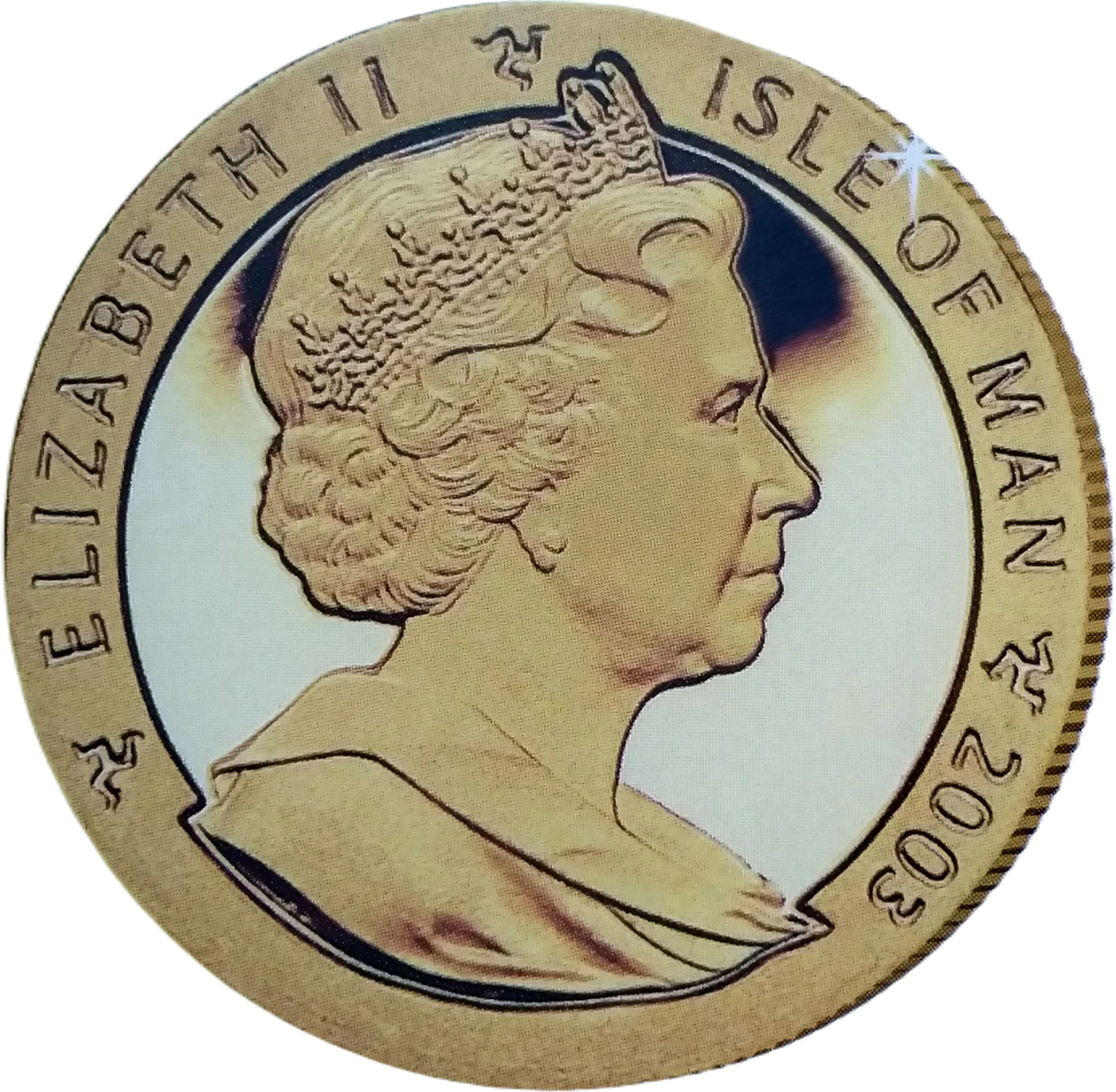
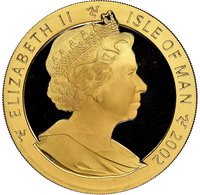
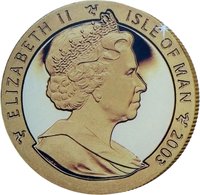
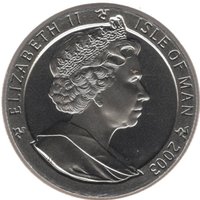
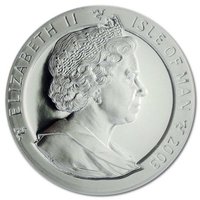
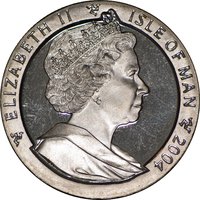
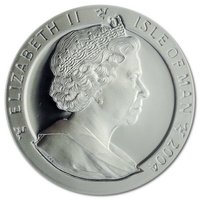
Right-facing bust of Queen Elizabeth II in the "Girls of Great Britain and Ireland" Tiara, with incused legend and date.
Inscription:
ELIZABETH II ISLE OF MAN 2003
IRB
IRB
Translation:
ELIZABETH II ISLE OF MAN 2003
IRB
IRB
Script: Latin
Designer: Ian Rank-Broadley
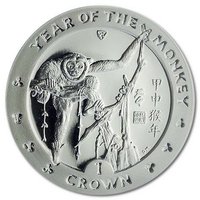
Reverse
Edge
Reeded
Categories
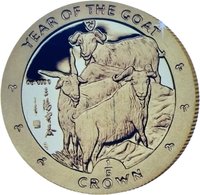
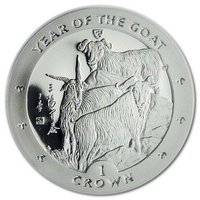
| Animal> Goat |
| Astrology> Chinese calendar |
Mints
| Name | Mark |
|---|---|
| Pobjoy Mint | (PM) |
Mintings
| Year | Mint Mark | Mintage | Quality | Collection |
|---|---|---|---|---|
| 2003 | PM | — | Proof |
Historical background
In 2003, the Isle of Man's currency situation was defined by its unique constitutional relationship with the United Kingdom. The Island was not part of the UK or the European Union, but it was in a monetary union with Britain. Consequently, the official currency was the Manx pound, which was issued by the Isle of Man Government Treasury and maintained a fixed parity of 1:1 with the pound sterling. Sterling notes and coins also circulated freely and were accepted interchangeably with Manx issues, though the reverse was not always true in the UK.
The year saw the continued operation of the Island's long-standing currency board system, which required the Manx authorities to hold sterling reserves to fully back the Manx pound notes and coins in circulation. This arrangement provided stability and confidence, crucial for an international finance centre. Notably, 2003 fell within the period after the UK's decimalisation and after the Manx government began issuing its own distinct series of notes (in 1983) and coins (in 1971), which often featured local landmarks and Celtic symbols, promoting a separate national identity within the British monetary sphere.
From an economic perspective, the fixed link to sterling in 2003 meant the Isle of Man automatically shared the UK's monetary policy and interest rates set by the Bank of England. This was largely beneficial, providing a stable exchange rate for its key finance and tourism sectors with its largest economic partner. However, it also meant the Island had no independent monetary lever to address local inflationary pressures or economic cycles, a trade-off accepted for the security of being pegged to a major global currency.
The year saw the continued operation of the Island's long-standing currency board system, which required the Manx authorities to hold sterling reserves to fully back the Manx pound notes and coins in circulation. This arrangement provided stability and confidence, crucial for an international finance centre. Notably, 2003 fell within the period after the UK's decimalisation and after the Manx government began issuing its own distinct series of notes (in 1983) and coins (in 1971), which often featured local landmarks and Celtic symbols, promoting a separate national identity within the British monetary sphere.
From an economic perspective, the fixed link to sterling in 2003 meant the Isle of Man automatically shared the UK's monetary policy and interest rates set by the Bank of England. This was largely beneficial, providing a stable exchange rate for its key finance and tourism sectors with its largest economic partner. However, it also meant the Island had no independent monetary lever to address local inflationary pressures or economic cycles, a trade-off accepted for the security of being pegged to a major global currency.
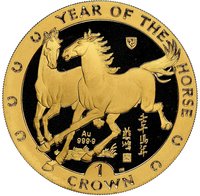
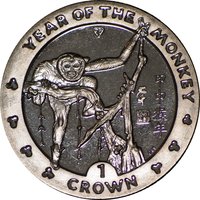
Series: Chinese Zodiac
✨ Legendary