

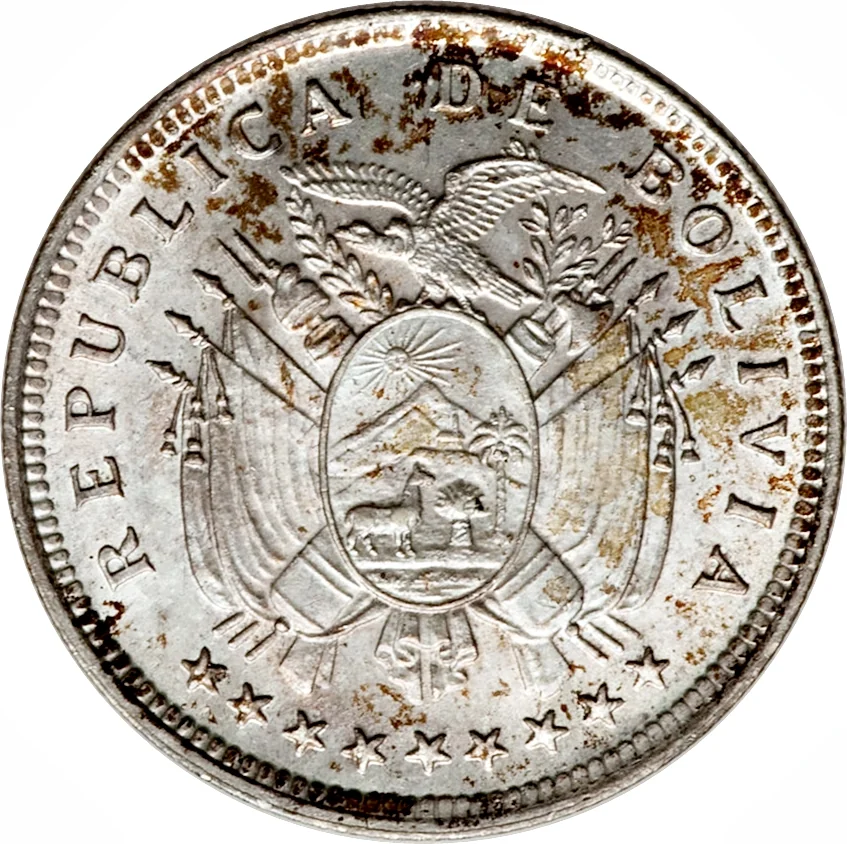
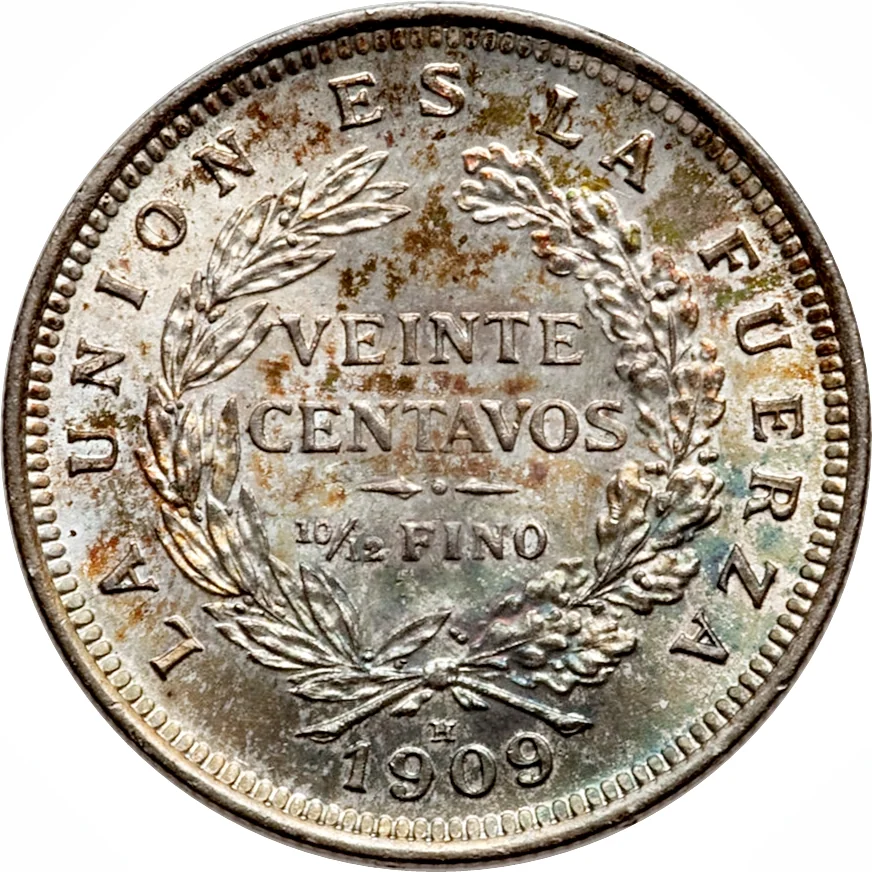
20 centavos – Bolivia
Add to wishlist
Bolivia
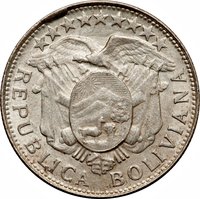
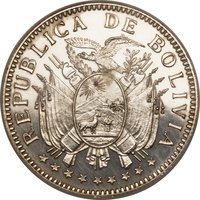
Obverse
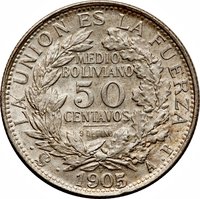
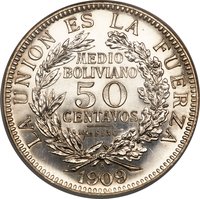
Reverse
Edge
Milled
Mints
| Name | Mark |
|---|---|
| Heaton and Sons / The Mint Birmingham | H |
Historical background
In 1909, Bolivia's currency situation was characterized by a period of relative stability under the gold standard, a system formally adopted in 1908. This followed decades of profound monetary chaos after the collapse of the silver standard in the late 19th century, which had caused severe depreciation and economic uncertainty. The 1908 law pegged the Bolivian boliviano to gold at a rate of 12.5 bolivianos per British gold sovereign, aiming to attract foreign investment, facilitate international trade, and impose fiscal discipline on the government.
This stability, however, was fragile and superficial. The nation's economy remained overwhelmingly dependent on a single export—tin—whose price fluctuations on the global market directly impacted the amount of gold and foreign exchange entering the country. Furthermore, Bolivia's own gold reserves were minimal; the gold standard was effectively maintained through sterilization, a process where the Central Bank of Bolivia (founded in 1911) used profits from tin exports to buy and hold gold-backed foreign currency (primarily British pounds sterling) to back the boliviano. This made the currency's stability externally dependent and vulnerable to shifts in the tin market.
Consequently, the system in 1909 represented a managed and dependent monetary order. While it succeeded in ending the wild inflation of previous decades and modernizing the financial system, it tethered Bolivia's economic health to external forces. The reliance on a single commodity and foreign currencies meant that the apparent stability was contingent on continued high tin prices and smooth access to international capital, conditions that would be severely tested in the coming decades, particularly during the Great Depression.
This stability, however, was fragile and superficial. The nation's economy remained overwhelmingly dependent on a single export—tin—whose price fluctuations on the global market directly impacted the amount of gold and foreign exchange entering the country. Furthermore, Bolivia's own gold reserves were minimal; the gold standard was effectively maintained through sterilization, a process where the Central Bank of Bolivia (founded in 1911) used profits from tin exports to buy and hold gold-backed foreign currency (primarily British pounds sterling) to back the boliviano. This made the currency's stability externally dependent and vulnerable to shifts in the tin market.
Consequently, the system in 1909 represented a managed and dependent monetary order. While it succeeded in ending the wild inflation of previous decades and modernizing the financial system, it tethered Bolivia's economic health to external forces. The reliance on a single commodity and foreign currencies meant that the apparent stability was contingent on continued high tin prices and smooth access to international capital, conditions that would be severely tested in the coming decades, particularly during the Great Depression.
🌟 Uncommon