

50 centavos – Bolivia
Add to wishlist
Bolivia
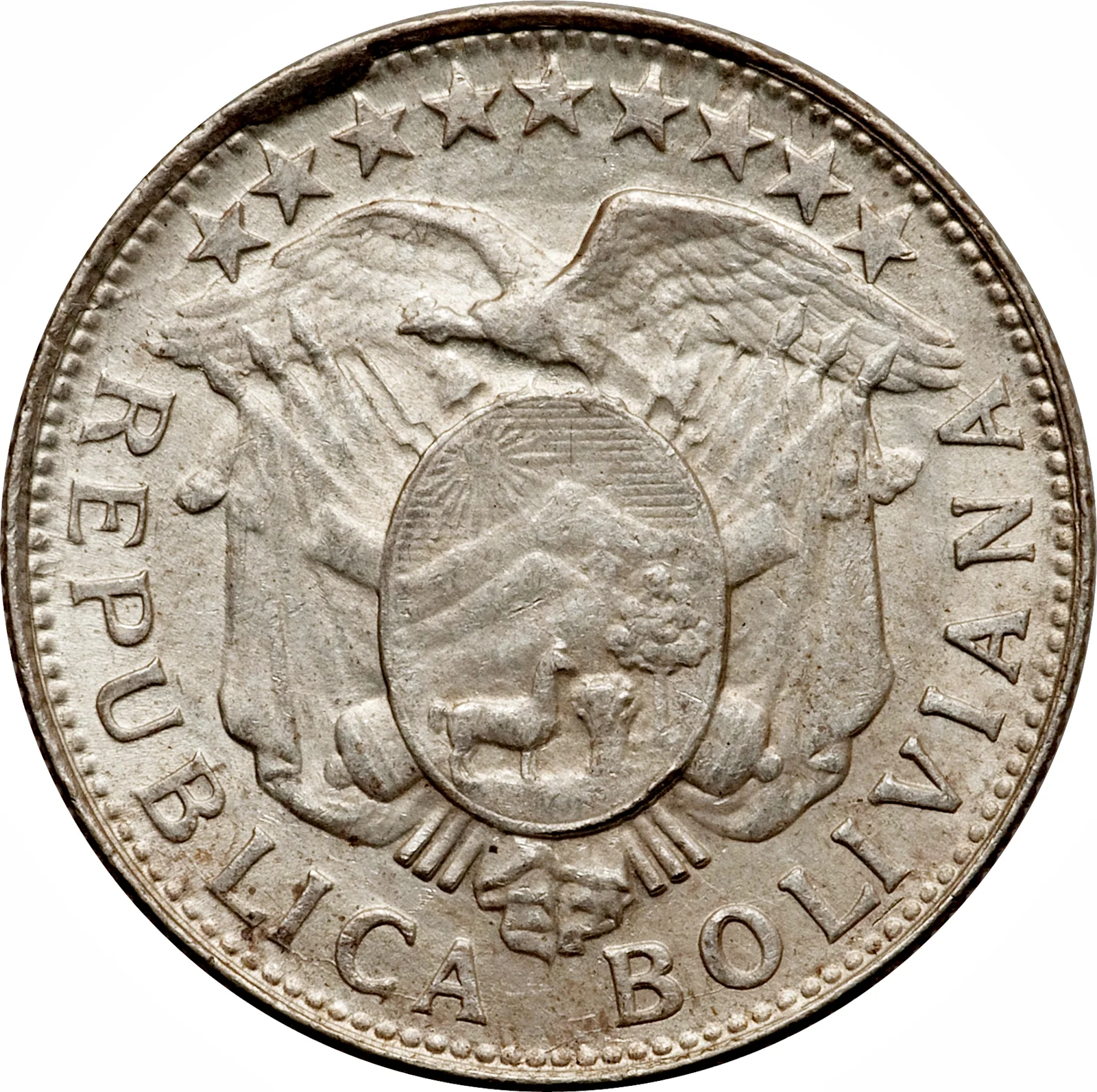
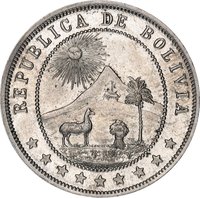
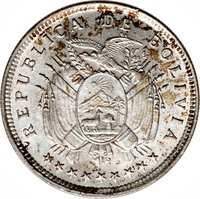
Obverse
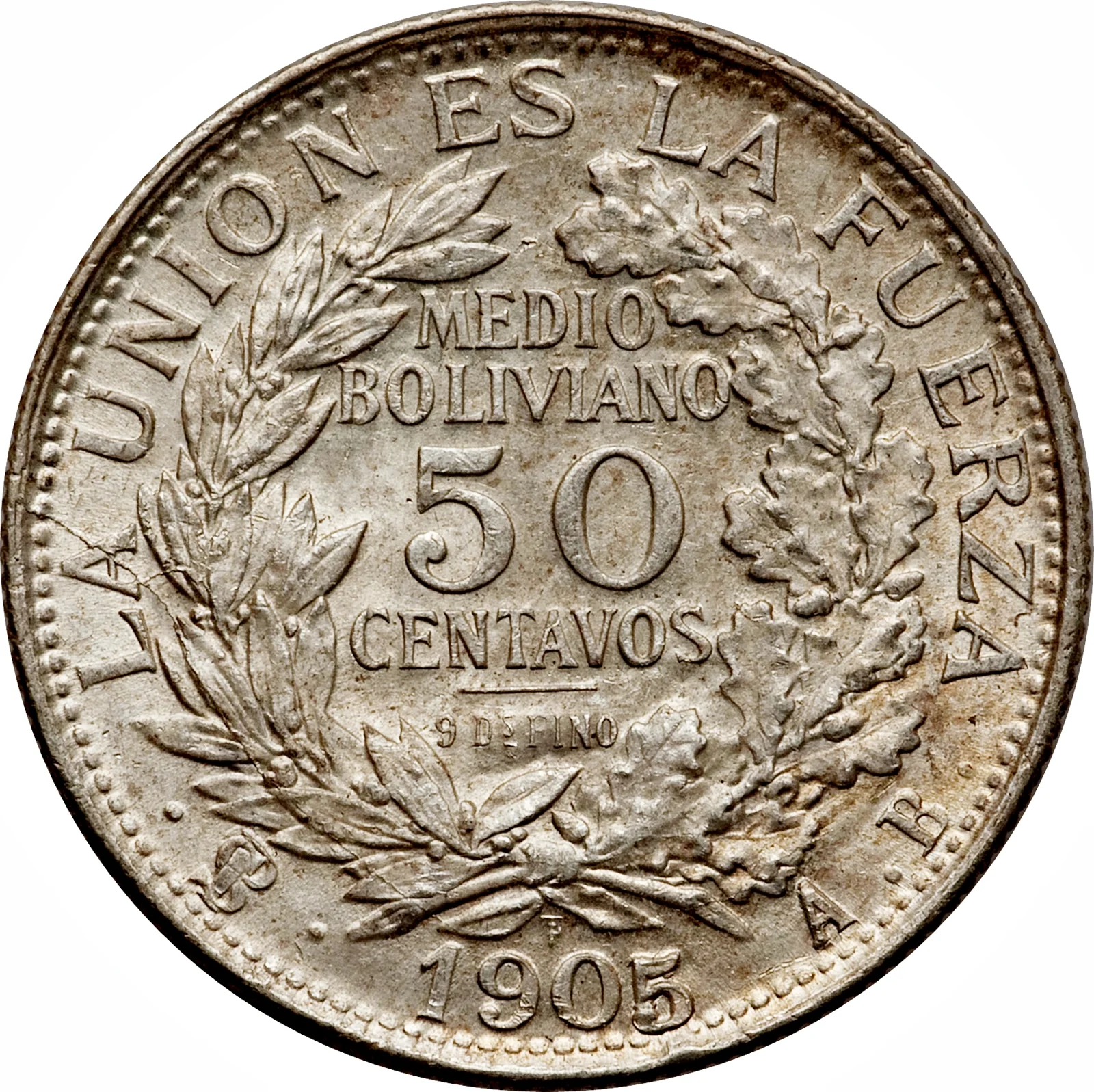
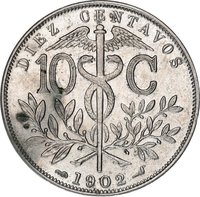
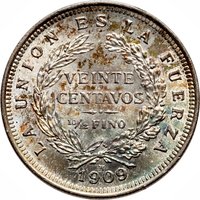
Reverse
Edge
Milled
Mints
| Name | Mark |
|---|---|
| Potosi | PTS |
| Casa de Moneda de Chile | So |
Mintings
Historical background
In 1900, Bolivia’s currency situation was characterized by profound instability and fragmentation, a direct legacy of the economic collapse following the War of the Pacific (1879-1884). The loss of its coastal territory and the vital nitrate and guano revenues plunged the nation into a prolonged fiscal crisis. The government, deeply in debt and with severely diminished silver mining output from Potosí, resorted to issuing inconvertible paper money, the boliviano. This fiat currency rapidly depreciated, leading to severe inflation and a widespread loss of public confidence in the monetary system.
Consequently, Bolivia operated with a dual and chaotic monetary reality. While the devalued paper boliviano was used for most government transactions and daily life, foreign silver coins, particularly the Peruvian sol and the Chilean condor, circulated widely as a trusted hard currency, especially in commercial centers and near the borders. This de facto dollarization, alongside the use of Bolivian silver coins that were hoarded for their intrinsic value, created a complex and inefficient economy where exchange rates fluctuated wildly, hindering domestic trade and foreign investment.
The situation in 1900 was at a critical juncture, setting the stage for imminent reform. The discovery of vast tin deposits, which were beginning to replace silver as the nation’s primary export, offered a potential path to stabilization. Pressure from foreign creditors and the domestic business elite for a sound monetary system was mounting. This culminated, just a few years later, in the Monetary Law of 1908, which established the gold standard and created a new, stable currency, the boliviano de oro, finally ending the chaotic period that defined the turn of the century.
Consequently, Bolivia operated with a dual and chaotic monetary reality. While the devalued paper boliviano was used for most government transactions and daily life, foreign silver coins, particularly the Peruvian sol and the Chilean condor, circulated widely as a trusted hard currency, especially in commercial centers and near the borders. This de facto dollarization, alongside the use of Bolivian silver coins that were hoarded for their intrinsic value, created a complex and inefficient economy where exchange rates fluctuated wildly, hindering domestic trade and foreign investment.
The situation in 1900 was at a critical juncture, setting the stage for imminent reform. The discovery of vast tin deposits, which were beginning to replace silver as the nation’s primary export, offered a potential path to stabilization. Pressure from foreign creditors and the domestic business elite for a sound monetary system was mounting. This culminated, just a few years later, in the Monetary Law of 1908, which established the gold standard and created a new, stable currency, the boliviano de oro, finally ending the chaotic period that defined the turn of the century.
🌱 Fairly Common